
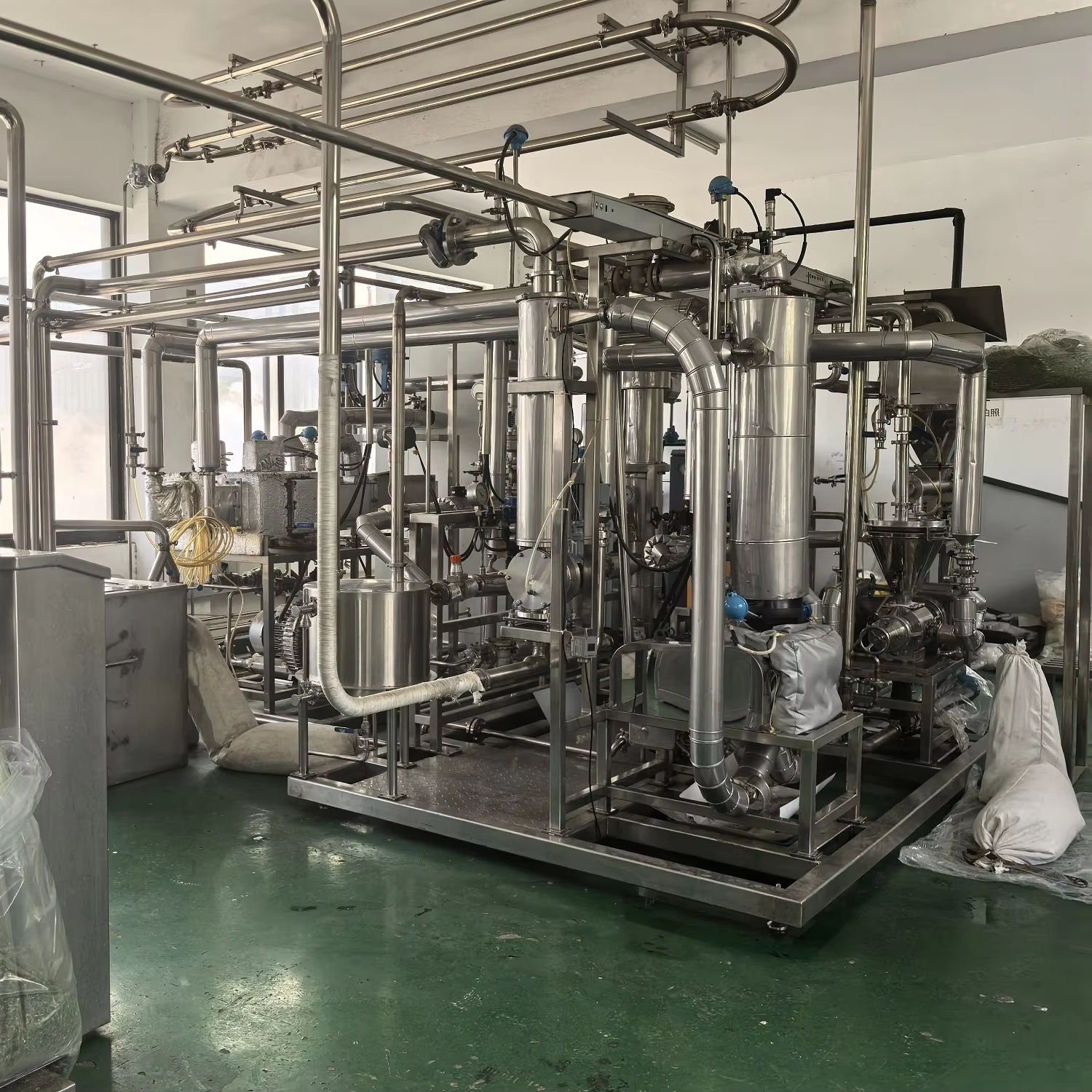
Production line and factory setup overview
A food-safety line for receiving whole spices, removing stones, dust and metal, grading, applying a validated short steam decontamination treatment, then rapid drying, cooling and protected holding. It is not a generic canning retort: time, temperature, moisture and aroma retention must be validated for each spice.
Recommended lowest-entry line configuration For the lowest credible entry, select a 50-100 kg/batch cleaning section and pressure-rated batch steam treatment with recorded temperature, pressure and time, followed by immediate dehumidified drying and cooling. Begin with one or two heat-tolerant whole spices.
Production process and implementation sequence
- Whole-spice receiving and sampling
- Air-screen cleaning and magnetic protection
- Destoning and size grading
- Pre-treatment moisture assessment
- Validated short steam treatment
- Immediate dehumidified drying
- Rapid cooling and protected transfer
- Microbiological release and dry storage
Products, capacity and market fit
- Clean whole spices can replace unsafe informal handling.
- Validated decontamination supports institutional and export buyers.
- Separate recipes protect aroma and color differences.
- A batch system limits entry capital while building process evidence.
- Clean steam-treated whole spices - Buyer-approved moisture, microbial limits, aroma, color and foreign matter - Food manufacturers, wholesalers and export buyers
- Released spice feed for grinding - Dry treated lot protected from recontamination - Controlled spice-milling operations
Core production machinery and line specifications
| Machine / stage | Function / value | Production note |
|---|---|---|
| Air-screen cleaner and magnet | Removes light matter, oversize material and metal | Separate settings by spice |
| Destoner and grader | Removes stones and creates uniform treatment fractions | Trialled on each whole spice |
| Batch feed and weighing station | Controls treatment load | 50-100 kg/batch entry |
| Pressure-rated steam chamber | Applies validated moist-heat treatment | Recorded temperature, pressure and time |
| Steam generator and treatment water system | Supplies food-compatible steam | Sized to chamber demand |
| Dehumidified batch dryer | Removes treatment moisture promptly | Product-temperature protection |
| Cooling and protected conveyor | Stops heating and limits recontamination | Filtered dry air |
| Sampling and released-lot bins | Holds treated spice pending test release | Closed food-grade containers |
Raw materials, utilities and factory requirements
- Traceable whole spices by separate lot
- Potable treatment water
- Food-grade lined bags and closed bins
- Laboratory sampling and microbiology materials
- Stable three-phase electricity
- Clean compressed air where specified
- Potable process water where required
- Washable food-grade processing room with dust control
- Dry segregated raw-material and finished-goods storage
Indicative low-entry investment and implementation plan
These planning ranges prioritize economical machinery, local labor and local civil works. Final pricing follows confirmed capacity, product specification, delivery terms and site conditions.
| Scope | Indicative range | Entry-plan note |
|---|---|---|
| Cleaning, destoning and grading | US$5k-12k | 50-100 kg/batch preparation |
| Steam treatment chamber and controls | US$10k-24k | Pressure-rated batch scope |
| Steam supply, drying and cooling | US$8k-20k | Rapid moisture removal |
| Quality and protected handling | US$3k-8k | Microbiology outsourced at launch |
| Freight, installation and spares | US$6k-14k | Pressure and steam interfaces |
| Indicative low-entry total | US$32k-78k | Building, boiler fuel, spice stock and certification excluded |
Detailed proposal and next step
The proposal contains the complete line flow, machinery scope, raw-material and utility requirements, implementation stages and indicative entry planning. Final configuration follows confirmed products, capacity, site and budget.