
Production line and factory setup overview
A dry, low-temperature line for receiving released herbs and tea, gentle cutting and sieving, recipe-controlled blending, metal detection, tea-bag forming, optional outer-envelope packing, coding and carton packing. Product identity, permitted ingredients and moisture control are more important than maximum machine speed.
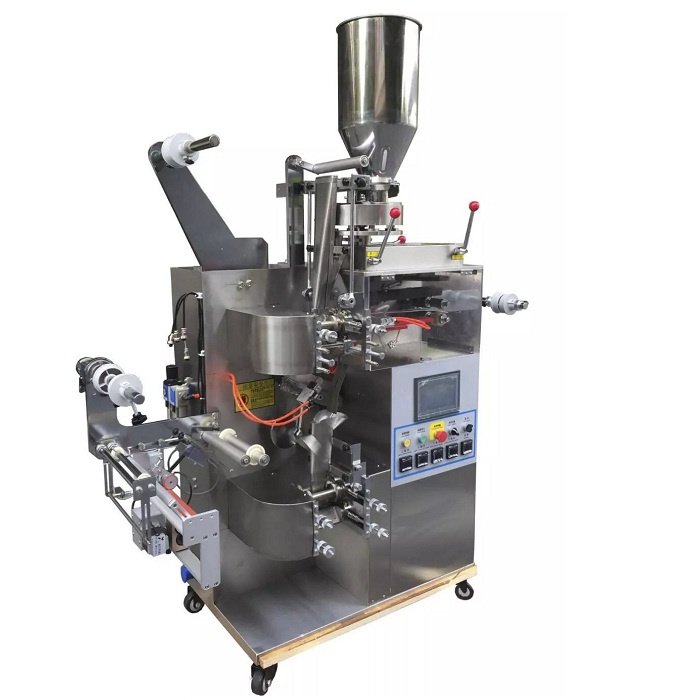
Recommended lowest-entry line configuration For the lowest credible entry, use a 30-60 kg/batch ribbon blender, small herb cutter and sieve, magnet, 20-40 bag/min filter-paper tea-bag machine with string and tag, manual outer pouch sealing and batch coding. Launch with three validated blends.
Production process and implementation sequence
- Released herb and tea receiving
- Identity, moisture and foreign-matter checks
- Gentle cutting and size classification
- Recipe weighing and controlled blending
- Magnetic protection and blend release
- Filter-paper bag forming and dosing
- String, tag, sealing and code verification
- Optional outer pouch and carton packing
Products, capacity and market fit
- Afghan mint, chamomile and selected herbs can enter higher-value retail blends.
- Tea bags provide a familiar convenient format for homes, offices and hospitality.
- A recipe-controlled cell supports several products without a large factory.
- Local blending and packing can replace part of imported herbal-infusion supply.
- Single-herb infusion bags - Declared herb, controlled cut size, moisture and bag dose - Retail, offices, hotels and pharmacies where permitted
- Blended herbal tea bags - Approved recipe, ingredient declaration, consistent dose and aroma - Retail, hospitality and private-label buyers
Core production machinery and line specifications
| Machine / stage | Function / value | Production note |
|---|---|---|
| Herb inspection and cutting station | Rejects defects and produces packable cut size | Low-speed interchangeable cutter |
| Vibratory sieve and magnet | Removes fines, oversize matter and ferrous metal | Screens trialled per herb |
| Recipe scales | Controls every blend component | Recorded lot and actual weight |
| Ribbon or paddle blender | Creates a uniform low-damage blend | 30-60 kg/batch entry |
| Blend holding hopper | Feeds released blend without segregation | Covered steep-wall design |
| Tea-bag packing machine | Forms, doses and seals filter-paper bags | 20-40 bags/min with string and tag |
| Outer-pouch sealer and coder | Adds moisture barrier and lot code | Manual or semi-automatic launch |
| Check scale and carton station | Verifies packs and dispatch count | Independent release check |
Raw materials, utilities and factory requirements
- Released Afghan herbs and approved imported tea by separate lot
- Food-grade filter paper, thread and tags
- Barrier outer pouches, labels and cartons
- Approved food-grade blend ingredients only
- Stable electricity matched to the selected equipment
- Potable process water where product contact occurs
- Washable food-grade rooms with pest and dust control
- Segregated raw-material, packaging and finished-goods storage
- Compressed air, steam or cooling water only where specified
Indicative low-entry investment and implementation plan
These planning ranges prioritize economical machinery, local labor and local civil works. Final pricing follows confirmed capacity, product specification, delivery terms and site conditions.
| Scope | Indicative range | Entry-plan note |
|---|---|---|
| Cutting, sieving and recipe scales | US$3k-8k | Three launch blends |
| Small blender and holding hopper | US$3k-8k | 30-60 kg/batch |
| Tea-bag packing machine | US$5k-14k | String and tag entry model |
| Outer sealing, coding and quality tools | US$2k-6k | Semi-manual launch |
| Freight, installation and spares | US$3k-7k | Compact workshop shipment |
| Indicative low-entry total | US$16k-43k | Building, herb stock and regulatory approval excluded |
Detailed proposal and next step
The proposal contains the complete line flow, machinery scope, raw-material and utility requirements, implementation stages and indicative entry planning. Final configuration follows confirmed products, capacity, site and budget.