Production line and factory setup overview
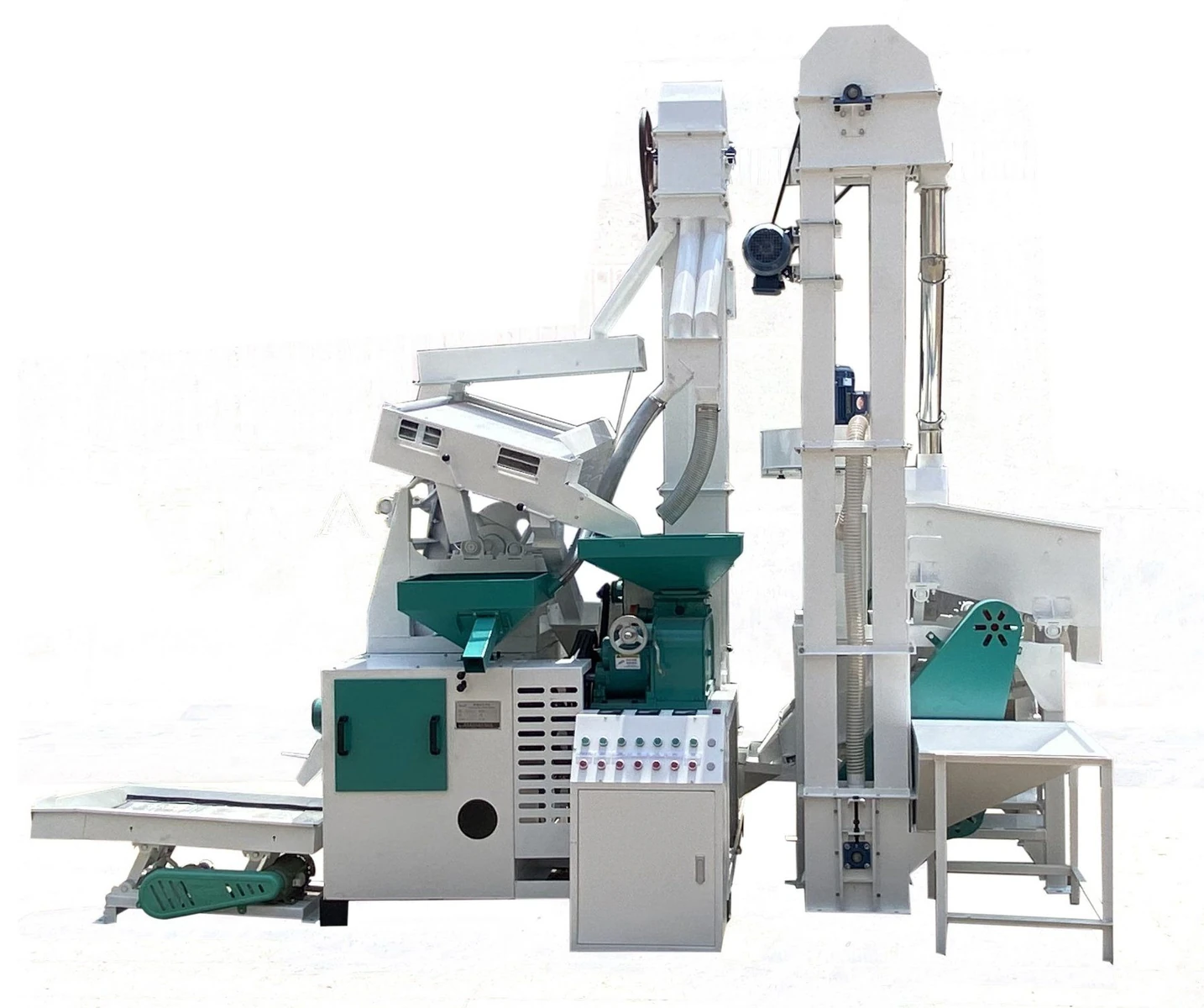
A complete small line for paddy cleaning, destoning, husking, paddy separation, whitening, polishing, grading and packing rice.
Recommended lowest-entry line configuration Start with a compact 600-800 kg/h paddy-input line comprising a cleaner, destoner, rubber-roll husker, paddy separator, whitener, polisher and semi-manual packing.
Production process and implementation sequence
- Paddy receiving, sampling and moisture check
- Pre-cleaning and magnetic protection
- Destoning
- Rubber-roll husking and husk aspiration
- Paddy and brown-rice separation with return loop
- Rice whitening and controlled polishing
- Broken-rice and size grading
- Weighing, bag closing and lot coding
Products, capacity and market fit
- Afghan paddy can be milled near producing areas, reducing transport of husk and increasing local value addition.
- Compact combined mills serve traders and cooperatives without the civil works of a large multi-floor plant.
- Rice bran, husk and controlled broken-rice grades create separate commercial streams.
- A modular launch can later add color sorting, automatic packing or a second whitener when demand is proven.
- Polished white rice - Buyer-approved whiteness, moisture, head-rice yield and low foreign matter - Retail, wholesale and institutional buyers
- Brown or lightly milled rice - Optional reduced-milling grade with controlled bran layer - Health-oriented and specialty buyers
- Broken rice - Separated and graded by buyer specification - Food processing, flour and feed users
- Rice bran and husk - Kept dry, separate and traceable - Approved oil, feed, fuel or bedding users
Core production machinery and line specifications
| Machine / stage | Function / value | Production note |
|---|---|---|
| Vibration cleaner and magnet | Removes straw, dust, oversize and ferrous material | Screens approved for local paddy |
| Destoner | Separates stones and dense impurities | Adjustable air and deck inclination |
| Rubber-roll husker | Removes husk with controlled kernel breakage | Include spare rolls and pressure adjustment |
| Husk aspirator | Separates light husk from brown rice | Ducting and cyclone included |
| Paddy separator | Returns unhusked paddy without remilling brown rice | Stable feed and adjustable separation deck |
| Rice whitener | Removes bran to the target milling degree | Adjustable pressure and bran aspiration |
| Rice polisher | Improves surface finish and removes loose bran | Dry or approved mist-polish configuration |
| Grader and bagging scale | Separates broken fractions and packs released rice | Semi-manual 5-50 kg starter range |
Raw materials, utilities and factory requirements
- Dry mature Afghan paddy approved by variety and milling trial
- Food-grade retail or lined wholesale bags
- Labels, sewing thread or heat-seal film
- Food-grade rubber rolls and approved polishing consumables where applicable
- Stable three-phase electricity
- Dust extraction and safe husk/bran collection
- Dry paddy storage with moisture monitoring
- Covered clean finished-rice and byproduct storage
- Calibrated moisture meter, scales and laboratory grader
Indicative low-entry investment and implementation plan
These planning ranges prioritize economical machinery, local labor and local civil works. Final pricing follows confirmed capacity, product specification, delivery terms and site conditions.
| Scope | Indicative range | Entry-plan note |
|---|---|---|
| Cleaning, destoning and husking section | US$7k-15k | Compact intake with rubber-roll husker |
| Paddy separation, whitening and polishing | US$8k-18k | One complete starter milling stream |
| Grading, aspiration and semi-manual packing | US$4k-10k | Color sorter excluded from entry scope |
| Electrical, installation and initial wear parts | US$3k-7k | Include rubber rolls, screens and belts |
| Freight and clearance | US$4k-9k | Confirm frames, elevators and container plan |
| Indicative low-entry total | US$26k-59k | Building, paddy stock, generator and color sorter excluded |
Detailed proposal and next step
The proposal contains the complete line flow, machinery scope, raw-material and utility requirements, implementation stages and indicative entry planning. Final configuration follows confirmed products, capacity, site and budget.