
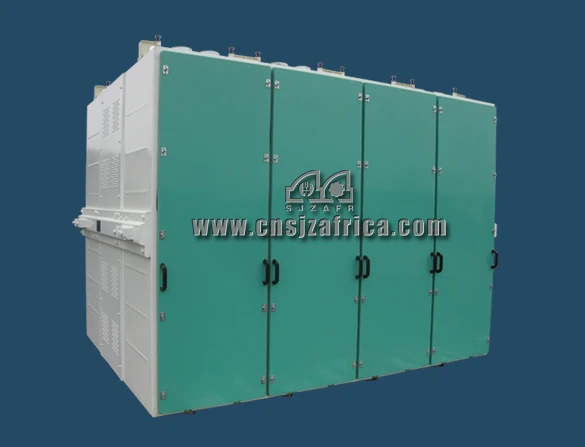
Production line and factory setup overview
A small line for cleaning, destoning, controlled dehulling, milling, sifting, blending and packing whole or reduced-bran barley flour.
Recommended lowest-entry line configuration For a workshop-scale start, select a 250-500 kg/h line with a cleaner, destoner, adjustable dehuller, hammer or pin mill, sifter, small blender and semi-manual packing.
Production process and implementation sequence
- Food-grade barley receiving and sampling
- Air-screen cleaning and magnetic protection
- Destoning and optional size grading
- Controlled dehulling for reduced-bran flour
- Primary milling
- Sifting and oversize recycle
- Batch blending and quality release
- Weighing, sealing and lot coding
Products, capacity and market fit
- Afghan barley can be sold as a higher-value local flour and composite-flour ingredient.
- A compact mill fits bakery, health-food and institutional-food supply at modest volume.
- Interchangeable screens and controlled dehulling support more than one flour grade.
- The line can later add automatic packing or a roller-milling section after demand is proven.
- Whole-barley flour - Buyer-approved particle size with bran retained - Flatbread blends, porridge and health-food products
- Reduced-bran barley flour - Controlled dehulling, lighter color and fine granulation - Bakeries, mixes and food manufacturers
- Coarse barley meal - Uniform coarse cooking fraction - Traditional foods and institutional kitchens
- Hull and bran co-product - Dry separated fraction - Approved feed users
Core production machinery and line specifications
| Machine / stage | Function / value | Production note |
|---|---|---|
| Cleaner and magnet | Removes dust, chaff, oversize and ferrous contamination | Screens matched to Afghan barley |
| Destoner | Protects the mill from dense impurities | Adjustable air and deck inclination |
| Adjustable dehuller | Removes hull or selected bran for lighter flour | Bypass for whole-barley flour |
| Hammer or pin mill | Reduces prepared barley to flour or meal | 250-500 kg/h planning range |
| Cyclone and dust filter | Transfers flour and controls airborne dust | Dust-tight ducts and safe filter cleaning |
| Vibration sifter | Controls particle size and returns oversize | Interchangeable buyer-approved screens |
| Small flour blender | Equalizes batches and approved blends | Food-grade cleanable contact surfaces |
| Auger or scale packer | Packs flour and meal | Semi-manual 1-25 kg starter range |
Raw materials, utilities and factory requirements
- Dry food-grade Afghan barley
- Food-grade retail pouches or lined wholesale bags
- Labels and coding consumables
- Approved sanitation and pest-control materials
- Stable three-phase electricity
- Dust extraction and safe ventilation
- Dry barley, flour and co-product storage
- Calibrated scale, moisture meter and laboratory sieves
- Food-hygiene and pest-control program
Indicative low-entry investment and implementation plan
These planning ranges prioritize economical machinery, local labor and local civil works. Final pricing follows confirmed capacity, product specification, delivery terms and site conditions.
| Scope | Indicative range | Entry-plan note |
|---|---|---|
| Cleaning, destoning and controlled dehulling | US$3k-8k | Compact preparation stream |
| Milling, sifting and dust collection | US$4k-10k | One 250-500 kg/h flour stream |
| Blending and semi-manual packing | US$2k-6k | Two launch grades |
| Electrical, installation and initial spares | US$2k-5k | Include screens, hammers or pins and belts |
| Freight and clearance | US$2.5k-6k | Consolidated compact shipment |
| Indicative low-entry total | US$13.5k-35k | Building, barley stock and laboratory tests excluded |
Detailed proposal and next step
The proposal contains the complete line flow, machinery scope, raw-material and utility requirements, implementation stages and indicative entry planning. Final configuration follows confirmed products, capacity, site and budget.