
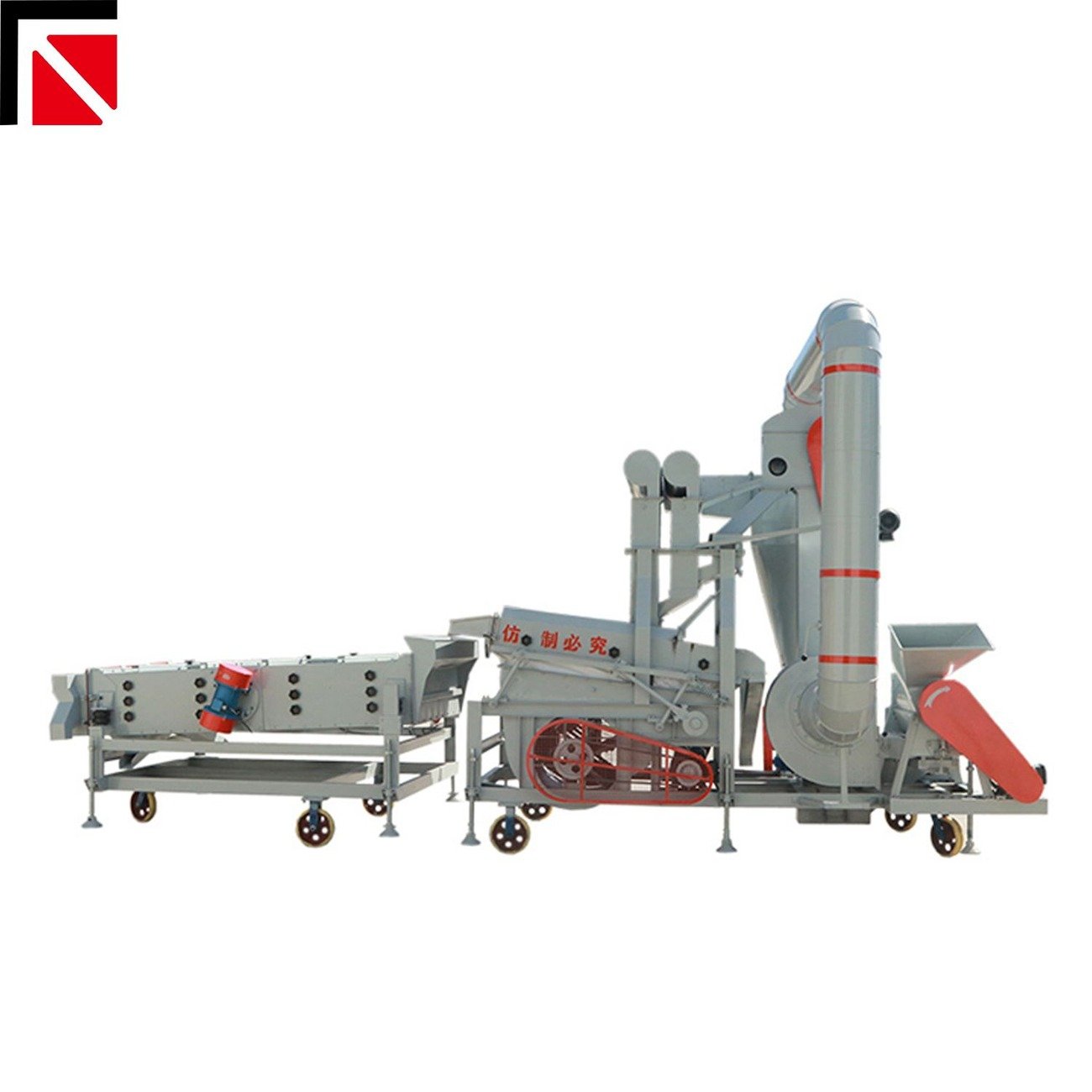
Production line and factory setup overview
A small seasonal line receiving hand-picked Afghan seed cotton, sampling and lot coding it, opening compacted locks, metered feeding, removing stones and heavy matter, separating sticks, burs, leaves and loose dust with gentle air/screen or cylinder cleaning, capturing dust and discharging cleaner seed cotton to short-term storage or a gin. It does not separate lint from seed.
Recommended lowest-entry line configuration For the lowest credible entry, use a covered receiving floor, manual foreign-fibre inspection, slow bale/lock opener, variable feeder, rock catcher, one inclined seed-cotton cleaner with aspiration, cyclone and bag filter, plus a short clean-cotton conveyor. Size it at 1-2 t/h and test it on hand-picked Afghan cotton to limit fibre and seed damage.
Production process and implementation sequence
- Covered lot receiving and sampling
- Manual contamination inspection
- Gentle lock opening
- Metered seed-cotton feeding
- Rock and heavy-matter removal
- Air/screen or cylinder pre-cleaning
- Dust collection and trash separation
- Clean lot storage or controlled gin feed
Products, capacity and market fit
- Afghan seed cotton can retain more value through local primary processing.
- Modular equipment suits district-scale seasonal aggregation.
- Cleaning and moisture control protect later gin performance and lint grade.
- Cottonseed and lint need separate traceable storage and buyers.
- Pre-cleaned seed cotton - Lot-traceable, reduced stones/leaf/dust with verified fibre and seed damage - Cotton gins and producer cooperatives
- Separated field trash - Contained non-product stream with no uncontrolled burning - Approved disposal or evaluated use
Core production machinery and line specifications
| Machine / stage | Function / value | Production note |
|---|---|---|
| Receiving floor and inspection belt | Identifies lots and removes strings/plastic manually | 1-2 t/h entry |
| Slow seed-cotton opener | Loosens compacted locks without harsh fibre action | Cotton-specific pinned design |
| Variable feed controller | Prevents cleaner overload and quality swings | Linked to cleaner load |
| Rock and heavy-matter catcher | Protects downstream machinery | Accessible clean-out |
| Inclined seed-cotton cleaner | Removes leaf, burs and loose field trash | One gentle stage |
| Aspiration ducts and cyclone | Carries and separates light dust | Balanced airflow |
| Bag filter and spark/fire controls | Contains respirable dust and ignition risk | Cotton-dust design |
| Clean-cotton conveyor and lot bins | Feeds gin or stores separated lots | No floor contact |
Raw materials, utilities and factory requirements
- Traceable Afghan seed cotton by variety, farm lot and harvest method
- Bale wrap, wire/strap or bags selected for lint and cottonseed
- Clean replacement screens, filter bags and approved lubricants
- Sampling bags, tags and calibration materials
- Stable electricity matched to motors, controls, lighting and ventilation
- Process and sanitation water of the required quality and pressure
- Safe material storage, fire protection and worker hygiene facilities
- Dust, vapour or wastewater collection sized to the selected process
- Covered raw-material and finished-product storage with traceability
Indicative low-entry investment and implementation plan
These planning ranges prioritize economical machinery, local labor and local civil works. Final pricing follows confirmed capacity, product specification, delivery terms and site conditions.
| Scope | Indicative range | Entry-plan note |
|---|---|---|
| Receiving, opener and controlled feeding | US$6k-15k | 1-2 t/h seasonal scope |
| Rock catcher and cotton cleaner | US$8k-20k | One gentle stage |
| Dust, cyclone and fire controls | US$5k-13k | Mandatory cotton-dust scope |
| Conveyors, bins and sampling tools | US$3k-8k | Semi-manual handling |
| Freight, setup and spares | US$4k-10k | Screens, pins and belts |
| Indicative low-entry total | US$26k-66k | Building, cotton and gin excluded |
Detailed proposal and next step
The proposal contains the complete line flow, machinery scope, raw-material and utility requirements, implementation stages and indicative entry planning. Final configuration follows confirmed products, capacity, site and budget.