
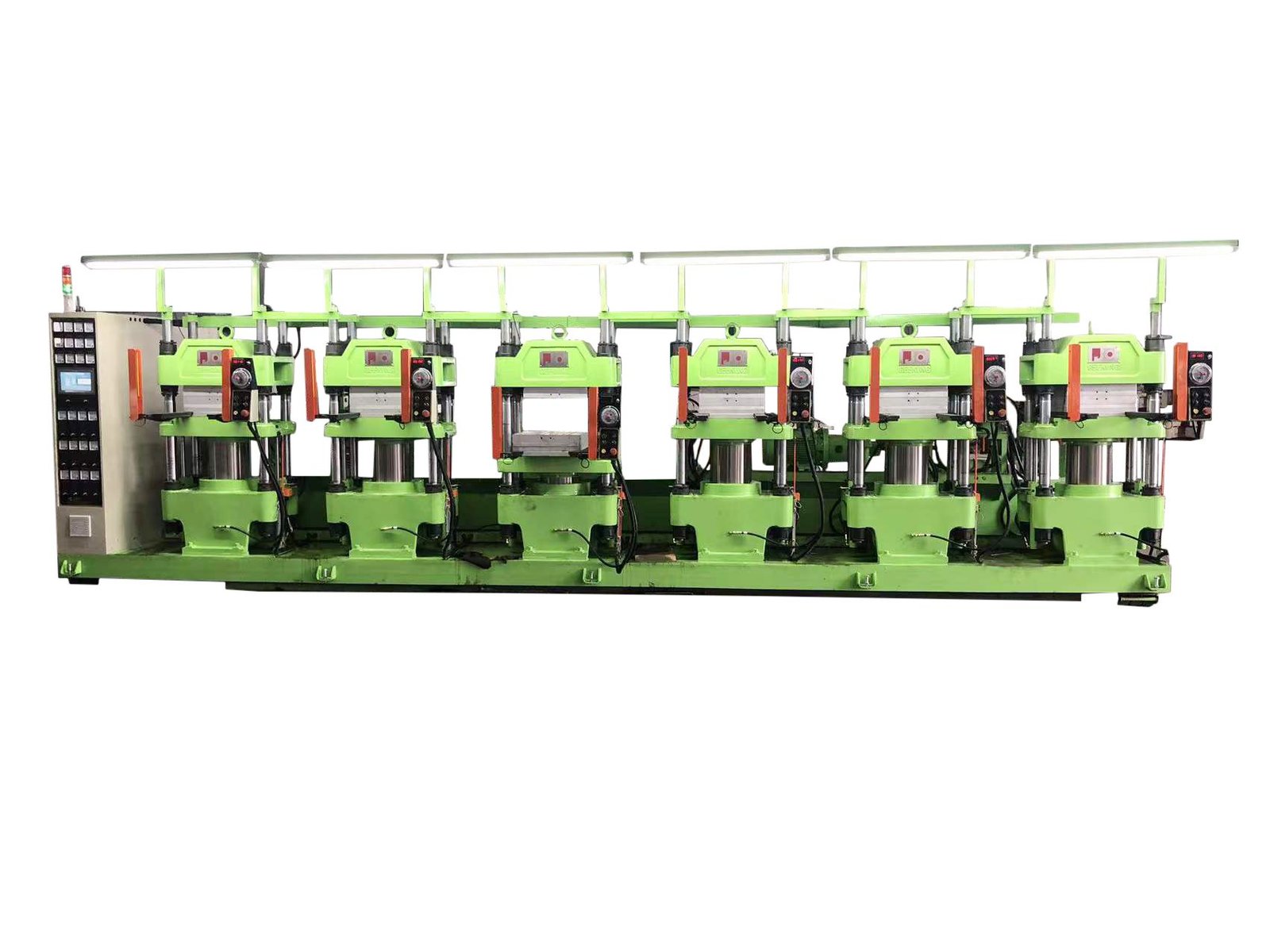
Production line and factory setup overview
A small rubber-compounding and compression-moulding line producing one non-safety footwear outsole family from a qualified recycled-rubber/virgin-rubber blend through crumb and polymer release, recipe weighing, internal or two-roll mixing, sheet-off and batch cooling, preform cutting and weighing, multi-station heated sole compression moulding, controlled vulcanization, demoulding, flash trimming, conditioning and hardness, abrasion, flex, tear, adhesion, slip and ageing tests.
Recommended lowest-entry line configuration Launch one casual-shoe outsole pattern in one size family using a supplier-qualified compound containing a controlled recycled fraction. Contract a small kneader or two-roll mill with dust/fume control, sheet-off/cooling, preform cutter, one six-station heated compression press, aluminium or steel mould set and sole laboratory. Safety footwear, direct-injection soles and unknown tire powder are separate routes.
Production process and implementation sequence
- Compound ingredients release
- Recipe weighing and mixing
- Sheet-off, cooling and maturation
- Preform cutting and weighing
- Heated multi-station compression moulding
- Controlled vulcanization and demould
- Flash trimming and conditioning
- Sole and shoe-assembly tests
Products, capacity and market fit
- Local shoe workshops can buy consistent soles instead of importing every style.
- A controlled recycled fraction can reduce material cost for casual footwear.
- One pattern and size family controls mould capital and compound development.
- Flex cracking, abrasion, slip and upper adhesion determine real footwear performance.
- Recycled-content casual-shoe outsole - Pattern, size family, mass, hardness, density, abrasion, flex, tear, slip, adhesion and ageing - Local casual footwear assemblers
Core production machinery and line specifications
| Machine / stage | Function / value | Production note |
|---|---|---|
| Recipe scales and dust extraction | Controls rubber and chemical dosing | Traceable batch |
| Small kneader or two-roll mill | Disperses recycled and virgin components | One compound |
| Sheet-off/cooling and preform cutter | Creates consistent mould charges | Mass controlled |
| Six-station heated sole press | Moulds and vulcanizes outsoles | One size family |
| Sole mould and trim fixtures | Defines tread and finished edge | Buyer-approved pattern |
| Rubber/footwear laboratory | Tests cure, abrasion, flex, slip and adhesion | Casual-shoe protocol |
Raw materials, utilities and factory requirements
- Qualified recycled-rubber powder or devulcanized compound
- Approved virgin rubber, filler, oil and cure package
- Release media, adhesive/primer for assembly trials
- Cartons, labels and mould consumables
- Stable three-phase electricity with verified connected load
- Guarded machinery, lockout, ventilation and fire protection
- Dry segregated raw-material and finished-goods storage
- Maintenance tools, safe lifting and critical spare parts
- Local exhaust for mixing and curing
- Temperature-controlled compound maturation area
Indicative low-entry investment and implementation plan
These planning ranges prioritize economical machinery, local labor and local civil works. Final pricing follows confirmed capacity, product specification, delivery terms and site conditions.
| Scope | Indicative range | Entry-plan note |
|---|---|---|
| Mixing, sheet-off and preform equipment | US$22k-58k | One controlled compound |
| Six-station press and one mould family | US$28k-75k | Casual outsole |
| Laboratory, fumes and finishing | US$14k-38k | Footwear tests |
| Freight, installation and spares | US$15k-38k | Compound/mould trials |
| Indicative installed low-entry total | US$79k-209k | Building and working stock excluded |
Detailed proposal and next step
The proposal contains the complete line flow, machinery scope, raw-material and utility requirements, implementation stages and indicative entry planning. Final configuration follows confirmed products, capacity, site and budget.