Production line and factory setup overview
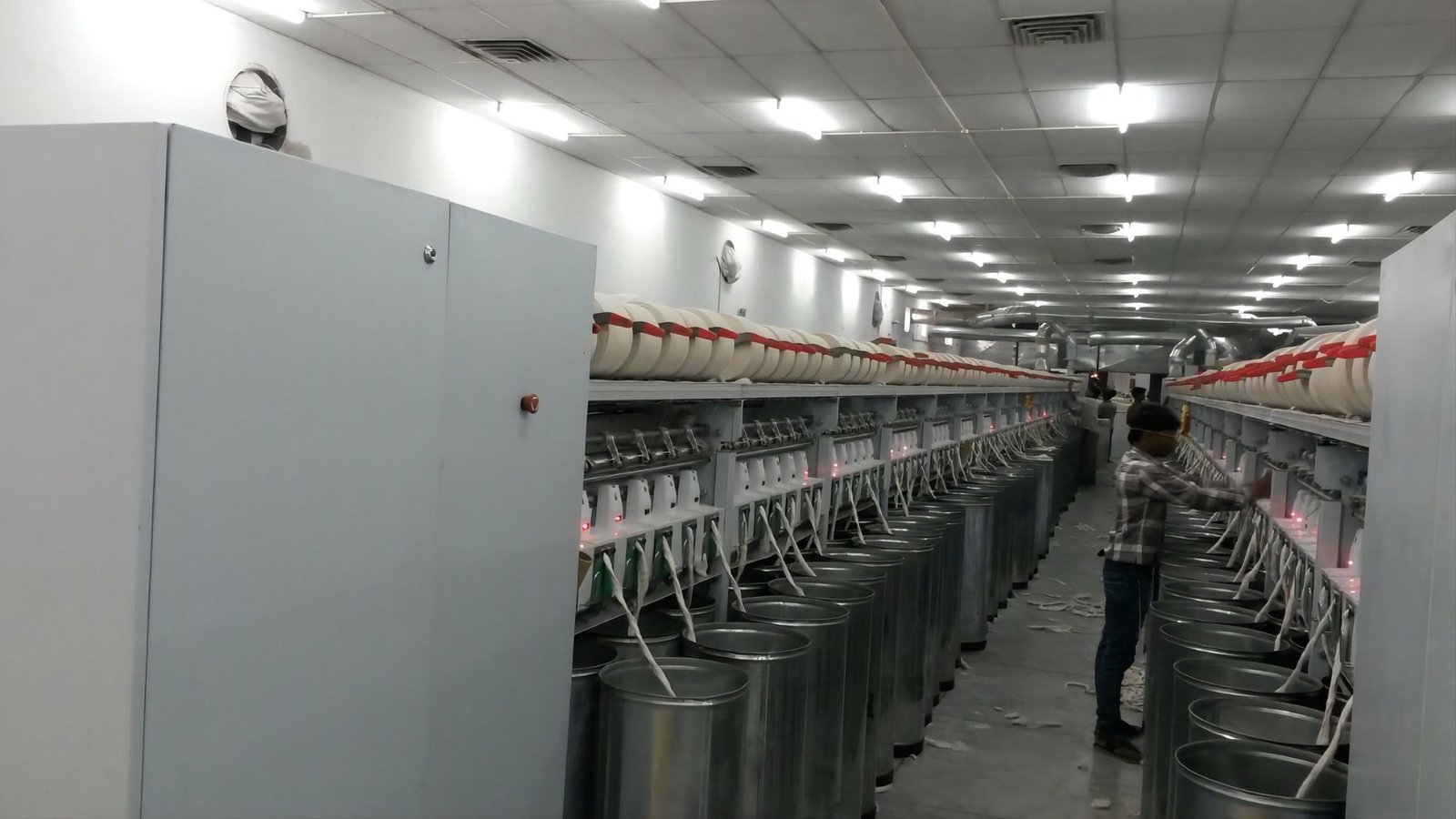
A medium-industrial rotor-spinning mill converting tested recovered cotton fibre, cotton waste and approved blending fibre into low- or medium-count yarn through blend preparation, opening and cleaning, carding, two drawing passages, sliver can transport, rotor spinning, cone inspection, conditioning and packing. It is a complete spinning process, not a single rotor-machine purchase.
Recommended lowest-entry line configuration Before equipment selection, secure one repeat recycled-fibre blend and one buyer-approved yarn count, then run spinning trials. Screen one compact blow-room/blending line, two cards, two drawing passages and one 120-168 rotor machine with waste extraction, humidification, laboratory and transformer sized from the supplier power list. Used inspected cards or draw frames may lower entry risk; the rotor head must have verified service support.
Production process and implementation sequence
- Fibre receiving and laboratory release
- Blend weighing and laydown
- Opening, metal detection and cleaning
- Carding to controlled sliver
- First drawing and levelling
- Second drawing and can preparation
- Rotor spinning and piecing
- Cone inspection, conditioning and packing
Products, capacity and market fit
- Local cotton and textile waste can enter higher-value yarn after controlled recycling.
- Open-end spinning is suitable for selected shorter fibres and lower-count yarns.
- Domestic knitting, weaving and rope buyers can reduce imported-yarn dependence.
- A single validated yarn count keeps launch settings, spares and working capital focused.
- Recycled-cotton open-end yarn - One buyer-approved count, twist, strength, evenness, contamination and package - Knitting, weaving, denim weft, towels or rope after trials
- Recoverable spinning waste - Segregated by stage and contamination - Controlled reprocessing where quality permits
Core production machinery and line specifications
| Machine / stage | Function / value | Production note |
|---|---|---|
| Blend preparation and opening line | Meters, mixes and gently opens fibre lots | One validated recycled blend |
| Metal/spark detection and cleaner | Protects machinery and yarn from contamination | Before fine opening and cards |
| Two carding machines | Cleans, individualises and forms sliver | Matched to recovered-fibre length |
| First drawing frame | Doubles and levels card sliver | Autoleveller preferred after trial |
| Second drawing frame | Prepares consistent rotor-feed sliver | Can size matched to rotor machine |
| 120-168 position rotor spinner | Forms and winds open-end yarn | Verified count, rotor speed and service |
| Waste suction and central filter | Collects fly and segregates process waste | Fire-safe pressure-balanced layout |
| Yarn laboratory and conditioning room | Controls count, twist, strength, evenness and moisture | Buyer test methods |
Raw materials, utilities and factory requirements
- Tested recovered cotton fibre by source, colour, length and trash
- Virgin cotton or approved blending fibre where trials require it
- Yarn cones, bags, cartons, labels and pallet materials
- Card clothing, opening wire, rotors, navels and critical spinning spares
- Stable three-phase electricity matched to the confirmed motor and starting loads
- High-volume dust extraction with fire-safe ducting, collection and housekeeping
- Dry covered raw-material and finished-product storage with lot separation
- Fire detection, suitable extinguishing equipment and controlled ignition sources
- Safe access, guarding, lifting aids and preventive-maintenance workspace
Indicative low-entry investment and implementation plan
These planning ranges prioritize economical machinery, local labor and local civil works. Final pricing follows confirmed capacity, product specification, delivery terms and site conditions.
| Scope | Indicative range | Entry-plan note |
|---|---|---|
| Opening, blending and two cards | US$90k-230k | New economy or inspected mixed scope |
| Two drawing passages and can handling | US$45k-120k | Sliver quality is mandatory |
| 120-168 rotor spinning machine | US$70k-180k | Supplier examples start near US$70k |
| Air, humidity, lab and electrical systems | US$55k-150k | Include transformer and fire controls |
| Freight, installation, training and spares | US$65k-170k | Technical commissioning required |
| Indicative installed project total | US$325k-850k | Building and fibre working capital excluded |
Detailed proposal and next step
The proposal contains the complete line flow, machinery scope, raw-material and utility requirements, implementation stages and indicative entry planning. Final configuration follows confirmed products, capacity, site and budget.