Production line and factory setup overview
A small/medium dry textile line converting released cotton, polyester or blend yarn into tubular or open-width single-jersey knitted fabric through yarn conditioning, creeling, positive feeding, circular weft knitting, online stop monitoring, roll take-down, relaxation, grey-fabric inspection, weighing, coding and packing. Dyeing and finishing are separate unless a compliant wet plant is added.
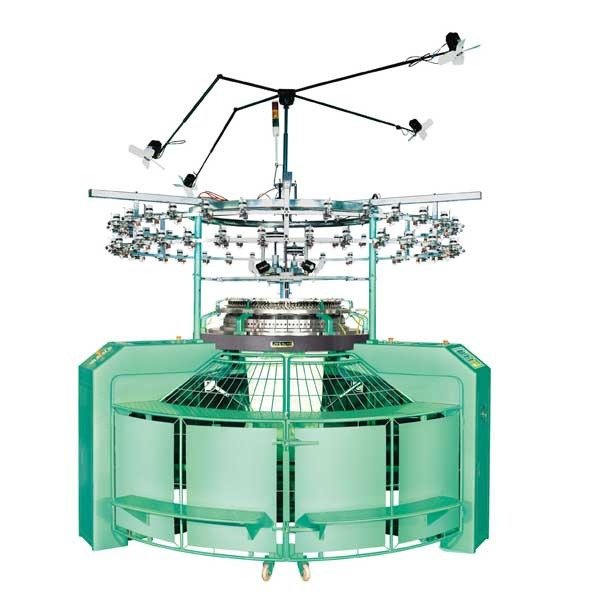
Recommended lowest-entry line configuration Start with one buyer-approved single-jersey construction using one 30-34 inch, 24-28 gauge circular knitting machine with positive feeders, yarn-break and needle detectors, automatic lubrication and roll take-down. Add a fabric inspection machine, compressor, humidity control, spare cylinder/needles and a small GSM/loop-length laboratory. An open-width frame is optional only when its saving justifies the cost.
Production process and implementation sequence
- Yarn receiving and conditioning
- Creel loading and tension setup
- Positive yarn feeding
- Circular weft knitting
- Stop-motion and defect monitoring
- Roll take-down and relaxation
- Grey-fabric inspection and weighing
- Coding, wrapping and dispatch
Products, capacity and market fit
- T-shirt, underwear, sportswear and basic garment producers consume single-jersey fabric.
- A dry knitting unit avoids dyehouse complexity by selling greige fabric or using pre-dyed yarn.
- One diameter, gauge and construction simplify cylinders, needles and buyer approval.
- Capacity can grow by adding identical machines after efficiency and sales are proven.
- Single-jersey greige fabric - One buyer-approved fibre, yarn count, gauge, width, GSM, loop length and defect limit - Dyehouses and T-shirt or underwear makers
- Lycra single jersey expansion - Separate elastane feeder, plating, relaxation and dimensional standard - Sportswear buyers after Phase 1
Core production machinery and line specifications
| Machine / stage | Function / value | Production note |
|---|---|---|
| Yarn creel and positive feeders | Presents yarn at controlled feed rate | Matched to feeder count |
| Single-jersey circular knitting machine | Forms the launch knitted construction | 30-34 inch, 24-28G basis |
| Yarn and needle stop motions | Stops defects before long fabric damage | Every feeder monitored |
| Lubrication and lint-cleaning system | Protects cams, needles and fabric | Automatic controlled oil |
| Roll take-down system | Builds stable tubular or open-width rolls | Tension matched to fabric |
| Fabric inspection machine | Finds and maps knitting defects | Illuminated roll inspection |
| Compressor and humidity system | Supports controls and yarn behavior | Room-specific balance |
| Knitting laboratory and spares | Checks GSM, loop length and construction | Needles, sinkers and cams |
Raw materials, utilities and factory requirements
- Released cotton, polyester or blend knitting yarn by count, twist, strength and lot
- Optional elastane only for a separately approved construction
- Paper tubes, roll wrap, labels and pallets
- Needles, sinkers, cams, lubricants and cleaning consumables
- Stable three-phase electricity with transformer, power-quality and motor-starting study
- Central dust or lint extraction with fire-safe collection and housekeeping
- Controlled temperature and humidity suited to the confirmed fibre, yarn or fabric
- Dry covered raw-material and finished-product storage with lot traceability
- Compressed air, process water, steam and wastewater treatment where the selected process requires them
Indicative low-entry investment and implementation plan
These planning ranges prioritize economical machinery, local labor and local civil works. Final pricing follows confirmed capacity, product specification, delivery terms and site conditions.
| Scope | Indicative range | Entry-plan note |
|---|---|---|
| Single circular knitting machine | US$15k-32k | Economy or supported new model |
| Inspection, compressor and humidity equipment | US$5k-14k | Dry-process essentials |
| Laboratory, spares and handling | US$3k-9k | Needle and fabric controls |
| Freight, electrical and installation | US$5k-16k | Local commissioning support |
| Indicative low-entry total | US$28k-71k | Dyeing, building and yarn excluded |
Detailed proposal and next step
The proposal contains the complete line flow, machinery scope, raw-material and utility requirements, implementation stages and indicative entry planning. Final configuration follows confirmed products, capacity, site and budget.