
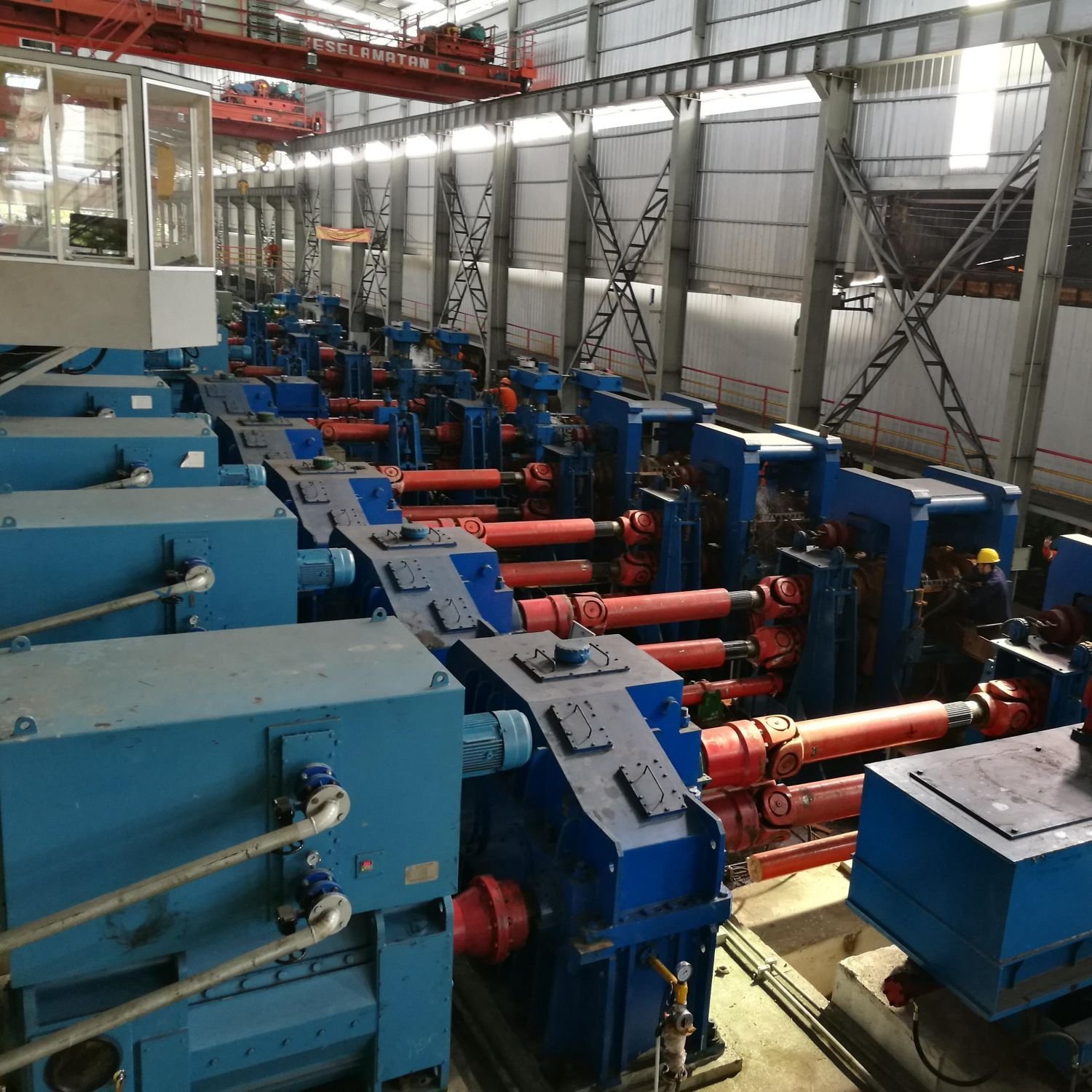
Production line and factory setup overview
A strategic rolling mill converting certified billets into one rebar range through billet inspection, reheating, roughing/intermediate/finishing stands, controlled cooling, shearing, bundling, marking and mechanical-property release. Scrap melting is excluded unless separately engineered as a steelmaking project.
Recommended lowest-entry line configuration Screen a billet-fed 10-25 t/hour mill and a narrow diameter range after validating billet certificates, gas/electricity, water cooling, rolls and guides, NDT/lab equipment, national standards and contracted construction demand.
Production process and implementation sequence
- Billet receipt, certificate review and storage
- Reheating and descaling
- Roughing and intermediate rolling
- Finishing, quench/cooling and rib control
- Flying shear, cooling bed and length cutting
- Bundling, marking and tensile/bend release
Products, capacity and market fit
- Billet rolling can add local value when certified steel feedstock and construction demand are stable.
- Yield, weight tolerance and mechanical properties determine rebar acceptance.
- Hot rolling requires robust utilities, lifting, guarding and safety management.
- Reinforcing steel bars - Diameter, mass per metre, rib geometry, yield strength, tensile strength, elongation and bend performance - Afghan contractors, steel traders and infrastructure projects
Core production machinery and line specifications
| Machine / stage | Function / value | Production note |
|---|---|---|
| Billet yard, furnace and descaler | Prepares certified billets | 10-25 t/hour screen |
| Rolling stands, guides and finishing blocks | Reduces and ribs bar | Narrow diameter range |
| Cooling bed, shears and bundler | Cuts and packs straight bar | Standard trading lengths |
| Mechanical lab and traceability | Releases compliant rebar | Tensile/bend/mass tests |
Raw materials, utilities and factory requirements
- Certified billets with defined chemistry and dimensions
- Rolls, guides, water-treatment chemicals, tags and bundles
- Stable three-phase electricity with verified connected load
- Guarded machinery, lockout, ventilation and fire protection
- Covered segregated raw-material and finished-goods storage
- Maintenance tools, safe lifting and critical spare parts
- Reheating fuel/electricity, cooling-water loop, compressed air and heavy lifting
- Scale collection, hot-zone guarding, fume extraction and fire response
Indicative low-entry investment and implementation plan
These planning ranges prioritize economical machinery, local labor and local civil works. Final pricing follows confirmed capacity, product specification, delivery terms and site conditions.
| Scope | Indicative range | Entry-plan note |
|---|---|---|
| Billet yard, reheating and rolling stands | US$8m-20m | 10-25 t/hour basis |
| Cooling, shear, bundling and laboratory | US$3m-8m | Narrow diameter range |
| Utilities, civil, cranes and installation | US$5m-12m | Hot-rolling infrastructure |
| Indicative strategic project total | US$16m-40m | Land, billet stock and working capital excluded |
Detailed proposal and next step
The proposal contains the complete line flow, machinery scope, raw-material and utility requirements, implementation stages and indicative entry planning. Final configuration follows confirmed products, capacity, site and budget.