Production line and factory setup overview
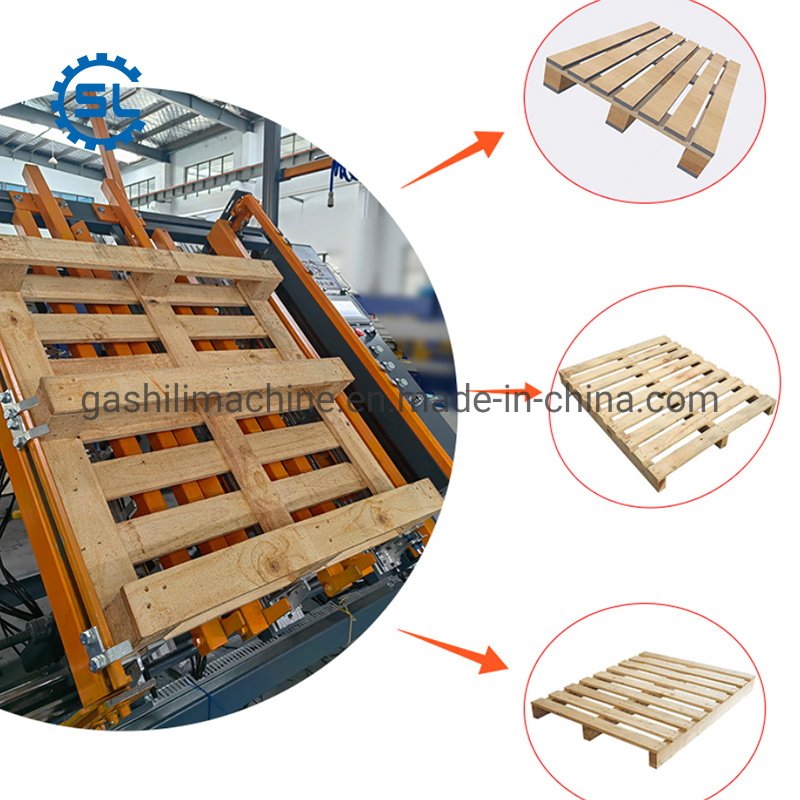
A micro/small pallet workshop converting legally sourced, graded wood into repairable stringer or block pallets through timber receiving and moisture/defect grading, cross-cutting, ripping and thickness preparation where required, block/stringer and deck-board sizing, edge treatment, jig assembly, controlled pneumatic nailing, clinching or nail-depth inspection, optional corner cutting/notching, sanding, marking, stacking and buyer load tests. Export pallets require an approved ISPM 15 heat-treatment and marking route.
Recommended lowest-entry line configuration Start with one buyer-approved domestic pallet using kiln-dried purchased boards or legally sourced local timber processed to one bill of materials. Use guarded cross-cut and rip saws, thickness planer only where needed, block/stringer cut station, one adjustable assembly table with pneumatic nail guns, compressor, nail-depth controls, corner cutter, stacker and load-test fixture. Add automatic nailing or an ISPM 15 kiln only after repeat volume and certification are confirmed.
Production process and implementation sequence
- Timber receiving, legality and moisture grading
- Cross-cutting, ripping and thickness preparation
- Block/stringer and deck-board sizing
- Defect removal, edge and corner preparation
- Jig loading and pneumatic nailing
- Nail depth, protrusion and squareness inspection
- Optional certified heat treatment and marking
- Load test, repairability check, stack and dispatch
Products, capacity and market fit
- Factories, warehouses, food processors and logistics companies need standard handling pallets.
- Local wood and local labour support a low-entry assembly workshop when sourcing is legal and sustainable.
- One pallet drawing and bill of materials reduce cutting waste and nail errors.
- Export use requires recognized heat treatment and traceable marking, not informal heating.
- Domestic stringer or block pallet - One buyer drawing, timber species/grade, moisture, nail schedule, dimensions and load rating - Factories, warehouses, distributors and local logistics
- Export heat-treated pallet - Same structural approval plus authorized ISPM 15 treatment, traceability and mark - Exporters only through a recognized treatment programme
Core production machinery and line specifications
| Machine / stage | Function / value | Production note |
|---|---|---|
| Moisture meters and grading tables | Releases legal, suitable timber | Buyer species/grade limits |
| Guarded cross-cut and rip saws | Cuts boards to bill of materials | Dust extracted |
| Planer and block/stringer station | Controls thickness and support pieces | Only required preparation |
| Adjustable pallet assembly jig | Holds one pallet square during nailing | One launch design |
| Pneumatic nail guns and compressor | Installs specified fasteners | Depth controlled |
| Corner/notch and sanding tools | Finishes handling geometry | Buyer drawing |
| Stacker and load-test fixture | Handles and validates pallets | Static/dynamic test plan |
| Optional certified heat-treatment kiln | Treats export pallets | Authority-approved Phase 2 |
Raw materials, utilities and factory requirements
- Legally sourced local or imported wood by approved species/grade
- Specified pallet nails and repair fasteners
- Approved marking ink or brand only for authorized use
- Straps, labels, spacers and saw/nailer spares
- Three-phase power and high-capacity compressed air
- Covered ventilated timber and finished-pallet areas
- Wood-dust extraction, fire detection and housekeeping
- Safe saw guarding, push systems and ergonomic handling
- Kiln heat and calibrated sensors only if export treatment is installed
Indicative low-entry investment and implementation plan
These planning ranges prioritize economical machinery, local labor and local civil works. Final pricing follows confirmed capacity, product specification, delivery terms and site conditions.
| Scope | Indicative range | Entry-plan note |
|---|---|---|
| Saws, planer, dust and timber handling | US$8k-22k | Purchased dry-board route can be lower |
| Assembly jig, nailers and compressor | US$5k-14k | One pallet design |
| Finishing, stacking and load-test tools | US$3k-9k | Semi-automatic entry |
| Freight, installation and spares | US$4k-11k | Local workshop |
| Indicative installed low-entry total | US$20k-56k | Automatic nailing, kiln, building and timber stock excluded |
Detailed proposal and next step
The proposal contains the complete line flow, machinery scope, raw-material and utility requirements, implementation stages and indicative entry planning. Final configuration follows confirmed products, capacity, site and budget.