
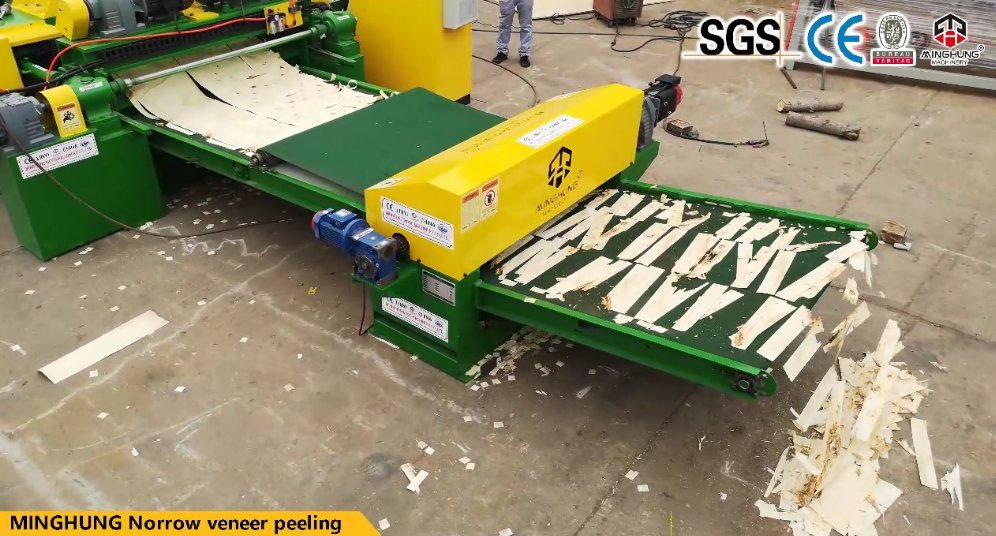
Production line and factory setup overview
A micro/small crate workshop converting legal, dry timber or peeled narrow veneer into ventilated fruit crates and light export boxes through timber receiving and moisture grading, cross-cutting or veneer peeling, slat sizing, edge finishing, component sorting, jig assembly, pneumatic stapling or nailing, squareness and protrusion inspection, optional branding, stacking and buyer load, drop and ventilation trials. Solid-wood export crates require an authorized ISPM 15 treatment and marking route.
Recommended lowest-entry line configuration Launch one buyer-approved ventilated crate for a named fruit and transport route. The lowest-risk unit buys dry sized slats and uses one adjustable assembly jig, pneumatic staplers or nailers, compressor, edge sander, gauges and a simple compression/drop-test fixture. Add a guarded cross-cut/multi-rip cell or a 1-4 mm narrow-veneer peeling line only when stable timber supply and repeat volume justify it; certified heat treatment is a separate controlled phase.
Production process and implementation sequence
- Buyer drawing, fruit and transport-route approval
- Legal timber receiving and moisture/defect grading
- Cross-cutting, ripping or narrow-veneer peeling
- Slat/component sizing and edge finishing
- Kit sorting and jig loading
- Controlled pneumatic stapling or nailing
- Squareness, protrusion, ventilation and cleanliness inspection
- Compression/drop trial, stacking and dispatch
Products, capacity and market fit
- Afghan grapes, pomegranates, apples, apricots and vegetables need ventilated, stackable packs that reduce bruising in road transport.
- One fruit, crate footprint and stack height keep wood, fastener and jig inventory low.
- Local legal timber and labor can support a small assembly workshop near packing houses.
- Export treatment, food-contact cleanliness and transport testing matter more than decorative appearance.
- Ventilated wooden fruit crate - One buyer drawing, fruit load, internal size, vent area, moisture, fastener schedule and stack rating - Orchards, packhouses, wholesalers and cold stores
- Light export crate - Product-specific dimensions, restraint, load and authorized ISPM 15 treatment where applicable - Exporters after route and phytosanitary approval
Core production machinery and line specifications
| Machine / stage | Function / value | Production note |
|---|---|---|
| Moisture meter and grading benches | Releases suitable legal wood and components | Species/defect limits contracted |
| Guarded cross-cut and multi-rip saws | Prepares slats from dry boards | Optional if buying sized slats |
| Narrow-veneer peeling and clipper cell | Produces thin fruit-box veneer from logs | Optional 1-4 mm route |
| Edge sander and component gauges | Removes splinters and controls size | Food-pack finish |
| Adjustable crate assembly jig | Holds one crate square | One launch footprint |
| Pneumatic staplers/nailers and compressor | Installs specified fasteners | Depth and protrusion controlled |
| Compression/drop test fixture | Validates transport and stacking | Buyer test plan |
Raw materials, utilities and factory requirements
- Legally sourced, dry timber slats or validated narrow veneer
- Food-pack-compatible nails or staples to the approved schedule
- Clean spacers, straps, labels and approved branding ink
- Saw blades, nailer seals, jigs and critical pneumatic spares
- Three-phase power where saws/peeler are installed and clean compressed air
- Covered dry timber and finished-crate storage
- Dust extraction, fire protection and guarded cutting
- Clean assembly area separated from wet/treated wood
- Authorized heat-treatment route only for applicable export packaging
Indicative low-entry investment and implementation plan
These planning ranges prioritize economical machinery, local labor and local civil works. Final pricing follows confirmed capacity, product specification, delivery terms and site conditions.
| Scope | Indicative range | Entry-plan note |
|---|---|---|
| Assembly jigs, nailers and compressor | US$5k-13k | Purchased sized-slat route |
| Saws, sanding, gauges and dust control | US$6k-18k | Local board preparation |
| Testing, handling and packing tools | US$2k-7k | One crate design |
| Freight, installation and starter spares | US$3k-9k | Local workshop |
| Indicative installed low-entry total | US$16k-47k | Peeler, kiln, building and timber stock excluded |
Detailed proposal and next step
The proposal contains the complete line flow, machinery scope, raw-material and utility requirements, implementation stages and indicative entry planning. Final configuration follows confirmed products, capacity, site and budget.