Production line and factory setup overview
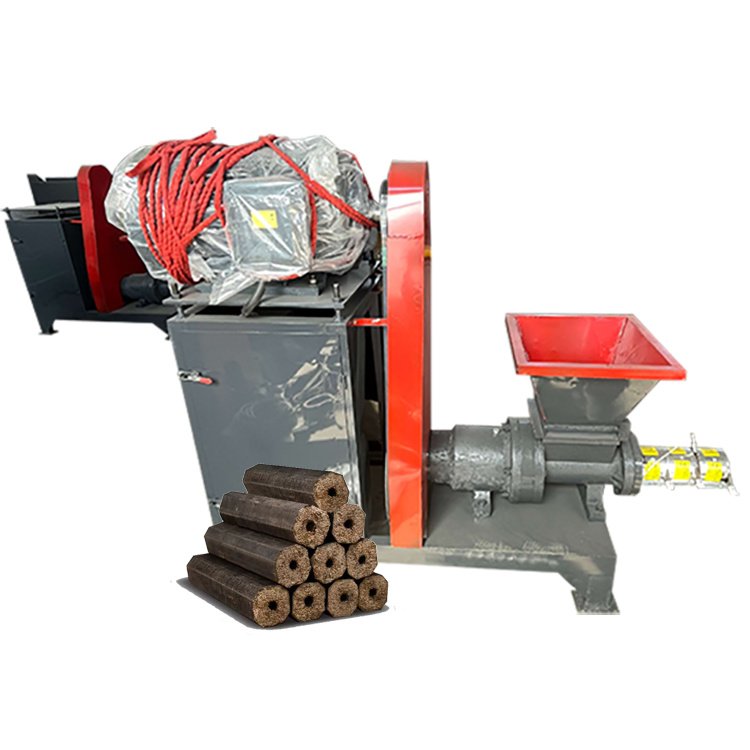
A micro/small biomass-fuel line densifying clean sawdust and qualified crop residues into non-carbonized fuel briquettes through feedstock segregation, metal and stone removal, coarse size reduction, screening, moisture measurement, hot-air drying where required, fine milling, buffer storage, controlled feeding, high-pressure screw or piston briquetting, cooling, cutting, inspection, bagging and dry storage. Charcoal carbonization is a different process and is excluded.
Recommended lowest-entry line configuration Start with one tested sawdust/cotton-stalk blend and one local boiler, bakery or household-fuel buyer. Screen a 300-500 kg/h line with magnetic and stone removal, hammer mill for below 3-5 mm feed, moisture meter, compact hot-air dryer sized to actual evaporation duty, buffer hopper, one supported screw or piston press, cooling rack/conveyor, length cutter and bag scale. Contract 8-12% press-feed moisture and do not include a carbonization furnace unless charcoal is a separately permitted product.
Production process and implementation sequence
- Residue receiving, segregation and recipe coding
- Metal, stone and oversized contamination removal
- Coarse crushing and fine milling
- Moisture test and controlled drying
- Screening, blending and buffer storage
- Metered screw or piston briquetting
- Cooling, length cutting and visual inspection
- Mass, durability, moisture and ash release; bagging
Products, capacity and market fit
- Sawmill dust, pruning residues and cotton or cereal stalks can displace loose fuel when collection and ash quality are controlled.
- Densification reduces storage volume and produces a repeatable boiler or stove fuel.
- One validated blend protects the press and avoids unstable ash, slagging and customer heat output.
- A compact line can start below large pellet-plant investment while preserving local labor and residue value.
- Non-carbonized biomass fuel briquette - One diameter/shape, moisture, density, durability, ash, calorific value and buyer combustion trial - Boilers, bakeries and compatible household or institutional stoves
- Crop-residue blend briquette - Separate recipe with ash-fusion, slagging and emissions approval - Named industrial heat user after trial
Core production machinery and line specifications
| Machine / stage | Function / value | Production note |
|---|---|---|
| Receiving hopper, magnet and stone trap | Protects downstream machines | Residue-specific separation |
| Chipper/hammer mill and screen | Reduces feed to stable press size | Below about 3-5 mm |
| Moisture meter and hot-air dryer | Controls press-feed moisture | 8-12% target |
| Blend bin and metered feeder | Maintains one approved recipe | Bridging prevention |
| Screw or piston briquette press | Densifies biomass without routine binder | 300-500 kg/h basis |
| Cooling conveyor/racks and cutter | Stabilizes hot product and controls length | Fire-safe discharge |
| Bag scale and fuel laboratory | Packs and releases briquettes | Moisture, density, ash, durability |
Raw materials, utilities and factory requirements
- Clean sawdust and only tested cotton stalk, cereal straw, pruning or husk fractions
- Dry starter fuel for the hot-air generator where needed
- Bags, labels, pallets and dry-store protection
- Press screws/dies, bearings, screens and critical dryer spares
- Three-phase power with motor-starting and overload protection
- Controlled hot-air heat source with spark arresting and exhaust stack
- Covered dry raw-material and finished-fuel stores
- Dust collection, bonding/grounding and fire detection/extinguishing
- Safe separation of hot product, dryer and bagging areas
Indicative low-entry investment and implementation plan
These planning ranges prioritize economical machinery, local labor and local civil works. Final pricing follows confirmed capacity, product specification, delivery terms and site conditions.
| Scope | Indicative range | Entry-plan note |
|---|---|---|
| Cleaning, milling, screening and conveying | US$7k-18k | One residue blend |
| Compact dryer and hot-air system | US$8k-22k | Actual evaporation duty |
| One press, cooling, cutter and bag scale | US$9k-24k | 300-500 kg/h basis |
| Dust/fire control, freight, installation and spares | US$6k-17k | Local workshop |
| Indicative installed low-entry total | US$30k-81k | Can be US$22k-49k if dry milled feed is guaranteed; building/stock excluded |
Detailed proposal and next step
The proposal contains the complete line flow, machinery scope, raw-material and utility requirements, implementation stages and indicative entry planning. Final configuration follows confirmed products, capacity, site and budget.