
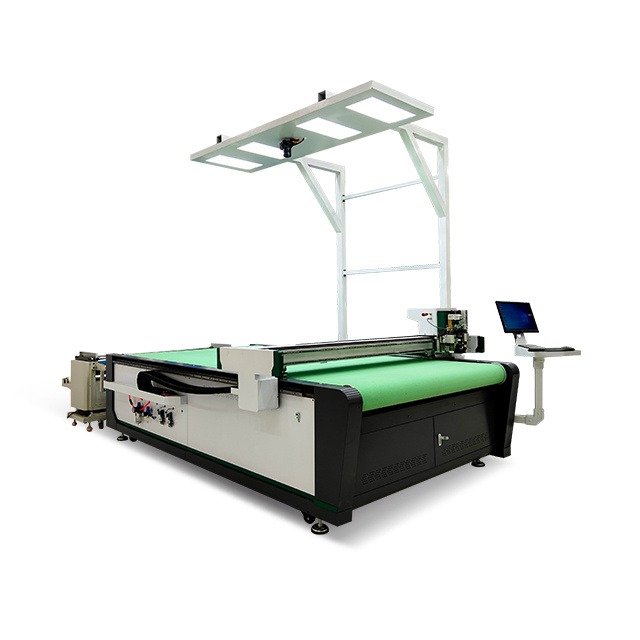
Production line and factory setup overview
A flexible small leather-goods workshop converting purchased finished leather and selected linings/hardware into standardized belts and simple bags first, with later shoes or gloves only through separate patterns, lasts, machines and skills. The common process is design and grading, hide inspection and nesting, clicker or CNC cutting, splitting/skiving, edge preparation, reinforcement, sewing, hardware setting, edge finishing, inspection and packing.
Recommended lowest-entry line configuration For the lowest entry, do not launch four product families together. Start with two belt designs and one unlined bag using manual patterns, a 20-30 ton swing-arm clicker, strap cutter, bell-knife skiver, two cylinder/post-bed sewing machines, edge-paint station, hole punch and rivet/snap press. Add footwear lasting or glove machines only after separate demand and skill trials.
Production process and implementation sequence
- Design, specification and pattern control
- Leather inspection, grading and nesting
- Clicker or knife cutting
- Splitting/skiving and edge preparation
- Reinforcement and component assembly
- Cylinder/post-bed sewing
- Hardware setting and edge finishing
- Inspection, coding and packing
Products, capacity and market fit
- Small leather goods fit skilled workshop production and local labour.
- Belts and simple bags use fewer specialized machines than shoes.
- Afghan motifs and local branding can differentiate finished products.
- Common cutting, skiving and sewing equipment supports later expansion.
- Leather belts - Two widths/designs with controlled length, buckle strength and edge finish - Retail, uniforms and corporate orders
- Simple leather bag - One unlined pattern with tested seam, strap and hardware strength - Retail and gift buyers
Core production machinery and line specifications
| Machine / stage | Function / value | Production note |
|---|---|---|
| Pattern table and hide inspection frame | Controls design and maps defects before cutting | Three launch SKUs |
| Swing-arm clicker press | Cuts repeat parts with steel-rule dies | 20-30 ton entry |
| Strap cutter and splitter | Creates consistent belt widths and substance | Two belt widths |
| Bell-knife skiving machine | Reduces edge bulk for folding and seams | 4-50 mm skive width |
| Cylinder/post-bed sewing machines | Sews shaped leather components | Two machines, selected feed type |
| Edge paint and drying station | Builds smooth protected cut edges | One colour launch |
| Punch and rivet/snap press | Sets holes, buckles and hardware consistently | Guarded dies |
| Finishing and inspection bench | Cleans, measures and releases each product | Master-sample comparison |
Raw materials, utilities and factory requirements
- Released finished leather with thickness, colour and defect grade
- Thread, reinforcement, lining where specified and safe adhesives
- Buckles, rivets, snaps, zips and other tested hardware
- Dust bags, boxes, labels and care instructions
- Stable electricity matched to motors, controls, lighting and ventilation
- Process and sanitation water of the required quality and pressure
- Safe material storage, fire protection and worker hygiene facilities
- Dust, vapour or wastewater collection sized to the selected process
- Covered raw-material and finished-product storage with traceability
Indicative low-entry investment and implementation plan
These planning ranges prioritize economical machinery, local labor and local civil works. Final pricing follows confirmed capacity, product specification, delivery terms and site conditions.
| Scope | Indicative range | Entry-plan note |
|---|---|---|
| Cutting tables, clicker and dies | US$6k-15k | Three launch SKUs |
| Strap cutting, splitting and skiving | US$5k-13k | Belts and simple bags |
| Sewing and hardware setting | US$5k-14k | Two industrial sewing heads |
| Edge finish, tools and quality fixtures | US$3k-8k | One edge colour |
| Freight, training and spares | US$4k-9k | Needles, feet and knives |
| Indicative low-entry total | US$23k-59k | Building, leather stock, shoes/gloves excluded |
Detailed proposal and next step
The proposal contains the complete line flow, machinery scope, raw-material and utility requirements, implementation stages and indicative entry planning. Final configuration follows confirmed products, capacity, site and budget.