
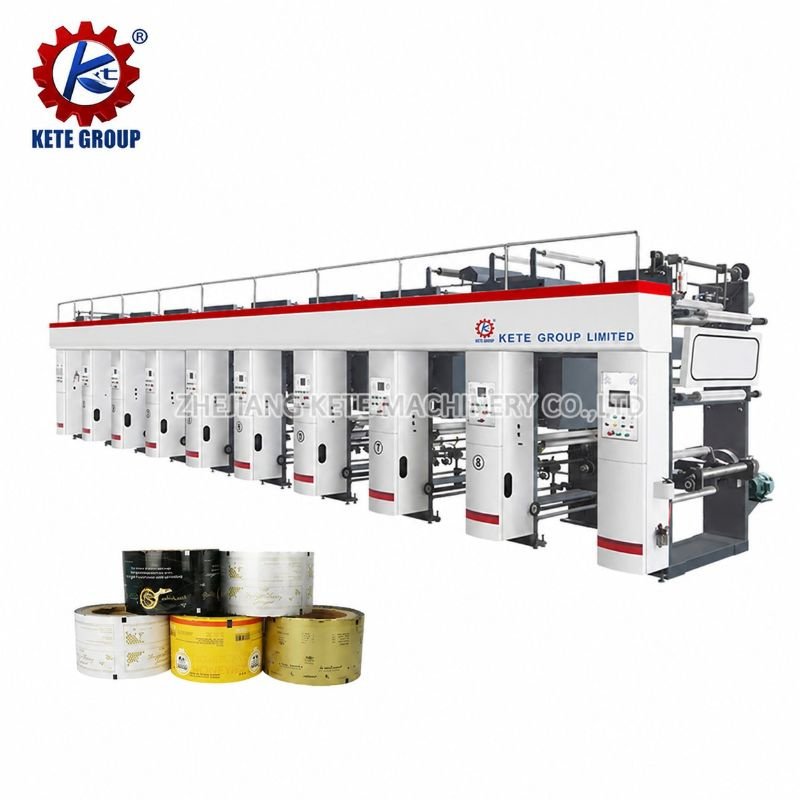
Production line and factory setup overview
A medium industrial flexible-packaging plant converting purchased BOPP, PET, PE, CPP, nylon, metallised film, paper or foil into printed laminated rollstock and selected pouches through film release and conditioning, wide-web gravure or flexographic printing, ink drying and exhaust, print inspection, solventless adhesive metering and two-layer lamination, controlled curing, slitting/rewinding, pouch forming and sealing, inspection and migration/seal testing. Printing, lamination, curing and bag making are separate balanced stages.
Recommended lowest-entry line configuration Do not publish a low headline price for a printer alone. Screen one 6-8 colour 1,000-1,300 mm gravure press with register and web inspection, solvent/LEL-safe exhaust and recovery or compliant destruction route, one solventless two-layer laminator with automatic A/B adhesive mixer, curing room, slitter/rewinder and one center- or three-side-seal pouch machine. Start with one food or dry-product laminate structure and externally made cylinders.
Production process and implementation sequence
- Film/foil receiving and food-contact release
- Unwinding, tension and surface treatment
- Multi-colour reverse or surface printing
- Drying, exhaust and print inspection
- Solventless adhesive mixing and lamination
- Controlled cure and bond development
- Slitting/rewinding and defect removal
- Pouch forming, sealing, testing and packing
Products, capacity and market fit
- Food, spice, snack, detergent and agricultural brands need printed barrier pouches.
- Local conversion can shorten order lead times and print smaller regional runs.
- A complete plant must balance printing, lamination cure, slitting and pouch capacity.
- Food-contact compliance, solvent safety, bond cure and seal integrity are non-negotiable.
- Printed two-layer laminate rollstock - One approved film structure, print, bond, barrier, migration, width and roll build - Form-fill-seal food, spice and detergent packers
- Center- or three-side-seal pouch - One pouch type, dimensions, sealant layer, seal strength, leak and food-contact release - Dry foods, snacks, spices and household products
Core production machinery and line specifications
| Machine / stage | Function / value | Production note |
|---|---|---|
| Six- to eight-colour gravure press | Prints registered wide-web packaging | 1,000-1,300 mm entry |
| Ink kitchen, dryers and safe exhaust | Controls ink and removes solvent vapour | LEL/fire engineered |
| Web inspection and register system | Detects colour and print defects | Camera/strobe review |
| Solventless two-layer laminator | Bonds printed and sealant webs | Automatic A/B mixer |
| Conditioned curing room | Develops adhesive bond safely | Recipe time/temperature |
| Slitter/rewinder | Forms defect-controlled customer rolls | Tension/edge quality |
| Center/three-side pouch machine | Forms one selected pouch family | Heat-seal recipe |
| Packaging laboratory | Tests print, bond, migration and seals | Buyer/food standard |
Raw materials, utilities and factory requirements
- Certified printing and sealant films, paper or foil by approved structure
- Matched inks, solvent and solventless A/B adhesive
- Gravure cylinders or flexo plates and sleeves
- Cores, cartons, wrap, zipper/spout only if specified and critical spares
- High stable three-phase power and compressed air
- Drying heat, chilled water and controlled curing room
- Explosion-safe solvent storage, LEL monitoring and ventilation
- Emission recovery/destruction and hazardous-waste route
- Climate-controlled film, ink, cylinder and finished-goods areas
Indicative low-entry investment and implementation plan
These planning ranges prioritize economical machinery, local labor and local civil works. Final pricing follows confirmed capacity, product specification, delivery terms and site conditions.
| Scope | Indicative range | Entry-plan note |
|---|---|---|
| Six- to eight-colour gravure press and inspection | US$120k-290k | 1,000-1,300 mm basis |
| Solventless laminator, mixer and curing | US$105k-250k | Two-layer entry |
| Slitter, one pouch machine and laboratory | US$90k-220k | One pouch family |
| Exhaust, safety, freight, installation and spares | US$95k-260k | Site-specific solvent scope |
| Indicative installed industrial total | US$410k-1.02m | Building, cylinders and film stock excluded |
Detailed proposal and next step
The proposal contains the complete line flow, machinery scope, raw-material and utility requirements, implementation stages and indicative entry planning. Final configuration follows confirmed products, capacity, site and budget.