
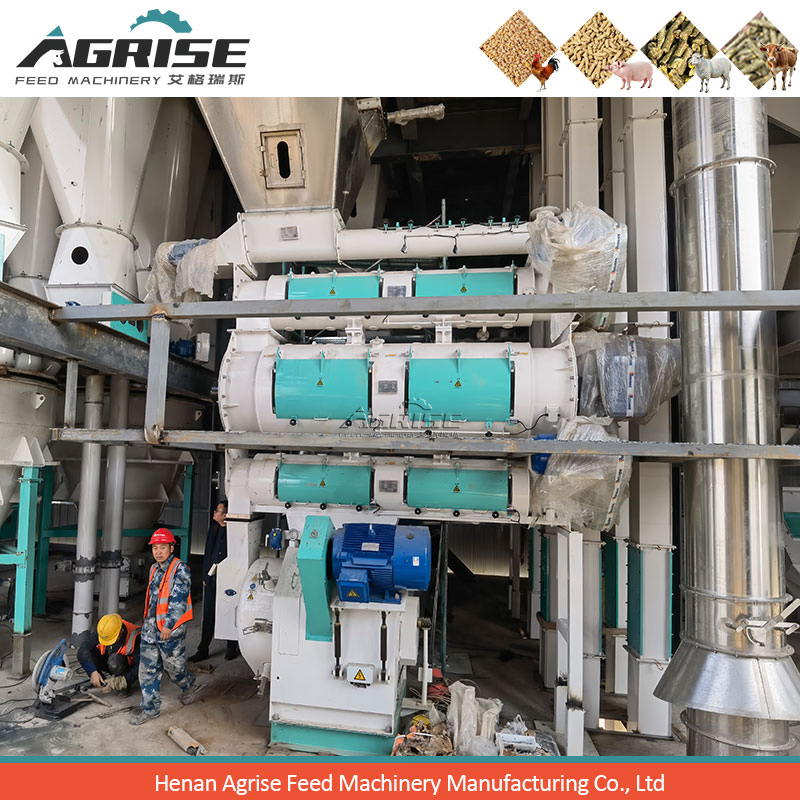
Production line and factory setup overview
A small line for converting flour-mill bran into animal-feed pellets through storage, dosing, mixing, conditioning, pelleting, cooling, screening and bagging.
Recommended lowest-entry line configuration Start at 300-500 kg/h with simple screening or grinding where needed, a mixer, low-pressure conditioner, flat-die feed pellet mill, compact cooler and semi-manual bagging.
Production process and implementation sequence
- Bran receiving and inspection
- Screening and magnet protection
- Ingredient dosing
- Grinding where required
- Batch mixing
- Moisture or steam conditioning
- Pellet pressing
- Cooling, screening and fines return
- Weighing and bag closing
Products, capacity and market fit
- Afghan flour mills produce bran that can be upgraded from a loose by-product into denser feed pellets.
- Pellets reduce dust and simplify storage, transport and controlled feeding.
- A small line can serve dairy, sheep, goat and cattle farms after nutrition trials.
- Local molasses or other approved ingredients may improve durability when the formula allows.
- Cattle feed pellets - Validated bran-based formula and pellet diameter - Dairy and beef farms
- Sheep and goat pellets - Species-appropriate formula and mineral balance - Small-ruminant farms
- Bran feed concentrate - Buyer-approved composition, not a complete ration unless formulated - Feed mixers and livestock cooperatives
Core production machinery and line specifications
| Machine / stage | Function / value | Production note |
|---|---|---|
| Bran receiving hopper | Stores and meters dry bran into production | Covered, dust-tight and cleanable |
| Screen and magnet | Removes oversize material and ferrous contamination | Install before mixer and pellet mill |
| Ingredient scale and micro-addition station | Doses bran, binders and approved supplements | Formula-based manual or small batch weighing |
| Hammer mill | Equalizes coarse ingredients when required | Optional for already fine flour-mill bran |
| Horizontal feed mixer | Produces a uniform feed batch | 300-500 kg practical starter batch |
| Conditioner and liquid addition | Adjusts moisture and binder before pelleting | Low-pressure steam or controlled water/molasses |
| Flat-die pellet mill | Compresses conditioned feed into pellets | 300-500 kg/h entry target; 3-8 mm dies |
| Pellet cooler and screen | Stabilizes pellets and removes fines | Return clean fines to the mixer |
| Scale and bag closer | Packs finished feed for storage and sale | 25-50 kg semi-automatic bags |
Raw materials, utilities and factory requirements
- Dry wheat bran from traceable flour mills
- Approved grain meals, oilseed meals or forage ingredients by formula
- Feed-grade mineral/vitamin premix where specified
- Approved binder or molasses where required
- Feed bags, labels and sewing thread
- Stable three-phase electricity
- Low-pressure steam or controlled water addition if conditioning is used
- Dust collection and ventilation
- Dry ingredient and finished-feed storage
- Feed-safe cleaning, pest-control and fire-protection systems
Indicative low-entry investment and implementation plan
These planning ranges prioritize economical machinery, local labor and local civil works. Final pricing follows confirmed capacity, product specification, delivery terms and site conditions.
| Scope | Indicative range | Entry-plan note |
|---|---|---|
| Screening, dosing and mixing | US$3k-8k | Manual batch dosing for lowest entry |
| Pellet mill and basic conditioner | US$4k-10k | Flat-die 300-500 kg/h target |
| Cooling, screening and bagging | US$3k-8k | Compact cooler and semi-manual bags |
| Electrical, dust control and installation | US$2k-6k | Local supports and connections where safe |
| Freight, clearance, dies and spares | US$3k-7k | Include at least two die sizes and wear parts |
| Indicative low-entry total | US$15k-39k | Building, boiler and ingredient working capital excluded |
Detailed proposal and next step
The proposal contains the complete line flow, machinery scope, raw-material and utility requirements, implementation stages and indicative entry planning. Final configuration follows confirmed products, capacity, site and budget.