Production line and factory setup overview
This proposal presents a dry-process mini cement plant centered on controlled limestone crushing, raw-meal preparation, preheating, rotary-kiln clinker production, cooling, finish grinding and bagging. A 300-500 ton/day configuration provides a practical reference point, while the final design must follow limestone chemistry, fuel availability, environmental permitting and market demand.
Recommended lowest-entry line configuration Phased 100-300 tons/day dry-process mini cement plant using economical Chinese machinery, local civil works and semi-automatic bagging, expandable toward 500 tons/day after market validation.
Production process and implementation sequence
- Crushing
- Raw grinding
- Homogenizing
- Preheating
- Clinker burning
- Cooling
- Finish grinding
- Packing
Products, capacity and market fit
- Cement is a strategic input for housing, roads and public infrastructure.
- Domestic clinker and cement capacity can reduce exposure to cross-border supply disruption.
- Afghanistan has limestone resources that warrant location-specific geological and chemical assessment.
- Bulk and bagged product options serve ready-mix, block, precast and retail channels.
- Ordinary Portland cement - Market grade subject to local standard - General construction
- High-early-strength cement - Adjusted clinker and gypsum recipe - Precast and fast-track works
- Blended cement - Clinker plus approved mineral additions - Cost and durability applications
- Bulk cement - Tanker dispatch - Ready-mix and block factories
Core production machinery and line specifications
| Machine / stage | Function / value | Production note |
|---|---|---|
| Apron feeder and crusher | Receive and reduce limestone | 80-150 t/h reference |
| Preblending stacker | Stabilize quarry variation | Covered stockpile |
| Raw mill | Dry and grind raw meal | 35-40 t/h reference |
| Homogenizing silo | Equalize raw-meal chemistry | Aerated blending |
| Cyclone preheater | Recover kiln exhaust heat | Multi-stage |
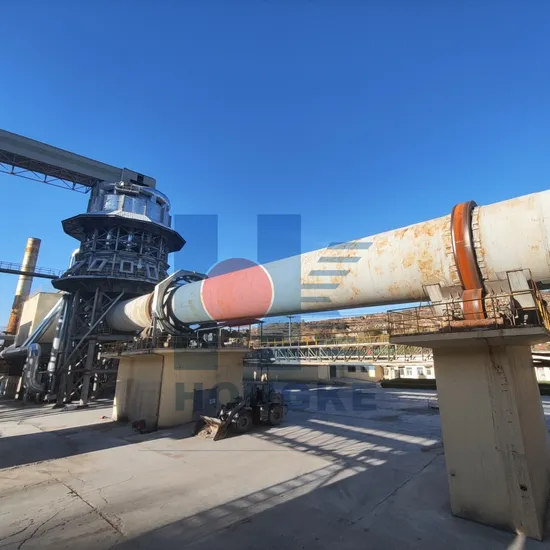
| Rotary kiln | Form cement clinker | 3.0 x 45 m; 160 kW class |
| Clinker cooler | Cool clinker and recover heat | Grate cooler |
| Cement mill | Grind clinker, gypsum and additions | Closed circuit |
| Storage silos | Store cement grades | Aeration and level control |
| Packing and palletizing | Fill and dispatch bags | Rotary packer; 25-50 kg |
Raw materials, utilities and factory requirements
- Chemically suitable limestone
- Clay, shale or laterite corrective feed
- Iron-bearing corrective material where required
- Gypsum for set control
- Approved mineral additions for blended cement
- Coal, gas, oil or alternative fuel after feasibility study
- Stable high-voltage electrical supply and substation
- Kiln fuel receiving, storage and dosing
- Quarry haul roads and heavy vehicle access
- Process laboratory and control room
Indicative low-entry investment and implementation plan
These planning ranges prioritize economical machinery, local labor and local civil works. Final pricing follows confirmed capacity, product specification, delivery terms and site conditions.
| Scope | Indicative range | Entry-plan note |
|---|---|---|
| Entry process equipment | US$1.5m-4m | 100-300 t/day economy configuration |
| Local civil, quarry and utilities | US$0.6m-1.8m | Local labor and simple buildings; land excluded |
| Freight, erection, commissioning | US$0.4m-1.2m | Supplier supervision plus local erection team |
| Laboratory and initial spares | US$0.1m-0.3m | Basic QC laboratory and critical spares |
| Working capital | US$0.3m-0.8m | Fuel, quarry operation, bags and launch inventory |
| Low-entry project total | US$2.9m-8.1m | Phased mini plant; final kiln scope controls cost |
Detailed proposal and next step
The proposal contains the complete line flow, machinery scope, raw-material and utility requirements, implementation stages and indicative entry planning. Final configuration follows confirmed products, capacity, site and budget.