Production line and factory setup overview
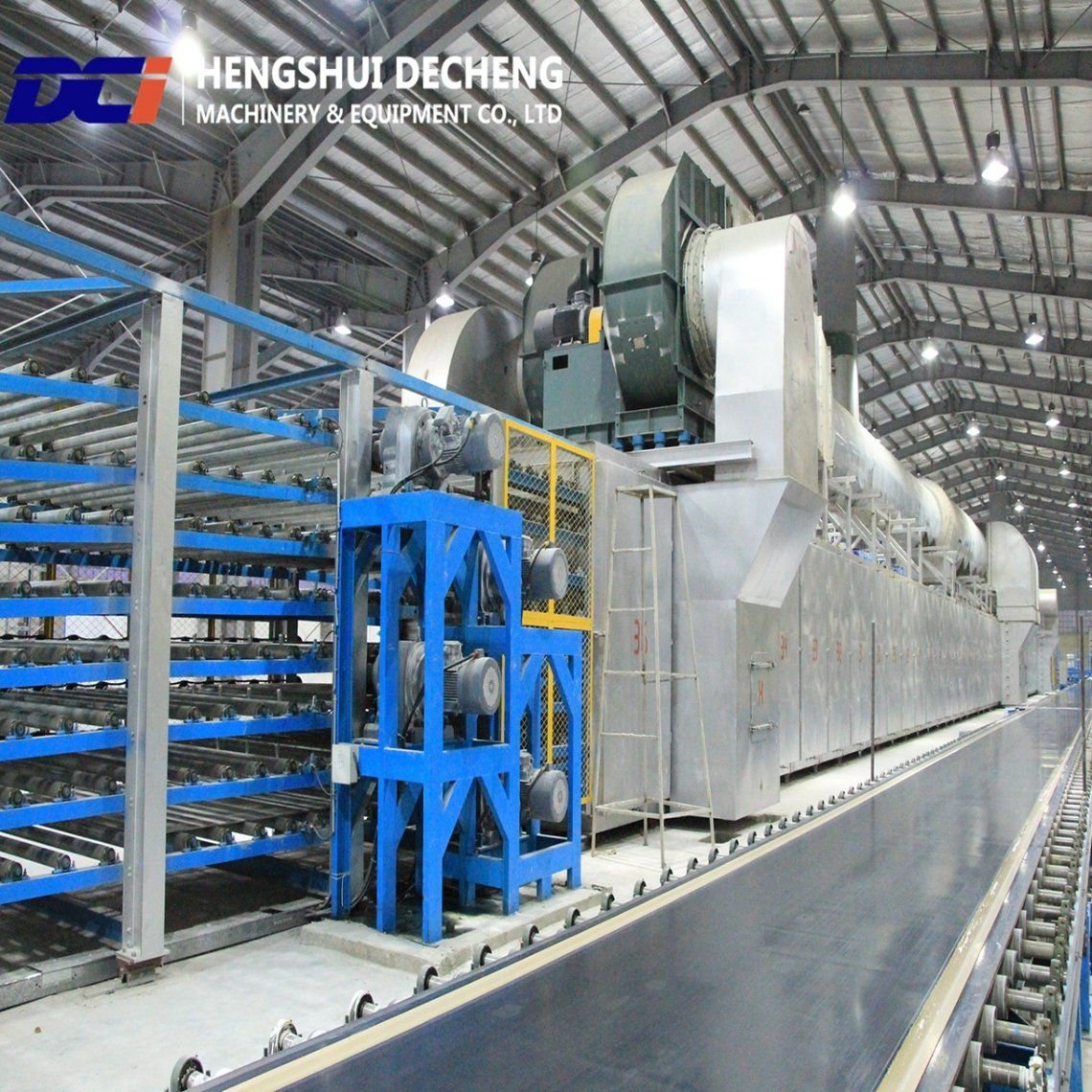
This proposal presents an automated paper-faced gypsum-board plant integrating powder dosing, additive preparation, high-speed mixing, continuous forming between liner papers, initial setting, cutting, multi-deck drying, trimming, inspection and stacking. Capacity can be scaled from approximately 2 to 30 million square meters per year.
Recommended lowest-entry line configuration 2-5 million m2/year entry configuration producing 1,200-1,220 mm wide board, 2,400-3,600 mm long and 8-20 mm thick, with PLC control and multi-zone hot-air dryer.
Production process and implementation sequence
- Powder dosing
- Slurry mixing
- Paper feeding
- Continuous forming
- Cutting
- Drying
- Trimming
- Stacking
Products, capacity and market fit
- Drywall supports faster and lighter interior construction than traditional wet masonry.
- Demand grows with commercial buildings, offices, hotels and modern housing.
- A product family of standard, moisture-resistant and fire-rated boards expands market reach.
- Local gypsum availability can improve competitiveness after purity and consistency testing.
- Standard gypsum board - 8-20 mm thickness - Interior walls and ceilings
- Moisture-resistant board - Hydrophobic additives and liner - Kitchens and humid areas
- Fire-resistant board - Fiber and performance additives - Fire-rated assemblies
- Ceiling board - Lightweight formats - Suspended ceiling systems
Core production machinery and line specifications
| Machine / stage | Function / value | Production note |
|---|---|---|
| Gypsum powder silos | Store and meter stucco | Load cells and screw feeders |
| Additive preparation | Dose starch, foam and modifiers | Recipe controlled |
| Pin mixer | Produce uniform gypsum slurry | Continuous high speed |
| Paper unwind stands | Feed face and back liner | Automatic tension |
| Forming station | Set thickness and bond papers | Servo gap control |
| Setting conveyor | Support initial hydration | Line-speed synchronized |
| Knife cutter | Cut wet board to length | Servo flying cut |
| Multi-deck dryer | Remove free moisture | Multi-zone hot air |
| Trimming and bundling | Finish edges and stack boards | Automatic |
| Dust collection | Control powder emissions | Silos, mixing and finishing |
Raw materials, utilities and factory requirements
- Calcined gypsum stucco of controlled purity
- Face and back liner paper
- Starch and foaming agent
- Set accelerators and retarders
- Glass fiber and fire-performance additives
- Silicone or hydrophobic additives
- Clean process water
- Stable three-phase power and PLC room
- Natural gas, diesel, thermal oil or other approved dryer fuel
- Process water treatment and storage
Indicative low-entry investment and implementation plan
These planning ranges prioritize economical machinery, local labor and local civil works. Final pricing follows confirmed capacity, product specification, delivery terms and site conditions.
| Scope | Indicative range | Entry-plan note |
|---|---|---|
| Entry production equipment | US$0.8m-2.2m | Economy 2-3 million m2/year configuration |
| Local dryer building and utilities | US$0.35m-1m | Local steelwork and civil labor where suitable |
| Freight and commissioning | US$0.2m-0.6m | Supplier supervision with local installation team |
| Laboratory and spares | US$0.06m-0.2m | Basic quality lab and essential drives |
| Working capital | US$0.15m-0.45m | Paper, stucco, additives and launch inventory |
| Low-entry project total | US$1.56m-4.45m | Land excluded; automation can be phased |
Detailed proposal and next step
The proposal contains the complete line flow, machinery scope, raw-material and utility requirements, implementation stages and indicative entry planning. Final configuration follows confirmed products, capacity, site and budget.