
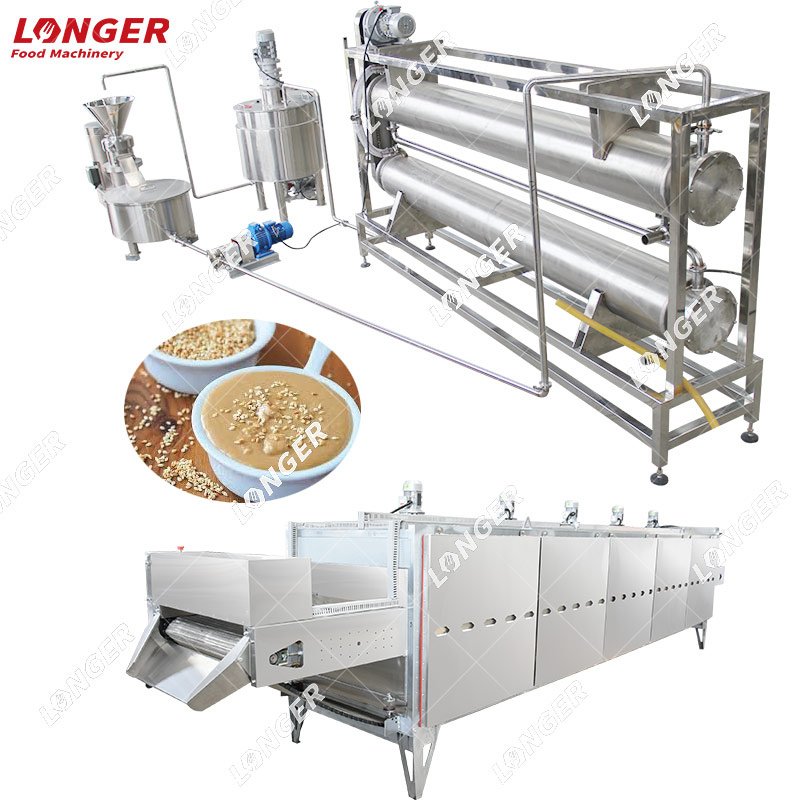
Production line and factory setup overview
A confectionery line that converts released tahini into fibrous tahini halva by preparing a controlled sugar syrup, cooking and aerating the approved foaming extract, temperature-controlled tahini addition, folding or kneading, inclusion dosing, molding, cooling, cutting and packing. It is not the same process as sesame brittle.
Recommended lowest-entry line configuration For the lowest credible entry, buy released tahini, use a 50-100 L jacketed syrup kettle, small aeration/whipping vessel, 50-100 kg/batch halva kneader, manual inclusion dosing, stainless molds, cooling racks and tabletop cutting/sealing. Launch one plain recipe before nut inclusions.
Production process and implementation sequence
- Released tahini and ingredient receiving
- Sugar-syrup weighing and cooking
- Foaming extract preparation and aeration
- Controlled-temperature tahini addition
- Folding or kneading to target fiber
- Optional inclusion dosing
- Molding, cooling and cutting
- Wrapping, sealing, coding and dry storage
Products, capacity and market fit
- Tahini halva is a shelf-stable value-added use for sesame paste.
- A small batch line can start with purchased local tahini.
- Plain product limits allergen and inclusion complexity at launch.
- Later formats can include pistachio or other Afghan nuts after validation.
- Plain tahini halva - Approved tahini/syrup ratio, fibrous texture, controlled moisture and pack weight - Retail, grocery, hospitality and food service
- Nut-inclusion tahini halva - Declared nut type, uniform inclusion and full allergen label - Premium retail and gift buyers after validation
Core production machinery and line specifications
| Machine / stage | Function / value | Production note |
|---|---|---|
| Ingredient scales and sifter | Controls sugar, tahini and minor ingredients | Recorded batch formulation |
| Jacketed syrup kettle | Cooks syrup to validated concentration | 50-100 L entry kettle |
| Aeration/whipping vessel | Prepares approved foaming phase | Food-grade guarded mixer |
| Halva kneader or folding mixer | Creates fibrous tahini-halva structure | 50-100 kg/batch |
| Inclusion dosing table | Adds nuts only to declared recipes | Manual segregated launch |
| Stainless molds and cooling racks | Forms and cools controlled blocks | Local noncritical fabrication |
| Portion cutter | Creates retail or bulk portions | Guarded tabletop entry |
| Wrapper/sealer and coder | Protects and identifies finished halva | Two launch formats |
Raw materials, utilities and factory requirements
- Released tahini with allergen declaration
- Food-grade sugar and approved foaming ingredient
- Optional declared Afghan nuts after validation
- Barrier wraps, trays, labels and cartons
- Stable electricity matched to motors, controls and refrigeration
- Potable process water where product contact or cleaning occurs
- Washable food-grade rooms with drainage and pest control
- Segregated raw-material, packaging and finished-goods storage
- Steam, fuel, chilled water or compressed air only where specified
Indicative low-entry investment and implementation plan
These planning ranges prioritize economical machinery, local labor and local civil works. Final pricing follows confirmed capacity, product specification, delivery terms and site conditions.
| Scope | Indicative range | Entry-plan note |
|---|---|---|
| Syrup and aeration vessels | US$4k-10k | One plain recipe |
| Halva kneader and molds | US$5k-13k | 50-100 kg/batch |
| Cooling, cutting and handling | US$3k-8k | Local racks where safe |
| Sealing and quality tools | US$3k-8k | Two pack sizes |
| Freight, installation and spares | US$4k-9k | Steam or electric heat confirmed |
| Indicative low-entry total | US$19k-48k | Tahini line, building and ingredient stock excluded |
Detailed proposal and next step
The proposal contains the complete line flow, machinery scope, raw-material and utility requirements, implementation stages and indicative entry planning. Final configuration follows confirmed products, capacity, site and budget.