
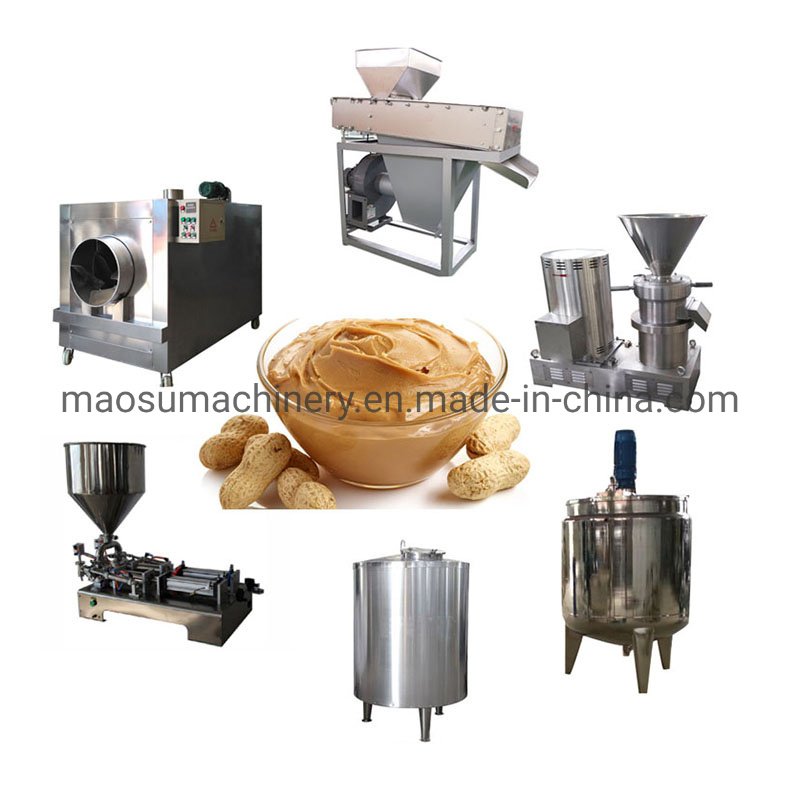
Production line and factory setup overview
A dedicated sesame-paste line for receiving Afghan sesame, cleaning and destoning, optional dehulling, controlled roasting, rapid cooling, inspection, two-stage colloid grinding, mixing or deaeration, hygienic holding and jar filling. Tahini quality depends on seed variety, roast profile, fineness and oil separation stability.
Recommended lowest-entry line configuration For the lowest credible entry, use a 50-100 kg/batch sesame cleaner/destoner, batch roaster and cooling tray, inspection table, two small colloid mills in series, 100-200 L mixing tank and semi-automatic piston filler. Begin with natural tahini from one approved sesame grade.
Production process and implementation sequence
- Sesame receiving, sampling and lot coding
- Air-screen cleaning, magnet and destoning
- Optional washing or dehulling route
- Controlled batch roasting
- Rapid cooling and defect inspection
- Two-stage colloid grinding
- Mixing, deaeration and release checks
- Jar filling, closing, coding and storage
Products, capacity and market fit
- Afghan sesame can be converted into a familiar higher-value paste.
- A compact batch line serves retail jars and food-service pails.
- Roast and grind control differentiate flavor and texture.
- Local tahini can supply bakeries, restaurants and halva makers.
- Natural sesame tahini - 100% sesame, buyer-approved roast, fineness, moisture and separation stability - Retail, restaurants, bakeries and hummus producers
- Food-service tahini - Controlled bulk pack, traceable lot and declared sesame grade - Caterers, confectionery and halva processors
Core production machinery and line specifications
| Machine / stage | Function / value | Production note |
|---|---|---|
| Sesame cleaner, magnet and destoner | Removes dust, metal and stones | 50-100 kg/batch entry |
| Optional dehuller or wash tank | Produces selected natural or hulled style | Only after product decision |
| Batch sesame roaster | Develops flavor under controlled heat | Recorded time and seed temperature |
| Cooling tray or small cooler | Stops roasting and protects aroma | Rapid clean-air cooling |
| Inspection table | Rejects scorched seeds and foreign matter | Manual low-cost quality gate |
| Two colloid mills | Produces smooth paste in two stages | 40-80 kg/h seed-dependent |
| Mixing/deaeration tank | Equalizes batch and limits entrained air | 100-200 L jacketed option |
| Semi-automatic paste filler | Fills jars or food-service tubs | Two launch pack sizes |
Raw materials, utilities and factory requirements
- Released Afghan sesame by variety and lot
- Food-grade jars, lids, liners, labels and cartons
- Approved cleaning and sanitation materials
- No undeclared additives
- Stable electricity matched to motors, controls and refrigeration
- Potable process water where product contact or cleaning occurs
- Washable food-grade rooms with drainage and pest control
- Segregated raw-material, packaging and finished-goods storage
- Steam, fuel, chilled water or compressed air only where specified
Indicative low-entry investment and implementation plan
These planning ranges prioritize economical machinery, local labor and local civil works. Final pricing follows confirmed capacity, product specification, delivery terms and site conditions.
| Scope | Indicative range | Entry-plan note |
|---|---|---|
| Cleaning, destoning and inspection | US$3k-8k | One sesame grade |
| Batch roasting and cooling | US$5k-13k | 50-100 kg/batch |
| Two-stage grinding and tank | US$6k-15k | 40-80 kg/h entry |
| Semi-automatic filling and quality tools | US$3k-8k | Two pack sizes |
| Freight, installation and spares | US$4k-9k | Compact food workshop |
| Indicative low-entry total | US$21k-53k | Building, sesame stock and dehulling module excluded |
Detailed proposal and next step
The proposal contains the complete line flow, machinery scope, raw-material and utility requirements, implementation stages and indicative entry planning. Final configuration follows confirmed products, capacity, site and budget.