
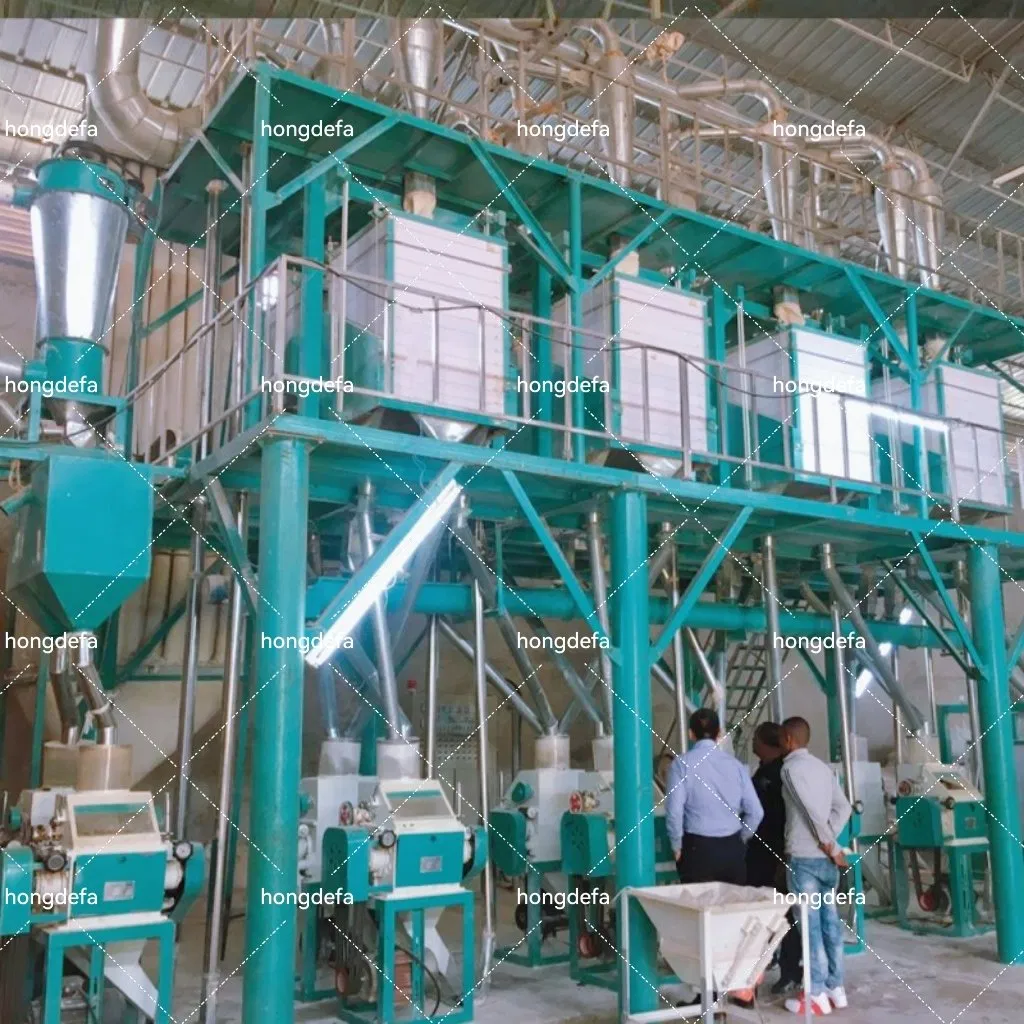
Production line and factory setup overview
A specialist hard-wheat cleaning and milling line for uniform coarse semolina used in pasta, noodles and cereal foods.
Recommended lowest-entry line configuration For the lowest credible entry, select a 10-20 t/day line with cleaning, destoning, controlled dampening, roller milling, planned sifting, a semolina purifier and semi-manual packing.
Production process and implementation sequence
- Hard-wheat intake and grading
- Pre-cleaning, destoning and magnetic protection
- Controlled dampening and tempering
- Progressive roller breaking
- Plansifting by particle size
- Semolina purification by air and sieving
- Optional sizing and blending
- Weighing, bag closing and lot coding
Products, capacity and market fit
- Afghan hard wheat can be upgraded into a higher-value ingredient for pasta, noodles, couscous-style foods and selected confectionery.
- Domestic semolina supply reduces dependence on imported pasta-milling ingredients.
- The same plant can recover lower-grade flour and bran as saleable co-products.
- A compact modular mill can add more roller and purification capacity after stable contracts are secured.
- Coarse semolina - Buyer-approved granulation, color and low bran specks - Pasta, couscous-style foods and retail packs
- Fine semolina - Controlled medium-fine fraction - Noodles, desserts and food-service users
- Secondary flour and bran - Separated and traceable milling co-products - Bakeries and livestock-feed users
Core production machinery and line specifications
| Machine / stage | Function / value | Production note |
|---|---|---|
| Intake cleaner and aspiration | Removes dust, chaff and over/undersize impurities | Screens selected for local wheat |
| Destoner and magnet | Protects rolls and controls dense and ferrous contamination | Accessible adjustment and inspection points |
| Dampening and tempering bins | Conditions bran and endosperm before milling | Sized for wheat hardness and residence time |
| Roller-mill passages | Opens kernels progressively without excessive flouring | Fluted break rolls plus reduction passages |
| Plansifter | Classifies semolina, middlings, flour and bran | Buyer-approved screen plan |
| Semolina purifier | Uses controlled air and sieving to remove bran specks | Essential for premium semolina quality |
| Product bins and blender | Keeps fractions separate and forms approved grades | Food-grade, dust-tight construction |
| Scale and bag closer | Packs semolina and co-products | Semi-manual 1-50 kg starter scope |
Raw materials, utilities and factory requirements
- Afghan hard wheat or durum-type wheat approved by milling trial
- Food-grade retail and wholesale bags
- Labels, sewing thread or heat-seal film
- Approved sanitation and pest-control materials
- Stable three-phase electricity
- Potable water for measured dampening and sanitation
- Dust extraction and safe ventilation
- Dry wheat, tempering and finished-product storage
- Laboratory sieves, moisture meter, ash testing access and calibrated scales
Indicative low-entry investment and implementation plan
These planning ranges prioritize economical machinery, local labor and local civil works. Final pricing follows confirmed capacity, product specification, delivery terms and site conditions.
| Scope | Indicative range | Entry-plan note |
|---|---|---|
| Cleaning, destoning and wheat conditioning | US$8k-18k | Compact section sized for one milling stream |
| Roller milling, plansifting and purification | US$22k-48k | Essential semolina passages, not a single grinder |
| Bins, dust control and semi-manual packing | US$6k-15k | Launch with limited product grades |
| Electrical, installation and initial spares | US$5k-12k | Local noncritical supports where safely engineered |
| Freight and clearance | US$6k-14k | Confirm container count and mill structure |
| Indicative low-entry total | US$47k-107k | Building, wheat stock and laboratory fees excluded |
Detailed proposal and next step
The proposal contains the complete line flow, machinery scope, raw-material and utility requirements, implementation stages and indicative entry planning. Final configuration follows confirmed products, capacity, site and budget.