
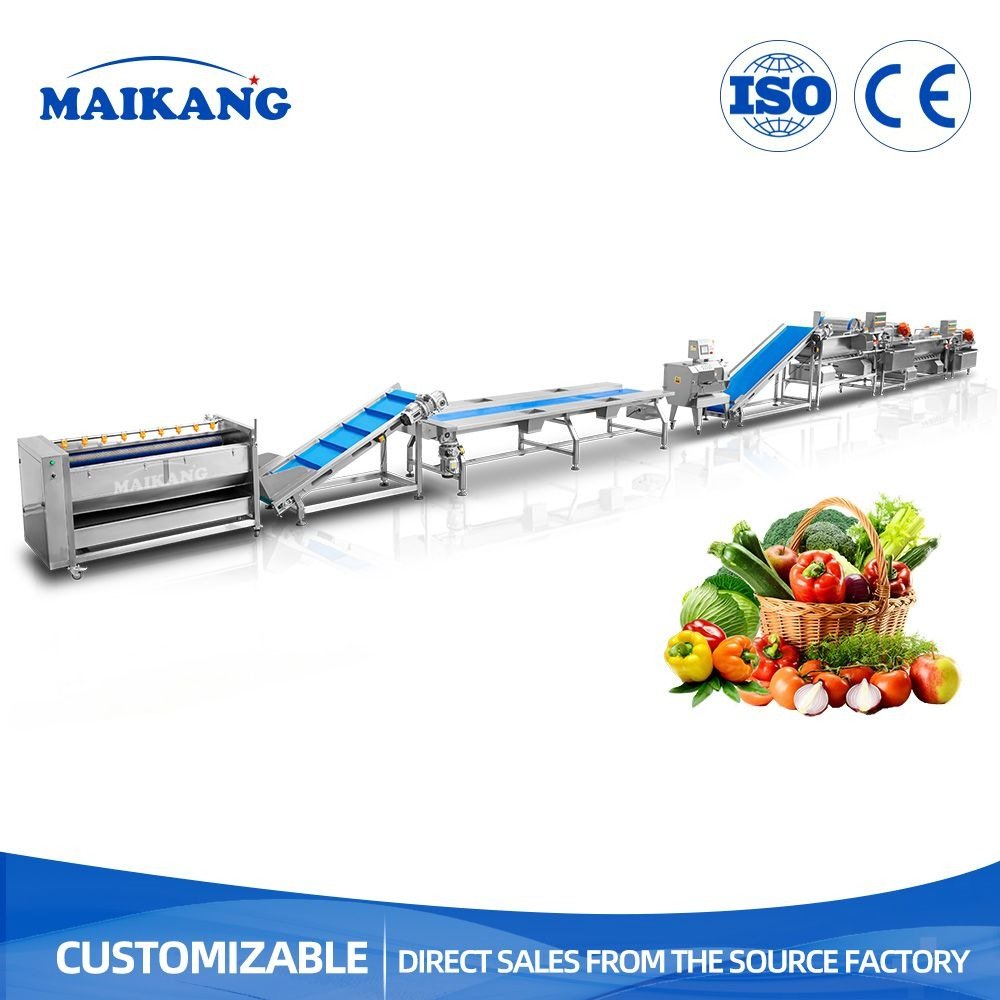
Production line and factory setup overview
This flexible line prepares separate batches of Afghan onion, carrot, cabbage, pepper, leafy herbs and other approved vegetables for dried pieces. Each vegetable needs its own trimming, cut geometry, blanching decision, dryer loading and endpoint; the plant is shared, but processing settings cannot be assumed interchangeable.
Recommended lowest-entry line configuration For the lowest credible entry, select a 300-500 kg/h preparation line with inspection tables, bubble washer, interchangeable cutter, optional blancher, dewaterer, 500 kg/batch heat-pump or short tunnel dryer, grader and semi-automatic packer.
Production process and implementation sequence
- Vegetable-specific receiving and sorting
- Trimming, peeling or stem removal
- Bubble washing and potable rinsing
- Recipe-specific slicing, dicing or shredding
- Optional validated blanching
- Surface-water removal and tray loading
- Controlled drying, cooling and conditioning
- Grading, metal detection and packing
Products, capacity and market fit
- A shared line can process several Afghan vegetable seasons without mixing recipes in one batch.
- Dry pieces reduce post-harvest loss and supply restaurants, spice blenders and instant-food processors.
- Interchangeable cutting tools create flakes, strips or dices for confirmed buyers.
- Batch drying allows product changeover and staged market development.
- Dried vegetable pieces - Vegetable-specific cut, moisture, color and microbiology - Restaurants, wholesalers and food processors
- Mixed dried-vegetable blend - Blended only after separate drying and release - Soup, seasoning and institutional buyers
Core production machinery and line specifications
| Machine / stage | Function / value | Production note |
|---|---|---|
| Inspection and trimming tables | Prepare each vegetable and reject defects | Separate waste and product routes |
| Bubble washer and spray rinse | Removes field soil and loose contamination | Potable final rinse |
| Interchangeable vegetable cutter | Produces slices, strips or dice | 3-15 mm tool sets |
| Optional belt blancher | Applies product-specific pretreatment | Bypass for unblanched recipes |
| Vibratory or centrifugal dewaterer | Removes surface water before drying | Selected for fragile versus firm vegetables |
| Heat-pump or short tunnel dryer | Dries separate vegetable batches | 500 kg/batch entry basis |
| Cooling and conditioning bins | Equalizes moisture before release | Covered food-grade handling |
| Grader, detector and packer | Sizes, checks and packs dry product | Bulk and one retail format |
Raw materials, utilities and factory requirements
- Sound traceable Afghan vegetables by separate lot
- Potable process water
- Only approved blanching aids
- Moisture-barrier pouches and bulk liners
- Labels and cartons
- Stable three-phase electricity
- Potable process water and hygienic drainage
- Food-grade heat source where required
- Ventilated washable processing room
- Clean dry packing and finished-goods storage
Indicative low-entry investment and implementation plan
These planning ranges prioritize economical machinery, local labor and local civil works. Final pricing follows confirmed capacity, product specification, delivery terms and site conditions.
| Scope | Indicative range | Entry-plan note |
|---|---|---|
| Sorting, washing and cutting | US$8k-18k | 300-500 kg/h flexible preparation |
| Optional blanching and dewatering | US$5k-12k | Bypassable module |
| Batch or short tunnel dryer | US$12k-28k | 500 kg/batch entry |
| Grading, detection and packing | US$5k-12k | Bulk plus one retail format |
| Freight, installation and spares | US$5k-12k | Heat source and ducting confirmed |
| Indicative low-entry total | US$35k-82k | Building, vegetables and working capital excluded |
Detailed proposal and next step
The proposal contains the complete line flow, machinery scope, raw-material and utility requirements, implementation stages and indicative entry planning. Final configuration follows confirmed products, capacity, site and budget.