
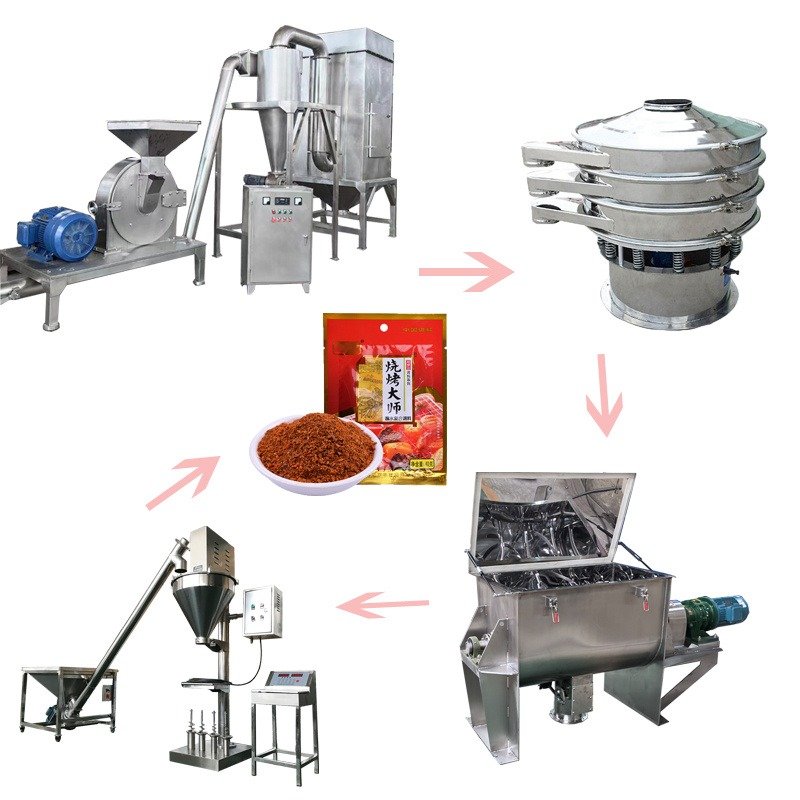
Production line and factory setup overview
A small dry line for cleaning, grading, optional washing, drying, roasting, seasoning, cooling and packing melon and watermelon seeds.
Recommended lowest-entry line configuration For the lowest credible entry, select a 200-300 kg/h cleaner-grader with destoner, 50 kg/batch roaster, seasoning drum, cooler and semi-automatic packing.
Production process and implementation sequence
- Dry seed receiving and sampling
- Aspiration, screening and magnetic protection
- Destoning and size grading
- Optional washing and complete redrying
- Controlled batch roasting
- Seasoning application
- Rapid cooling and inspection
- Weighing, sealing and coding
Products, capacity and market fit
- Melon and watermelon seeds are familiar snack products and can use locally recovered seed.
- Cleaning and size grading improve roast consistency and protect equipment.
- A batch roaster supports several recipes without a large continuous line.
- Small pouches suit shops, transport markets and wholesalers.
- Roasted melon seeds - Buyer-approved size, roast color, salt and moisture - Retail and wholesale snack buyers
- Roasted watermelon seeds - Uniform roast and declared seasoning - Retail, hospitality and regional buyers
Core production machinery and line specifications
| Machine / stage | Function / value | Production note |
|---|---|---|
| Air-screen cleaner | Removes light and oversize impurities | 200-300 kg/h starter |
| Magnet and destoner | Removes metal and stones | Accessible daily verification |
| Size grader | Creates uniform roasting fractions | Interchangeable screens |
| Optional washer and spin dryer | Supports washed or brined recipes | Must fully redry before roasting |
| Batch seed roaster | Develops flavor and microbial reduction | 50 kg/batch with timer and temperature |
| Seasoning drum | Applies salt or flavor uniformly | Controlled recipe dosing |
| Cooling conveyor | Stops roasting and prevents condensation | Filtered ambient air |
| Multihead or semi-auto packer | Packs released seed | One or two pouch sizes |
Raw materials, utilities and factory requirements
- Dry Afghan melon and watermelon seeds
- Food-grade salt and declared seasonings
- Optional approved edible oil
- Barrier pouches, labels and cartons
- Stable three-phase electricity
- Potable process water and hygienic drainage
- Food-grade heat source
- Ventilated washable processing room
- Clean dry packing and finished-goods storage
Indicative low-entry investment and implementation plan
These planning ranges prioritize economical machinery, local labor and local civil works. Final pricing follows confirmed capacity, product specification, delivery terms and site conditions.
| Scope | Indicative range | Entry-plan note |
|---|---|---|
| Cleaning, destoning and grading | US$5k-11k | 200-300 kg/h dry section |
| Batch roasting and cooling | US$6k-14k | 50 kg/batch |
| Seasoning and semi-auto packing | US$4k-9k | Limited launch formats |
| Inspection and quality tools | US$2k-5k | Moisture and process controls |
| Freight, installation and spares | US$3k-8k | Gas or electric heat |
| Indicative low-entry total | US$20k-47k | Building, seed and working capital excluded |
Detailed proposal and next step
The proposal contains the complete line flow, machinery scope, raw-material and utility requirements, implementation stages and indicative entry planning. Final configuration follows confirmed products, capacity, site and budget.