
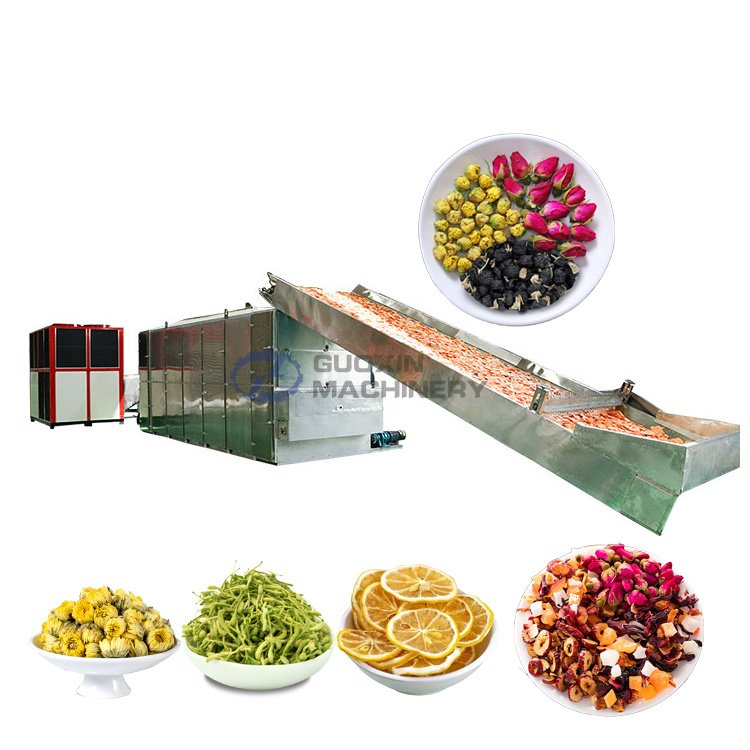
Production line and factory setup overview
A post-harvest line for traceable Afghan leaves, flowers, stems and selected roots, covering inspection, optional washing, draining, controlled low-temperature drying, cooling, gentle separation, size grading and protected bulk packing. Drying recipes must be specific to the botanical part and buyer specification.
Recommended lowest-entry line configuration For the lowest credible entry, use washable sorting tables, optional manual washer, a 100-250 kg/batch heat-pump or indirect-air cabinet dryer, small stem/leaf separator, interchangeable sieve and lined bulk-bag sealer. Begin with two botanicals that share compatible drying conditions.
Production process and implementation sequence
- Coded lot receiving and botanical identification
- Inspection and foreign-material removal
- Optional washing and surface-water removal
- Size reduction only when specified
- Low-temperature controlled drying
- Cooling and moisture equalization
- Stem, leaf and size separation
- Sampling, lined bulk packing and dry storage
Products, capacity and market fit
- Afghanistan has marketable aromatic and medicinal plants that often lose value through poor drying.
- Controlled drying reduces mold, discoloration and volatile-aroma loss.
- Separate botanical lots support traceability and buyer sampling.
- A batch workshop can operate near seasonal collection areas.
- Dried medicinal leaves and flowers - Buyer-approved identity, color, aroma, moisture, microbiology and foreign matter - Herbal tea, extract and ingredient buyers
- Separated dried stems or roots - Declared botanical part and controlled size fraction - Extractors and traditional-product manufacturers where permitted
Core production machinery and line specifications
| Machine / stage | Function / value | Production note |
|---|---|---|
| Receiving and inspection tables | Codes lots and rejects damaged material | Washable food-grade surfaces |
| Optional washer and drain rack | Removes soil where wet cleaning is allowed | Potable final rinse |
| Herb cutter | Produces even drying thickness when required | Guarded low-speed blades |
| Batch cabinet or heat-pump dryer | Controls air temperature and moisture removal | 100-250 kg/batch product-dependent |
| Cooling and equalization bins | Prevents condensation before grading | Covered breathable holding |
| Stem and leaf separator | Gently separates botanical fractions | Speed and gap trialled per herb |
| Vibratory grading sieve | Creates buyer-approved size grades | Interchangeable screens |
| Bulk-bag sealer and scales | Packs and reconciles released lots | Lined moisture-barrier bags |
Raw materials, utilities and factory requirements
- Correctly identified traceable Afghan medicinal plants
- Potable water where washing is approved
- Food-grade lined bags, labels and cartons
- Cleaning, sampling and moisture-test materials
- Stable electricity matched to the selected equipment
- Potable process water where product contact occurs
- Washable food-grade rooms with pest and dust control
- Segregated raw-material, packaging and finished-goods storage
- Compressed air, steam or cooling water only where specified
Indicative low-entry investment and implementation plan
These planning ranges prioritize economical machinery, local labor and local civil works. Final pricing follows confirmed capacity, product specification, delivery terms and site conditions.
| Scope | Indicative range | Entry-plan note |
|---|---|---|
| Sorting, washing and preparation | US$3k-8k | Manual low-cost launch |
| Batch dryer and heat source | US$7k-18k | 100-250 kg/batch |
| Stem separation and grading | US$3k-9k | Two launch botanicals |
| Packing and quality tools | US$2k-6k | Bulk lined bags |
| Freight, installation and spares | US$4k-9k | Dryer ducting confirmed |
| Indicative low-entry total | US$19k-50k | Building, plant stock and laboratory certification excluded |
Detailed proposal and next step
The proposal contains the complete line flow, machinery scope, raw-material and utility requirements, implementation stages and indicative entry planning. Final configuration follows confirmed products, capacity, site and budget.