
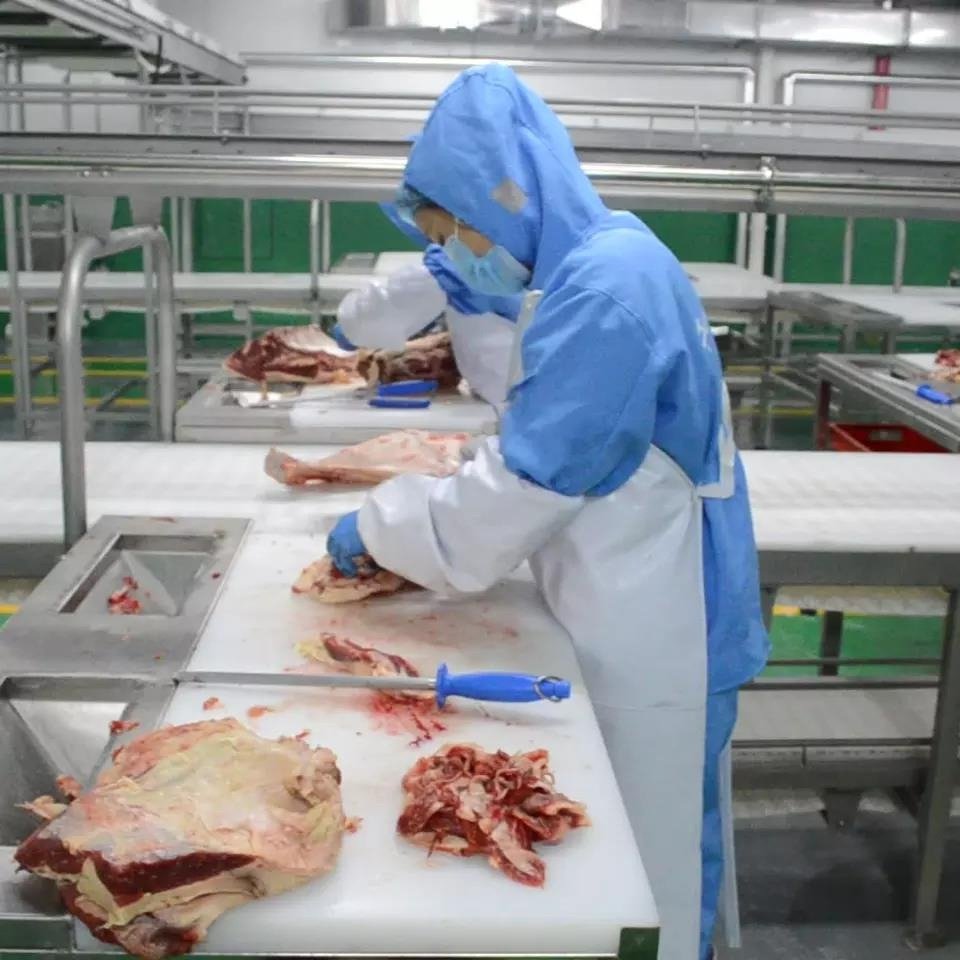
Production line and factory setup overview
A chilled meat-fabrication line for receiving inspected carcasses or primals, temperature-controlled staging, hygienic cutting and deboning, trimming, portioning, optional bone sawing, check-weighing, vacuum bag loading, double-chamber sealing, pack inspection, coding, crate packing and chilled or frozen storage. It processes approved meat and does not replace an abattoir.
Recommended lowest-entry line configuration For the lowest credible entry, use a chilled 300-600 kg/day room with stainless cutting tables, rails/trolleys, one band saw, calibrated scales, knife sterilizers, a double-chamber vacuum packer, coder, crate washer and small cold room. Launch four standardized bone-in or boneless cuts from one species.
Production process and implementation sequence
- Approved chilled carcass or primal receiving
- Temperature check and rail/trolley staging
- Primary cutting and optional bone sawing
- Deboning, trimming and portioning
- Check-weighing and cut identification
- Vacuum-bag loading and chamber sealing
- Seal inspection, coding and case packing
- Chilled/frozen storage and dispatch
Products, capacity and market fit
- Afghan livestock or poultry can support formal hygienic meat markets.
- Rapid chilling protects product quality and extends usable distribution time.
- A phased semi-automatic line uses local labor while controlling critical hygiene steps.
- By-products and wastewater need confirmed legal, safe and economical routes.
- Vacuum-packed meat cuts - Four buyer-defined cuts, weight range, trim standard, seal and cold shelf life - Butchers, groceries, hotels and institutions
- Food-service bulk packs - Traceable cut, controlled pack weight and chilled or frozen specification - Restaurants and caterers
Core production machinery and line specifications
| Machine / stage | Function / value | Production note |
|---|---|---|
| Chilled receiving rail and trolleys | Moves approved meat without floor contact | 300-600 kg/day entry |
| Stainless cutting/deboning tables | Supports ergonomic hygienic fabrication | Four cut specifications |
| Band saw and guarded hand tools | Cuts bone-in products safely | One guarded saw |
| Scales, knife sterilizers and hygiene station | Controls weight and tool/employee sanitation | Calibrated and logged |
| Double-chamber vacuum packer | Evacuates and heat-seals meat bags | Bag and cut trials required |
| Coder and seal-inspection table | Applies traceability and rejects weak packs | Every pack checked |
| Crate washer and clean crate store | Prevents return-crate contamination | Dirty/clean separation |
| Chilled and optional frozen storage | Maintains selected distribution temperature | Maximum daily load basis |
Raw materials, utilities and factory requirements
- Healthy animals or chilled carcasses from approved traceable suppliers
- Potable process water, ice or refrigeration as specified
- Food-contact bags, labels, cartons and clean reusable crates
- Approved cleaners, sanitizers and laboratory consumables
- Stable electricity matched to motors, controls, refrigeration and lighting
- Potable process and sanitation water with adequate pressure
- Washable food-grade rooms, drainage, pest control and hygiene barriers
- Segregated live/dirty, edible-process, packaging and finished-product zones
- Cold rooms, wastewater and by-product systems sized to the confirmed process
Indicative low-entry investment and implementation plan
These planning ranges prioritize economical machinery, local labor and local civil works. Final pricing follows confirmed capacity, product specification, delivery terms and site conditions.
| Scope | Indicative range | Entry-plan note |
|---|---|---|
| Cutting room tables, rails and tools | US$5k-14k | 300-600 kg/day |
| Band saw, scales and hygiene stations | US$4k-11k | Four launch cuts |
| Double-chamber vacuum packaging | US$4k-12k | One bag family |
| Cold room and crate washing | US$7k-18k | Short chilled route |
| Freight, installation and spares | US$4k-10k | Cold-room commissioning |
| Indicative low-entry total | US$24k-65k | Building, meat, vehicle and freezer excluded |
Detailed proposal and next step
The proposal contains the complete line flow, machinery scope, raw-material and utility requirements, implementation stages and indicative entry planning. Final configuration follows confirmed products, capacity, site and budget.