
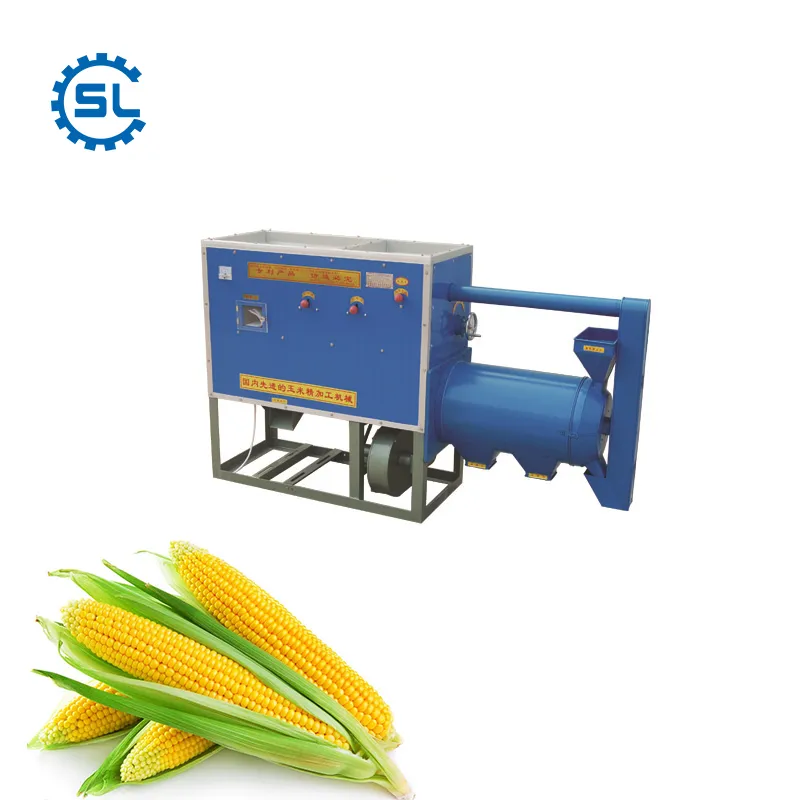
Production line and factory setup overview
A maize dehulling, degerming, crushing, grading and polishing line for fine, medium and coarse grits with flour co-product.
Recommended lowest-entry line configuration Start at 300-500 kg/h with one cleaner, a combined dehulling and grits machine, aspiration, grading screens and semi-manual packing.
300-500 kg/hstarter throughput
2-4launch grit grades
12-25 kWindicative connected load
4-6entry operators
Production process and implementation sequence
- Maize intake and sampling
- Cleaning and magnetic protection
- Moisture adjustment
- Dehulling and degerming
- Controlled crushing
- Aspiration of light bran
- Grit sizing and optional polishing
- Weighing, sealing and lot coding
Products, capacity and market fit
- Local maize can be upgraded into multiple priced food fractions
- Small combined machines reduce initial building and conveying requirements
- Grits can serve household, institutional and snack-processing buyers
- Separated flour, germ and bran create additional saleable streams
- Coarse maize grits - Uniform large fraction with low bran specks - Porridge, food service and further processing
- Medium and fine maize grits - Buyer-defined graded fractions - Retail, snacks and institutional foods
- Maize flour, germ and bran - Separated and traceable co-products - Food, oil and approved feed users
Core production machinery and line specifications
| Machine / stage | Function / value | Production note |
|---|---|---|
| Air-screen maize cleaner | Removes dust, stones and foreign material | Screens selected for local maize |
| Magnet and moisture-control station | Protects equipment and prepares kernels for dehulling | Measured water addition only when trial requires |
| Combined dehuller and degerminator | Removes bran and germ with controlled endosperm loss | Adjustable pressure and aspiration |
| Grits crusher | Breaks clean endosperm into controlled particles | 300-500 kg/h entry reference |
| Air separator | Removes loose bran and light fractions | Dust-tight ducting and adjustable air |
| Grit grader and polisher | Separates saleable sizes and improves appearance | Interchangeable screens for launch grades |
| Product bins and scales | Keeps grades and co-products separate | Food-grade identified bins |
| Bag sealer or closer | Packs each grit grade | Semi-manual 1-25 kg launch range |
Raw materials, utilities and factory requirements
- Dry food-grade Afghan maize
- Retail and wholesale food-grade bags
- Labels and coding consumables
- Approved sanitation materials
- Stable three-phase electricity
- Dust collection and ventilation
- Potable water for controlled conditioning and sanitation
- Dry segregated storage for maize and product grades
- Calibrated scales, moisture meter and laboratory sieves
Indicative low-entry investment and implementation plan
These planning ranges prioritize economical machinery, local labor and local civil works. Final pricing follows confirmed capacity, product specification, delivery terms and site conditions.
| Scope | Indicative range | Entry-plan note |
|---|---|---|
| Cleaning and maize preparation | US$3k-7k | Simple cleaner, magnet and conditioning |
| Combined dehulling and grits machine | US$3k-8k | Compact 300-500 kg/h unit |
| Aspiration, grading and semi-manual packing | US$3k-8k | Two to four launch grades |
| Electrical, dust control and initial spares | US$2k-5k | Include screens and high-wear parts |
| Freight and clearance | US$2k-6k | Consolidated shipment where practical |
| Indicative low-entry total | US$13k-34k | Building, maize stock and optional color sorter excluded |
Detailed proposal and next step
The proposal contains the complete line flow, machinery scope, raw-material and utility requirements, implementation stages and indicative entry planning. Final configuration follows confirmed products, capacity, site and budget.