
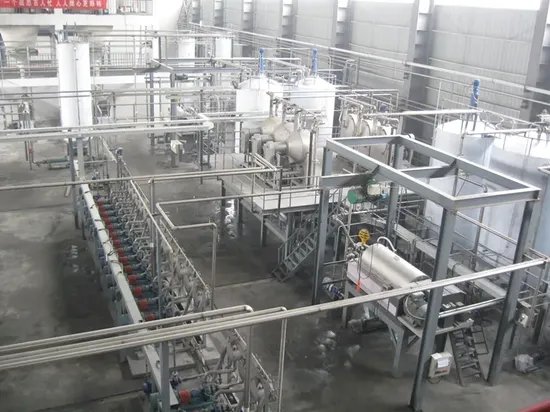
Production line and factory setup overview
A seasonal industrial factory converting qualified fresh Afghan potatoes into native potato starch through receiving and storage control, dry soil removal, washing and destoning, inspection, rasping, fibre separation, starch extraction, multi-stage hydrocyclone refining, dewatering, flash drying, cooling, screening, bagging and laboratory release. It is not potato flakes or instant mashed potato; those require separate cooking and drying equipment.
Recommended lowest-entry line configuration Screen a 30-60 t/h fresh-potato campaign only after confirming seasonal tonnage, agronomy, starch content, collection distance, water source, residue route and starch buyers. Include covered receiving, washer/destoner, rasping, extraction screens, hydrocyclones, dewatering, flash dryer, dust control, bagging, laboratory and full wash-water/residue management. Schedule operating days from real harvest availability rather than nameplate capacity.
Production process and implementation sequence
- Potato receipt, sampling and storage control
- Dry soil removal, washing and destoning
- Inspection and controlled rasping
- Fibre separation and starch extraction
- Hydrocyclone refining and washing
- Dewatering and flash drying
- Cooling, screening and bagging
- Laboratory release, residue and water management
Products, capacity and market fit
- Afghan potatoes can gain value when seasonality and starch content are managed.
- A starch factory needs large, clean water and a defined potato-pulp route.
- Fresh potato quality and transport time directly affect extraction and food safety.
- Native starch is a distinct product from flakes, powder and modified starch.
- Native food or industrial potato starch - Moisture, purity, protein, ash, whiteness, viscosity, granulation, microbiology, foreign matter and bag mass - Qualified Afghan food, textile, paper, adhesive or starch-derivative buyers
Core production machinery and line specifications
| Machine / stage | Function / value | Production note |
|---|---|---|
| Receiving, washer, destoner and inspection line | Prepares fresh potatoes without stones and damaged material | 30-60 t/h campaign screen |
| Rasper, fibre screens and extraction section | Releases starch slurry from tested potatoes | Local-potato recovery trial |
| Hydrocyclone refining and dewatering system | Washes and concentrates native starch | Purity and water target |
| Flash dryer, cooler, sifter and bagger | Produces stable dry starch | One bag family |
| Laboratory, pulp route and wastewater plant | Releases product and manages seasonal residues | Mandatory environmental scope |
Raw materials, utilities and factory requirements
- Fresh potatoes with agreed variety, starch content, damage and storage limits
- Food-grade packaging sacks, labels, filter media and cleaning materials
- Stable three-phase electricity with verified connected load
- Guarded machinery, lockout, ventilation and fire protection
- Covered segregated raw-material and finished-goods storage
- Maintenance tools, safe lifting and critical spare parts
- Large reliable water source, water recycling and wash-water treatment
- Steam or approved thermal source for flash drying and dust-safe powder handling
- Covered potato yard, pulp/peel collection and approved feed, biogas or compost route
Indicative low-entry investment and implementation plan
These planning ranges prioritize economical machinery, local labor and local civil works. Final pricing follows confirmed capacity, product specification, delivery terms and site conditions.
| Scope | Indicative range | Entry-plan note |
|---|---|---|
| Receiving, washing, rasping and extraction | US$1.5m-4m | 30-60 t/h campaign basis |
| Refining, dewatering, drying and bagging | US$1.8m-5m | Native starch only |
| Water, residue, dust, laboratory and utilities | US$1.2m-3.5m | Seasonal plant controls |
| Civil, installation, freight and commissioning | US$1.5m-4.5m | Local-potato trials |
| Indicative strategic project total | US$6m-17m | Land and potato stock excluded |
Detailed proposal and next step
The proposal contains the complete line flow, machinery scope, raw-material and utility requirements, implementation stages and indicative entry planning. Final configuration follows confirmed products, capacity, site and budget.