
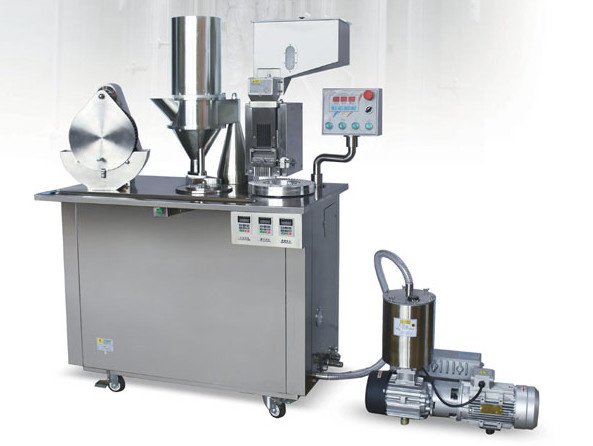
Production line and factory setup overview
A controlled dry-processing line for released, correctly identified dried herbs: final cleaning, low-heat grinding, sieving, recipe blending, powder testing, semi-automatic hard-capsule filling, polishing, metal detection and count packing. It is suitable only where the ingredients and claims follow applicable food or medicine rules.
Recommended lowest-entry line configuration For the lowest credible entry, use a 20-50 kg/h dust-contained grinder, sieve, 25-50 kg ribbon blender, semi-automatic hard-capsule filler for one capsule size, capsule polisher and manual counting/bottling. Begin with one legally reviewed, laboratory-tested formulation.
Production process and implementation sequence
- Released dried-herb receiving
- Final cleaning and magnetic protection
- Low-heat grinding with dust capture
- Sieving and controlled rework
- Recorded recipe weighing and blending
- Blend sampling and laboratory release
- Capsule separation, filling and closing
- Polishing, metal check, counting and bottle packing
Products, capacity and market fit
- Dried Afghan botanicals can enter standardized powder formats after legal and laboratory review.
- Capsules provide controlled presentation but require disciplined formulation and release testing.
- One semi-automatic machine can serve several later products after validated cleaning.
- Local processing can retain more value than selling unsorted dry herbs.
- Single-herb powder capsules - Declared identity, capsule size, fill weight, moisture and microbiology - Licensed wellness or medicine channels as legally permitted
- Standardized herbal blend capsules - Approved formula, blend uniformity, contaminant testing and controlled claim - Licensed private-label and institutional buyers
Core production machinery and line specifications
| Machine / stage | Function / value | Production note |
|---|---|---|
| Final cleaner and magnet | Protects the mill and product from foreign matter | Released dried botanical feed |
| Dust-contained grinder | Produces controlled herbal powder | 20-50 kg/h product-dependent |
| Vibratory sieve | Controls particle size and returns oversize | One validated launch mesh |
| Ribbon blender | Produces uniform released formulation | 25-50 kg/batch |
| Powder sampling station | Supports blend and laboratory release | Traceable thief sampler |
| Semi-automatic capsule filler | Separates, fills and closes hard capsules | One launch size; supplier 10k-25k/h |
| Capsule polisher and metal detector | Removes surface powder and checks metal risk | Validated test pieces |
| Counter and bottle-closing station | Counts, closes, codes and labels packs | Manual or semi-automatic entry |
Raw materials, utilities and factory requirements
- Released dried botanicals with identity and contaminant records
- Legally suitable empty hard capsules
- Approved formulation ingredients only
- Food/pharma-compatible bottles, closures, labels and desiccants
- Stable electricity matched to the selected equipment
- Potable process water where product contact occurs
- Washable food-grade rooms with pest and dust control
- Segregated raw-material, packaging and finished-goods storage
- Compressed air, steam or cooling water only where specified
Indicative low-entry investment and implementation plan
These planning ranges prioritize economical machinery, local labor and local civil works. Final pricing follows confirmed capacity, product specification, delivery terms and site conditions.
| Scope | Indicative range | Entry-plan note |
|---|---|---|
| Cleaning, grinding and dust collection | US$5k-13k | 20-50 kg/h entry |
| Sieving and small blender | US$4k-10k | One launch formulation |
| Semi-automatic capsule filler | US$5k-14k | One capsule size/tool set |
| Polishing, counting and quality tools | US$4k-10k | Semi-manual bottling |
| Freight, installation and spares | US$5k-11k | Vacuum and air supply confirmed |
| Indicative low-entry total | US$23k-58k | Building, laboratory, registration and herb stock excluded |
Detailed proposal and next step
The proposal contains the complete line flow, machinery scope, raw-material and utility requirements, implementation stages and indicative entry planning. Final configuration follows confirmed products, capacity, site and budget.