
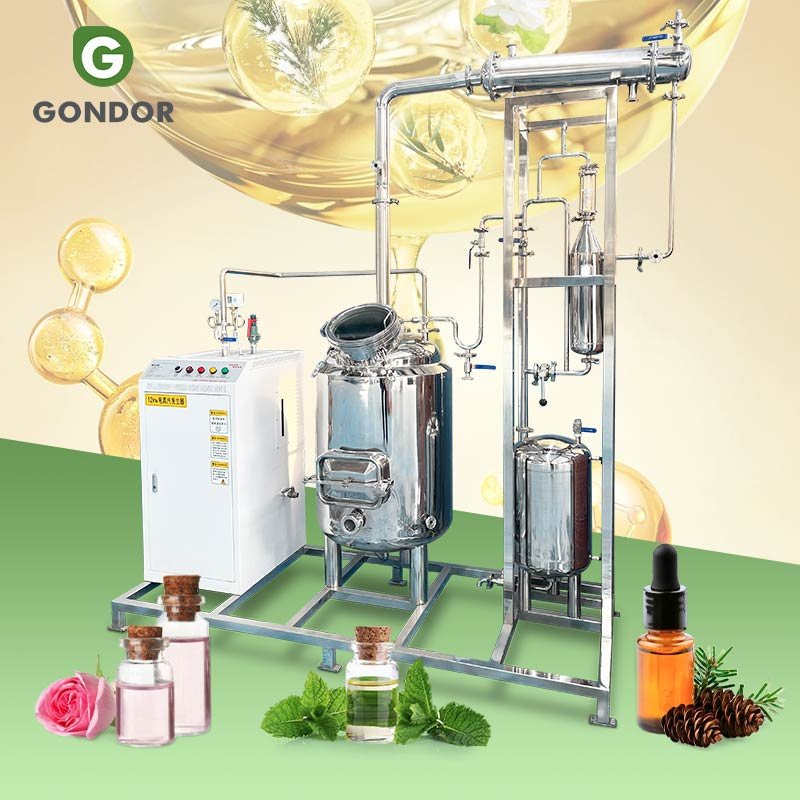
Production line and factory setup overview
A batch extraction line for selected Afghan aromatic flowers, leaves or seeds, covering botanical receiving, preparation, steam generation, controlled distillation, condensation, oil-water separation, oil drying or polishing filtration, protected storage and small-bottle packing. Every botanical requires its own yield and quality trial.
Recommended lowest-entry line configuration For the lowest credible entry, use a 100-200 L stainless steam-distillation vessel with removable plant basket, small steam generator, condenser, cooling-water loop, Florentine separator, dark oil receiver and manual or bench-top filling for one validated botanical.
Production process and implementation sequence
- Botanical receiving and identity check
- Sorting and specified size preparation
- Steam-generator and cooling-loop checks
- Controlled vessel loading and steam distillation
- Vapor condensation
- Florentine oil-water separation
- Oil drying, filtration and dark holding
- Small-bottle filling, coding and protected storage
Products, capacity and market fit
- Afghan aromatic crops can be tested for higher-value essential oils and hydrosols.
- A flexible batch still permits different botanicals with validated cleaning between lots.
- Local distillation reduces transport of bulky fresh plant material.
- Small dark-bottle packs support cosmetic, fragrance and ingredient buyers.
- Botanical essential oil - Declared species and part, buyer-approved profile, water content and clean package - Fragrance, cosmetic and ingredient buyers
- Co-produced aromatic hydrosol - Separated lot, clarity, aroma and microbiological specification - Personal-care and household formulators where permitted
Core production machinery and line specifications
| Machine / stage | Function / value | Production note |
|---|---|---|
| Botanical sorting and preparation station | Removes defects and creates specified feed | Manual entry; cutter only if validated |
| Steam generator | Supplies controlled clean steam | Matched to vessel and local fuel |
| Stainless distillation vessel and basket | Holds plant material above steam distribution | 100-200 L entry vessel |
| Demister and vapor line | Limits entrainment into condenser | Food/cosmetic-compatible construction |
| Condenser and cooling loop | Condenses oil-and-water vapor | Sized for peak vapor load |
| Florentine separator | Continuously separates oil and hydrosol | Matched to oil density behavior |
| Oil polishing and dark receiver | Removes residual water and protects oil | Small inert light-protected vessels |
| Bench filler, capper and coder | Packs released oil into small bottles | One or two launch volumes |
Raw materials, utilities and factory requirements
- Correctly identified traceable aromatic plants
- Clean steam and cooling water
- Dark compatible bottles, closures, labels and cartons
- Approved filtration, drying and cleaning materials
- Stable electricity matched to the selected equipment
- Potable process water where product contact occurs
- Washable food-grade rooms with pest and dust control
- Segregated raw-material, packaging and finished-goods storage
- Compressed air, steam or cooling water only where specified
Indicative low-entry investment and implementation plan
These planning ranges prioritize economical machinery, local labor and local civil works. Final pricing follows confirmed capacity, product specification, delivery terms and site conditions.
| Scope | Indicative range | Entry-plan note |
|---|---|---|
| 100-200 L still and plant basket | US$7k-18k | One validated botanical |
| Steam generator and condenser loop | US$5k-13k | Local fuel and cooling confirmed |
| Separator, oil handling and filtration | US$3k-8k | Protected small-batch scope |
| Bench filling and quality tools | US$2k-6k | One or two bottle volumes |
| Freight, installation and spares | US$5k-11k | Steam and pressure interfaces |
| Indicative low-entry total | US$22k-56k | Building, crop stock and laboratory certification excluded |
Detailed proposal and next step
The proposal contains the complete line flow, machinery scope, raw-material and utility requirements, implementation stages and indicative entry planning. Final configuration follows confirmed products, capacity, site and budget.