
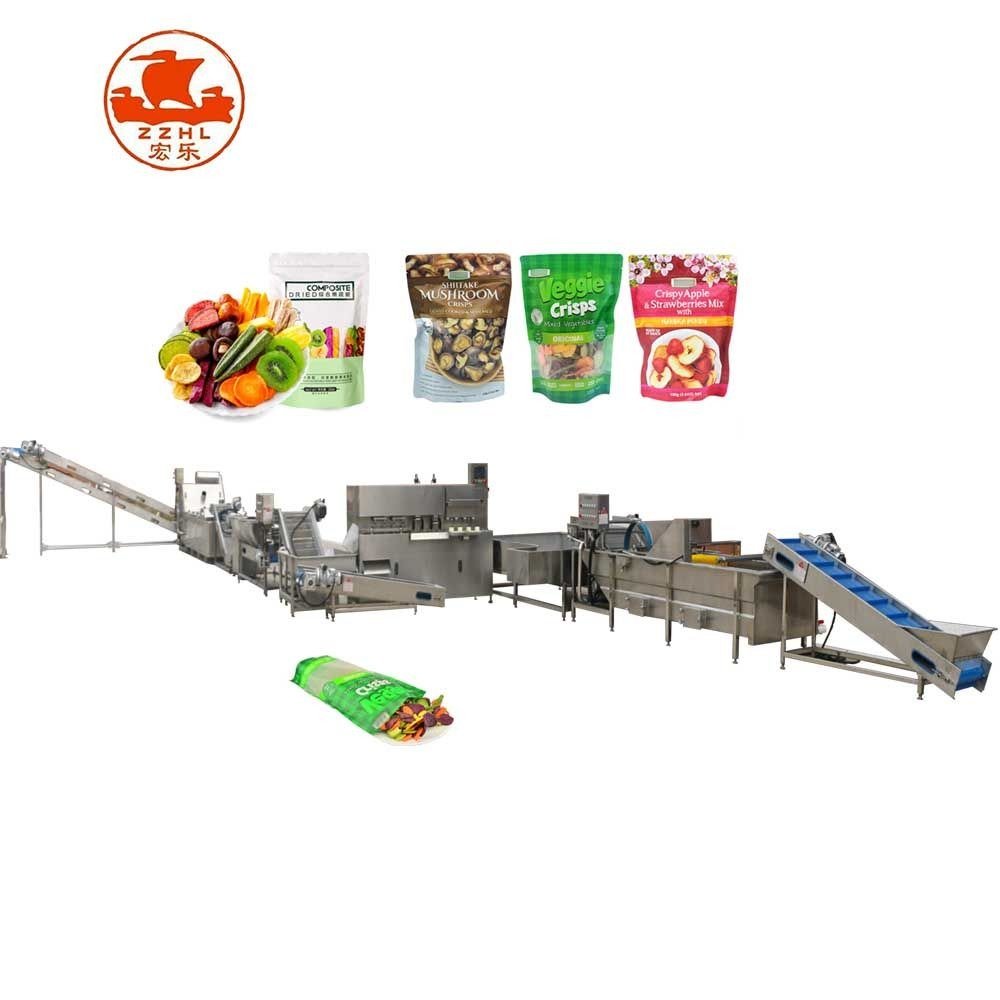
Production line and factory setup overview
A small line for sorting, peeling, washing, uniform slicing, multi-stage drying, cooling, grading and packing dehydrated onion flakes.
Recommended lowest-entry line configuration For the lowest credible entry, select a 300-500 kg/h fresh-onion line with peeler, washer, slicer, optional blancher, small tunnel or belt dryer, grader and semi-automatic packing.
Production process and implementation sequence
- Onion receiving, trimming and defect sorting
- Dry or abrasive peeling
- Washing and potable rinsing
- Uniform slicing
- Optional buyer-approved blanching
- Staged hot-air dehydration
- Cooling, moisture equalization and grading
- Metal detection and moisture-barrier packing
Products, capacity and market fit
- Onion dehydration can preserve seasonal surplus and reduce transport weight.
- Flakes supply spice blenders, food-service buyers and packaged-food factories.
- Fines can become granules after the flake process is stable.
- A small tunnel or belt dryer allows staged growth from local sourcing.
- Dehydrated onion flakes - Buyer-approved size, moisture, color, flavor and microbiology - Spice blenders, restaurants and food processors
- Onion granules - Milled and sieved released flakes - Seasoning and ingredient buyers
Core production machinery and line specifications
| Machine / stage | Function / value | Production note |
|---|---|---|
| Onion topper and peeler | Removes tops, roots and outer skin | Trialled for local onion sizes |
| Bubble washer | Removes loose skin and soil | Potable final rinse |
| Adjustable slicer | Produces uniform drying thickness | 3-5 mm typical target |
| Optional blancher | Applies buyer-defined pretreatment | Recorded time and temperature |
| Tunnel or mesh-belt dryer | Reduces moisture in controlled stages | 300-500 kg/h fresh input basis |
| Cooling and conditioning conveyor | Prevents condensation and equalizes moisture | Filtered air |
| Vibratory grader | Separates commercial flake sizes | Return fines for granules |
| Metal detector and packer | Checks and packs released product | Bulk liner or one retail format |
Raw materials, utilities and factory requirements
- Sound mature Afghan onions
- Potable water
- Only buyer-approved pretreatment aids
- Moisture-barrier bulk liners or pouches
- Labels and cartons
- Stable three-phase electricity
- Potable process water and hygienic drainage
- Food-grade heat source
- Ventilated washable processing room
- Clean dry packing and finished-goods storage
Indicative low-entry investment and implementation plan
These planning ranges prioritize economical machinery, local labor and local civil works. Final pricing follows confirmed capacity, product specification, delivery terms and site conditions.
| Scope | Indicative range | Entry-plan note |
|---|---|---|
| Trimming, peeling, washing and slicing | US$10k-22k | 300-500 kg/h preparation |
| Small tunnel or belt dryer | US$18k-38k | Heat source confirmed separately |
| Cooling, grading and packing | US$7k-16k | Bulk or one retail format |
| Quality and hygiene equipment | US$3k-8k | Moisture and metal control |
| Freight, installation and spares | US$6k-14k | Ducting and dryer footprint matter |
| Indicative low-entry total | US$44k-98k | Building, onion and working capital excluded |
Detailed proposal and next step
The proposal contains the complete line flow, machinery scope, raw-material and utility requirements, implementation stages and indicative entry planning. Final configuration follows confirmed products, capacity, site and budget.