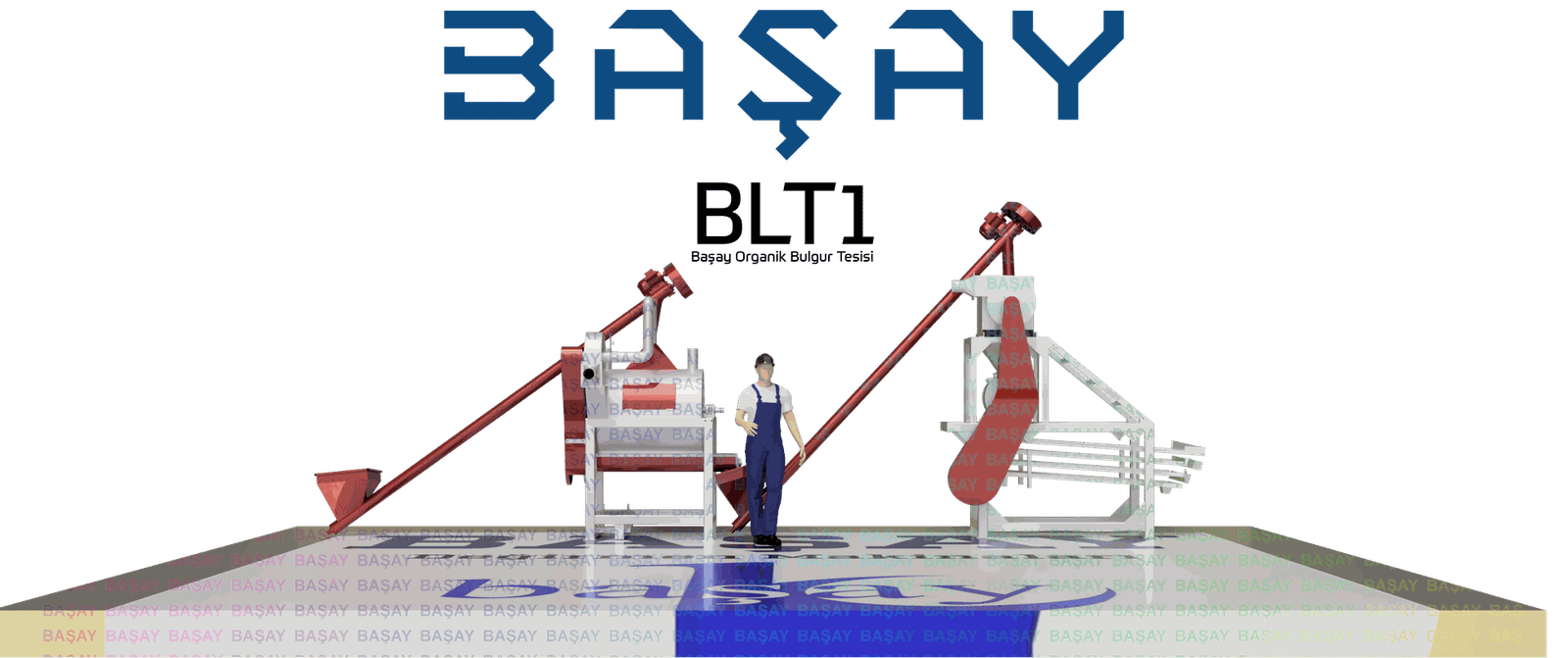
Production line and factory setup overview
A small line for wheat cleaning, controlled cooking or steaming, drying, peeling, cracking, grading and bulgur packing.
Recommended lowest-entry line configuration Start at 300-500 kg/h with compact cleaning, a batch cooking vessel, a cabinet or small tunnel dryer, peeler, bulgur crusher-sifter and semi-manual packing.
300-500 kg/hstarter cleaned-wheat input
~10%post-drying moisture reference
35-70 kWindicative electrical load
6-9entry operators
Production process and implementation sequence
- Wheat receiving and cleaning
- Washing or controlled soaking
- Batch cooking or steaming
- Drain and controlled drying
- Tempering and peeling
- Bulgur cracking
- Coarse and fine grading
- Final inspection and packing
Products, capacity and market fit
- Afghan wheat can be converted into a higher-value shelf-stable staple food.
- Coarse and fine bulgur grades serve households, restaurants and institutional kitchens.
- Batch cooking and semi-manual packing keep the entry plant manageable for a small operator.
- Local fuel and labor advantages can support drying and handling when food safety is controlled.
- Coarse bulgur - Buyer-approved large grain fraction - Pilaf, restaurants and household retail
- Medium bulgur - Uniform mid-size fraction - General retail and institutional food
- Fine bulgur - Small graded fraction with controlled fines - Traditional dishes and food service
Core production machinery and line specifications
| Machine / stage | Function / value | Production note |
|---|---|---|
| Wheat cleaner and destoner | Removes dust, chaff, stones and foreign grain | Food-grade 300-500 kg/h entry scope |
| Washer or soaking tank | Cleans and hydrates wheat before cooking | Potable-water contact and controlled drain |
| Batch cooking vessel | Cooks kernels uniformly to the approved endpoint | Steam-jacketed or direct-steam food-grade vessel |
| Drain conveyor and buffer | Removes free water and balances dryer feed | Cleanable stainless contact surfaces |
| Cabinet or small tunnel dryer | Reduces cooked-wheat moisture for safe cracking and storage | Controlled air near 60-65 C subject to trials |
| Tempering and peeling unit | Conditions and removes the loosened outer layer | Adjust to minimize kernel breakage |
| Bulgur crusher and sifter | Cracks dried wheat and separates size grades | Interchangeable screens for coarse, medium and fine |
| Final aspirator and inspection table | Removes light husk and permits visual control | Food-safe dust collection |
| Scale and bag sealer | Packs graded bulgur with lot coding | Semi-manual retail and 25 kg bags |
Raw materials, utilities and factory requirements
- Food-grade Afghan wheat with suitable hardness and sound kernels
- Potable process water
- Food-grade retail or wholesale bags
- Labels and coding consumables
- Approved cleaning and sanitation materials
- Stable three-phase electricity
- Potable process and cleaning water with drainage
- Steam, gas, diesel or other approved cooking and drying heat source
- Ventilation and humid-air exhaust
- Dry wheat and finished-bulgur storage
Indicative low-entry investment and implementation plan
These planning ranges prioritize economical machinery, local labor and local civil works. Final pricing follows confirmed capacity, product specification, delivery terms and site conditions.
| Scope | Indicative range | Entry-plan note |
|---|---|---|
| Cleaning and washing section | US$5k-12k | Compact cleaner, destoner and food-grade wash tank |
| Batch cooker and heat interface | US$7k-18k | Lowest-capacity food-grade cooking package |
| Controlled dryer | US$8k-22k | Cabinet or small tunnel sized by moisture load |
| Peeling, cracking, grading and packing | US$7k-18k | Semi-manual starter grade range |
| Electrical, installation and initial spares | US$4k-10k | Local platforms and piping where safe |
| Freight and clearance | US$5k-12k | Final cost follows cooker and dryer volume |
| Indicative low-entry total | US$36k-92k | Building, boiler house and wheat stock excluded |
Detailed proposal and next step
The proposal contains the complete line flow, machinery scope, raw-material and utility requirements, implementation stages and indicative entry planning. Final configuration follows confirmed products, capacity, site and budget.