
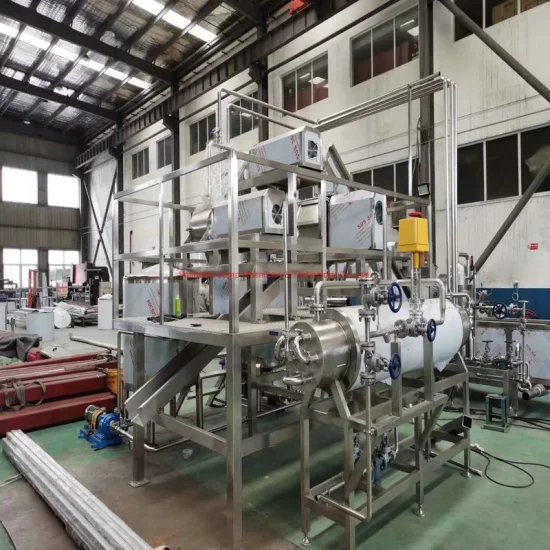
Production line and factory setup overview
A seasonal fruit-processing plant converting approved Afghan fruit into an aseptic puree or concentrate family through reception, sorting, washing, pulping or crushing, enzymatic treatment where needed, deaeration, pasteurisation, concentration where specified, aseptic sterilisation, bag-in-drum filling, cold/ambient storage and laboratory release.
Recommended lowest-entry line configuration Screen one fruit species and one aseptic product first, such as apricot puree or apple concentrate. Confirm harvest volume, Brix, pesticide limits, collection, process water, steam, aseptic bags/drums, cold chain where necessary and contracted buyers before a line is selected.
Production process and implementation sequence
- Fruit reception, sampling and grading
- Washing, sorting and preparation
- Crushing or pulping and seed/skin separation
- Deaeration, heating and Brix adjustment
- Evaporation where concentrate is specified
- Aseptic sterilisation and bag-in-drum filling
- Laboratory release and traceable storage
Products, capacity and market fit
- Afghan orchards can support value-added processing when collection and grading are controlled.
- One fruit and one Brix target prevents an expensive seasonal plant becoming too complex.
- Aseptic integrity, pesticide compliance and traceability decide export acceptance.
- Aseptic fruit puree or concentrate - Fruit species, Brix, pH, colour, viscosity, microbiology, pesticide residues and pack integrity - Afghan beverage, bakery, dairy and export buyers
Core production machinery and line specifications
| Machine / stage | Function / value | Production note |
|---|---|---|
| Wash, sort and pulping system | Prepares sound fruit and separates seeds/skins | One fruit family |
| Deaerator, pasteuriser and evaporator | Controls flavour, safety and Brix | Defined puree or concentrate |
| Aseptic steriliser and bag-in-drum filler | Protects shelf-stable product | Validated aseptic integrity |
| Laboratory and traceability system | Releases buyer-compliant batches | Brix/pH/microbiology/residue checks |
Raw materials, utilities and factory requirements
- Sound graded fruit, potable process water and approved food additives only where specified
- Aseptic bags, drums, labels and pallets
- Stable three-phase electricity with verified connected load
- Guarded machinery, lockout, ventilation and fire protection
- Covered segregated raw-material and finished-goods storage
- Maintenance tools, safe lifting and critical spare parts
- Steam, treated water, CIP, oil-free air and screened processing rooms
- Fruit-wash wastewater, pomace route and temperature-controlled storage as specified
Indicative low-entry investment and implementation plan
These planning ranges prioritize economical machinery, local labor and local civil works. Final pricing follows confirmed capacity, product specification, delivery terms and site conditions.
| Scope | Indicative range | Entry-plan note |
|---|---|---|
| Washing, sorting, pulping and preparation | US$180k-500k | One fruit family |
| Thermal process, concentration and aseptic filling | US$350k-1.2m | Depends on Brix and pack |
| Utilities, lab, civil interfaces and installation | US$180k-500k | Seasonal food plant |
| Indicative project total | US$710k-2.2m | Land and fruit working capital excluded |
Detailed proposal and next step
The proposal contains the complete line flow, machinery scope, raw-material and utility requirements, implementation stages and indicative entry planning. Final configuration follows confirmed products, capacity, site and budget.