
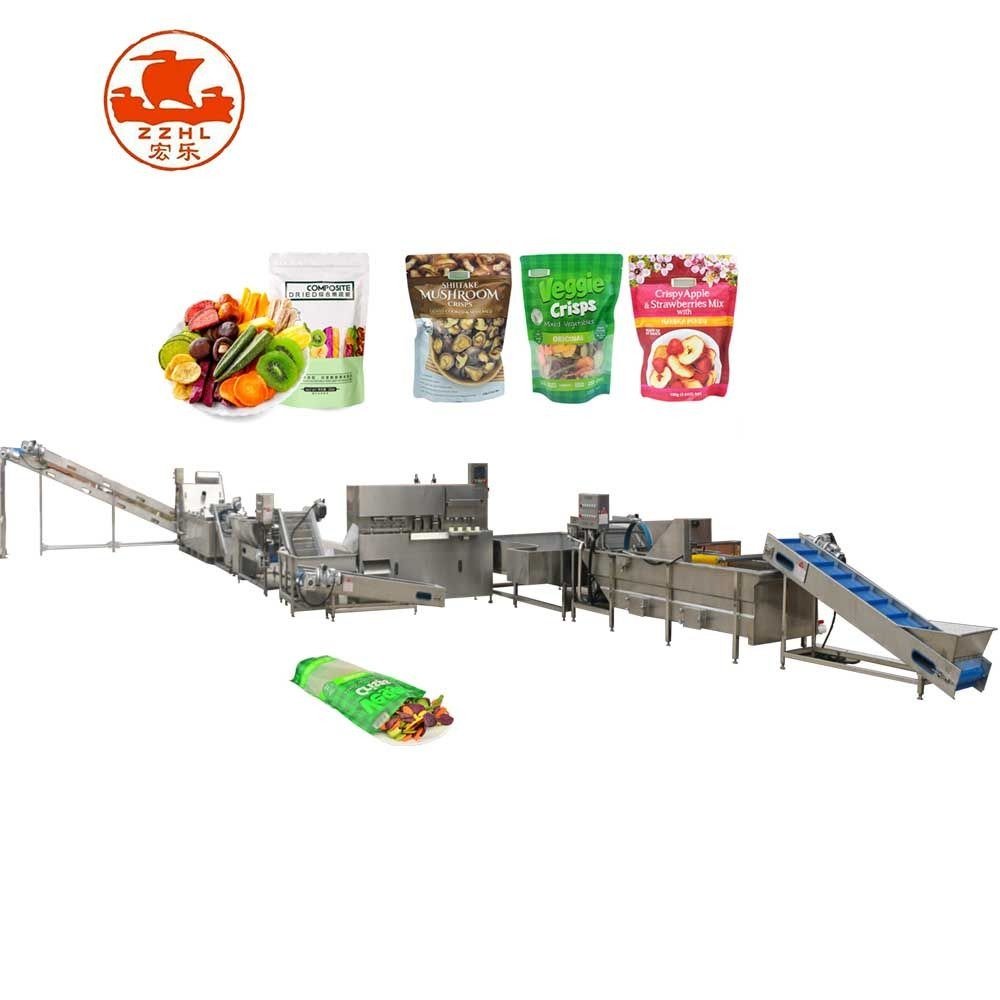
Production line and factory setup overview
A small line for receiving, washing, sorting, halving and pitting, anti-browning treatment, drying, grading and packing apricots.
Recommended lowest-entry line configuration For the lowest credible entry, select a 300-500 kg/h preparation line with bubble or spray washer, sorting table, halver-pitter, treatment tank, 500-800 kg/batch cabinet or tunnel dryer, grader and semi-manual packing.
Production process and implementation sequence
- Orchard-lot receiving, sampling and ripeness sorting
- Washing and potable-water rinsing
- Manual or mechanical halving and pit removal
- Permitted anti-browning treatment where contracted
- Tray loading with uniform bed depth
- Controlled staged hot-air drying
- Conditioning, moisture equalization and inspection
- Grading, metal detection, packing and dry storage
Products, capacity and market fit
- Afghan apricots can be dried near orchards, reducing transport of water and harvest losses.
- Controlled drying produces more consistent color, moisture and hygiene than exposed ground drying.
- Separated pits can feed the kernel-cracking line after safe storage and traceability.
- Retail pouches and bulk cartons serve domestic, regional and ingredient markets.
- Natural dried apricot halves - Buyer-approved moisture, color, size and no visible infestation - Retail, wholesale and bakery buyers
- Treated bright dried apricots - Only permitted treatment with declared residue compliance - Contract export and premium retail buyers
- Apricot pits - Dry, traceable and protected from mold - Approved kernel-cracking or fuel users
Core production machinery and line specifications
| Machine / stage | Function / value | Production note |
|---|---|---|
| Bubble or spray washer | Removes orchard dust and surface contamination | Potable final rinse and gentle fruit handling |
| Sorting and halving table | Rejects defects and prepares uniform halves | Food-grade surface with pit collection |
| Apricot halver-pitter | Separates flesh and pit with limited flesh loss | Trialled on local fruit sizes |
| Treatment and draining tank | Applies buyer-approved anti-browning treatment | Controlled concentration, time and drainage |
| Cabinet or tunnel dryer | Removes moisture under controlled airflow | 500-800 kg/batch starter loading |
| Drying trays and trolleys | Maintains hygienic uniform bed depth | Food-contact mesh and washable frames |
| Moisture meter and grader | Releases dry lots and separates commercial grades | Calibrated moisture and buyer size screens |
| Weigher, sealer and metal detector | Packs and checks released dried fruit | Bulk and one retail format at launch |
Raw materials, utilities and factory requirements
- Sound mature Afghan apricots
- Potable process water
- Only buyer-approved anti-browning treatment
- Food-grade pouches, liners and cartons
- Labels, coding ink and desiccant only where validated
- Stable electricity
- Clean hot air from electric, gas, biomass or indirect heat
- Potable water and hygienic drainage
- Ventilation and humidity exhaust
- Dry insect-controlled conditioning and packing room
Indicative low-entry investment and implementation plan
These planning ranges prioritize economical machinery, local labor and local civil works. Final pricing follows confirmed capacity, product specification, delivery terms and site conditions.
| Scope | Indicative range | Entry-plan note |
|---|---|---|
| Washing, sorting, halving and pitting | US$7k-16k | 300-500 kg/h preparation |
| Treatment tanks, trays and handling | US$3k-8k | One declared product style |
| Cabinet or short tunnel dryer | US$10k-24k | 500-800 kg/batch entry system |
| Grading, packing and quality tools | US$4k-10k | Semi-manual launch scope |
| Installation, freight and spares | US$5k-12k | Heat source and ducting confirmed separately |
| Indicative low-entry total | US$29k-70k | Building, fruit, fuel and working capital excluded |
Detailed proposal and next step
The proposal contains the complete line flow, machinery scope, raw-material and utility requirements, implementation stages and indicative entry planning. Final configuration follows confirmed products, capacity, site and budget.