
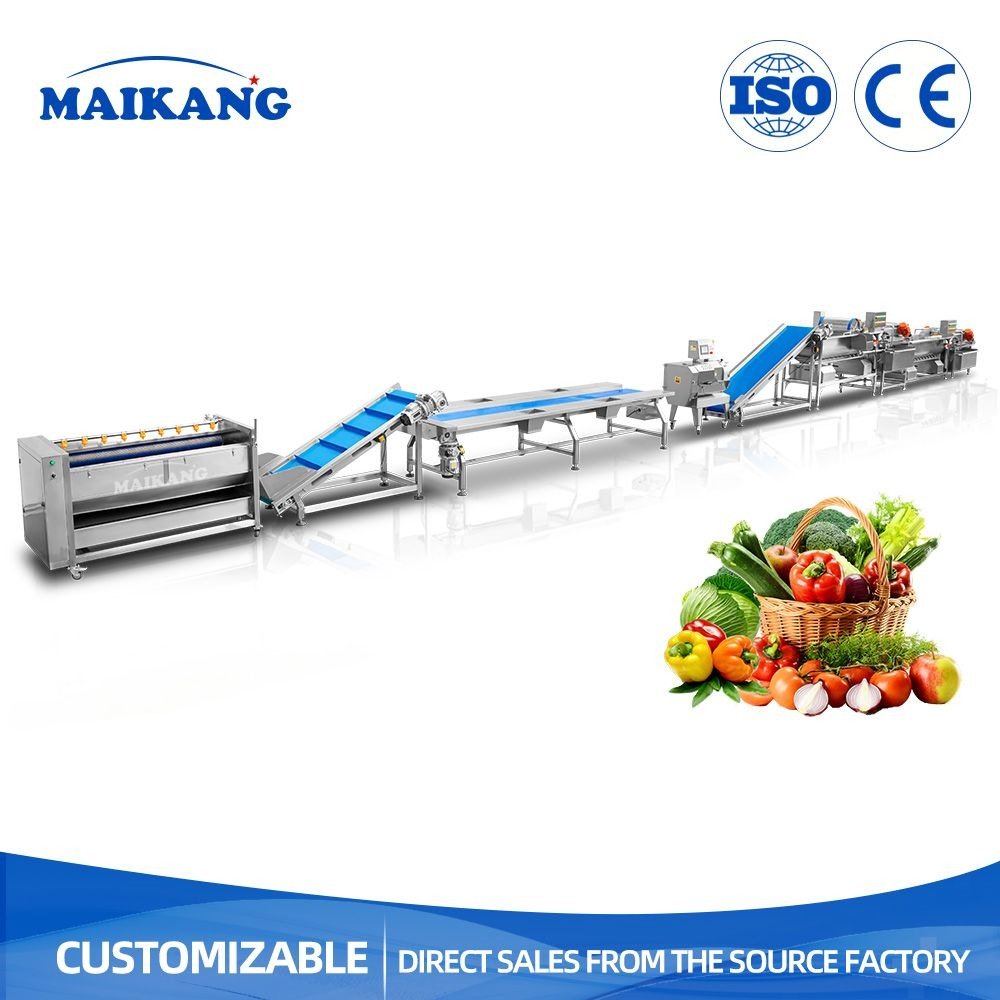
Production line and factory setup overview
A small line for gentle unloading, washing and brushing, drying, optional food-grade waxing, weight or size grading, inspection and packing Afghan apples.
Recommended lowest-entry line configuration For the lowest credible entry, select a 1-2 t/h line with water or soft-belt unloading, brush washer, air dryer, optional waxer, four-to-six-outlet weight grader, inspection table and manual packing.
Production process and implementation sequence
- Orchard-lot receiving, traceability and quality sampling
- Gentle water or padded-belt unloading
- Debris removal, washing and soft brushing
- Surface-water removal and air drying
- Optional permitted food-grade waxing and finish drying
- Weight or diameter grading
- Manual color and defect inspection
- Tray or carton packing, labeling, palletizing and cool storage
Products, capacity and market fit
- Uniform Afghan apple grades improve pricing for supermarkets, wholesalers and exporters.
- A small packhouse can serve several orchards without purchasing a high-speed optical sorter.
- Lower grades can be routed to juice, puree, drying or vinegar lines rather than discarded.
- Optional waxing and better cartons can extend presentation life when buyer rules permit.
- Premium fresh apples - Uniform size, color and appearance within buyer defect limits - Supermarkets, premium wholesalers and export buyers
- Standard fresh apples - Sound fruit with broader cosmetic tolerance - Domestic wholesale and institutional buyers
- Processing apples - Sound lower appearance grade, segregated from rot - Juice, puree, drying and vinegar processors
Core production machinery and line specifications
| Machine / stage | Function / value | Production note |
|---|---|---|
| Gentle unloading system | Transfers orchard bins while limiting impact damage | Water flume or padded low-drop conveyor |
| Brush washer and rinse | Removes field dust and surface contamination | Food-grade soft brushes and potable spray |
| Air knife or fan dryer | Removes surface water before grading or waxing | Adjustable clean air without overheating fruit |
| Optional wax applicator and dryer | Applies a controlled permitted food-grade coating | Buyer and destination approval required |
| Weight or diameter grader | Routes apples into commercial size grades | Four to six padded outlets at entry scale |
| Illuminated inspection table | Allows manual removal of bruised, rotten or defective fruit | Fruit rotation and ergonomic lighting |
| Packing tables and carton handling | Protects graded apples in trays or cartons | Low drops and buyer-approved count patterns |
| Scales, labels and traceability printer | Controls net weight and lot identification | Grower, variety, grade and pack date recorded |
Raw materials, utilities and factory requirements
- Sound Afghan apples segregated by variety and orchard lot
- Potable wash water
- Only approved food-grade wax where used
- Trays, pads, cartons, labels and pallet materials
- Approved sanitation chemicals
- Stable electricity
- Potable water, filtration and hygienic drainage
- Clean compressed air where specified
- Shaded receiving and finished-pack areas
- Pre-cooling or cool storage matched to the marketing plan
Indicative low-entry investment and implementation plan
These planning ranges prioritize economical machinery, local labor and local civil works. Final pricing follows confirmed capacity, product specification, delivery terms and site conditions.
| Scope | Indicative range | Entry-plan note |
|---|---|---|
| Gentle unloading, washing and brushing | US$7k-16k | One 1-2 t/h intake |
| Air drying and optional waxing | US$4k-10k | Wax module can be deferred |
| Four-to-six-outlet grader and inspection | US$7k-18k | Mechanical or basic electronic weighing |
| Packing tables, electrical and initial spares | US$3k-8k | Manual carton packing |
| Freight and clearance | US$4k-9k | Confirm conveyor nesting |
| Indicative low-entry total | US$25k-61k | Building, apples, cartons, cold store and optical sorter excluded |
Detailed proposal and next step
The proposal contains the complete line flow, machinery scope, raw-material and utility requirements, implementation stages and indicative entry planning. Final configuration follows confirmed products, capacity, site and budget.