
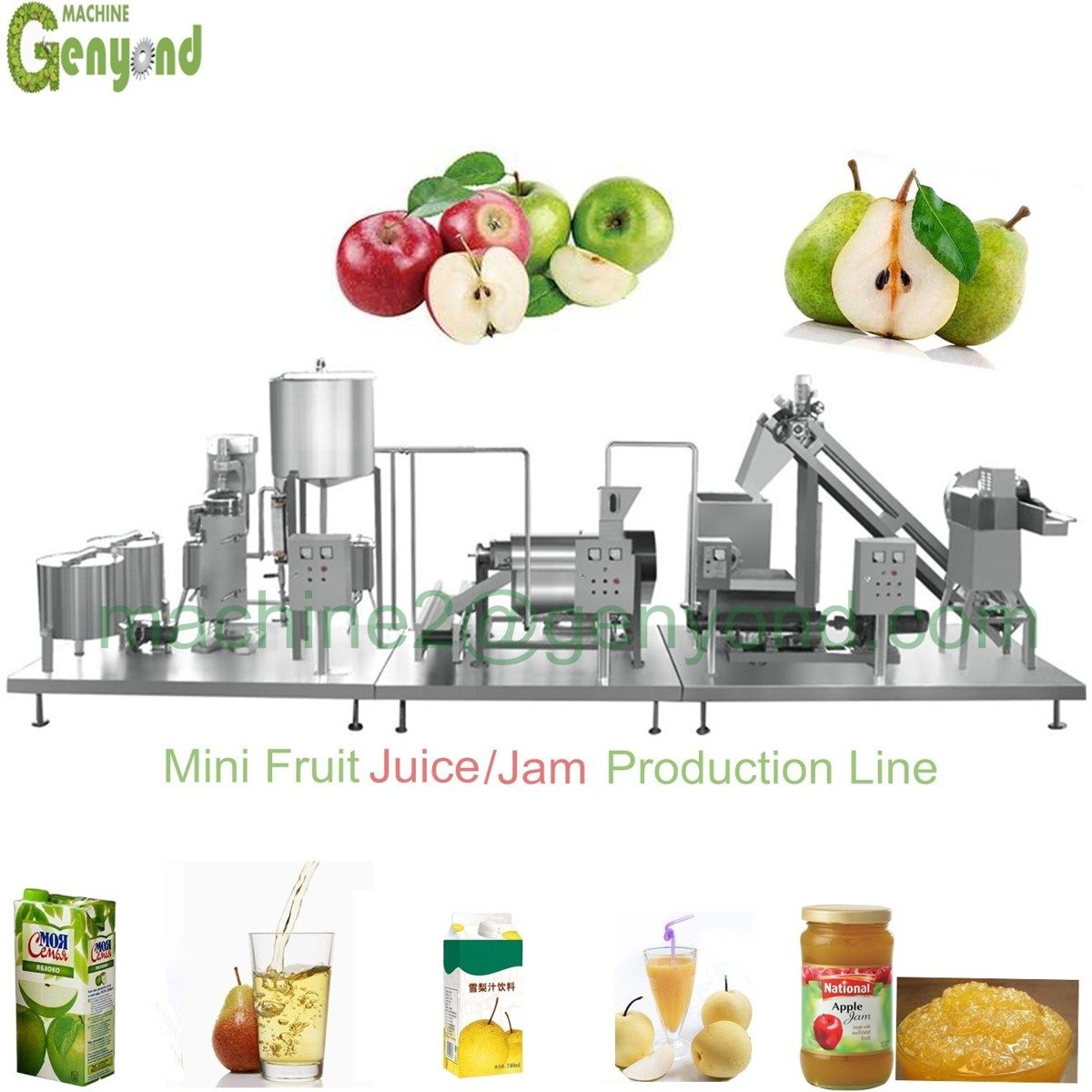
Production line and factory setup overview
A small line for washing, inspecting, crushing, pressing, clarification, pasteurization, hot filling, capping, cooling and labeling apple juice.
Recommended lowest-entry line configuration For the lowest credible entry, select a 300-500 kg/h apple line with washer, crusher, belt or rack-and-cloth press, tanks, filter, tubular pasteurizer and semi-automatic hot filler.
Production process and implementation sequence
- Apple receiving, weighing and defect sorting
- Washing and final inspection
- Milling or crushing
- Juice pressing and pomace separation
- Coarse screening and cloudy-juice stabilization or clarification
- Blend tank adjustment and deaeration where required
- Validated pasteurization and semi-automatic hot filling
- Capping, cooling, coding, labeling and pack inspection
Products, capacity and market fit
- Afghan apples that are sound but cosmetically unsuitable for fresh retail can become bottled juice.
- A compact line serves local shops, restaurants, hotels and institutions without concentrate equipment.
- Cloudy juice reduces clarification equipment and can support a natural product position.
- Apple pomace can be separated promptly for approved feed, pectin or compost channels.
- Cloudy apple juice - Buyer-approved Brix, acidity, suspended pulp, color and microbiology - Retail, hospitality and institutional buyers
- Clarified apple juice - Optional enzyme-treated and filtered clear style - Retail and beverage-blending buyers
- Apple pomace - Fresh separated co-product handled without spoilage - Approved feed, pectin, compost or drying users
Core production machinery and line specifications
| Machine / stage | Function / value | Production note |
|---|---|---|
| Apple washer and inspection conveyor | Cleans fruit and removes rot before milling | 300-500 kg/h gentle food-grade design |
| Apple mill or crusher | Creates an even mash for pressing | Replaceable knives or grater with guarded drive |
| Belt or rack-and-cloth press | Separates juice from apple pomace | Trial-confirmed yield and easy sanitation |
| Screen, balance tanks and optional clarifier | Controls pulp level and prepares juice for heat treatment | Cloudy route standard; clear module optional |
| Tubular pasteurizer | Applies the validated time-temperature process | Recorder and low-temperature diversion |
| Semi-automatic hot filler and capper | Fills heat-compatible bottles and applies closures | Two launch sizes with sanitary product path |
| Cooling conveyor or bath | Reduces bottle temperature after hot fill | Controlled cooling without thermal shock |
| Coder, labeler and inspection table | Finishes and checks saleable bottles | Lot, date, seal and net-fill verification |
Raw materials, utilities and factory requirements
- Sound Afghan apples suitable for juice
- Potable process water
- Approved antioxidant or clarification aids only where required
- Heat-compatible food bottles and closures
- Labels, coding ink, trays or cartons
- Stable electricity
- Food-safe steam, electric or hot-water heat source
- Potable water and hygienic drainage
- Cooling water for filled bottles
- Washable processing room and dry packaging storage
Indicative low-entry investment and implementation plan
These planning ranges prioritize economical machinery, local labor and local civil works. Final pricing follows confirmed capacity, product specification, delivery terms and site conditions.
| Scope | Indicative range | Entry-plan note |
|---|---|---|
| Washing, inspection, crushing and pressing | US$8k-18k | One 300-500 kg/h fruit stream |
| Screening, tanks and optional clarification | US$4k-10k | Cloudy juice is lowest entry |
| Pasteurization, hot filling, capping and cooling | US$8k-20k | Semi-automatic two-size line |
| Electrical, installation and initial spares | US$3k-8k | Include sanitary hoses and press cloths |
| Freight and clearance | US$4k-9k | Consolidated compact shipment |
| Indicative low-entry total | US$27k-65k | Building, apples, bottles, boiler and working capital excluded |
Detailed proposal and next step
The proposal contains the complete line flow, machinery scope, raw-material and utility requirements, implementation stages and indicative entry planning. Final configuration follows confirmed products, capacity, site and budget.