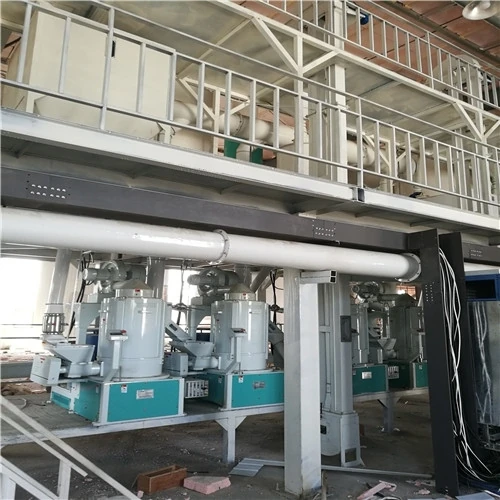
Production line and factory setup overview
This dry line converts clean in-shell Afghan almonds into inspected whole and broken kernels. Almonds must be graded by shell size before adjustable-gap cracking; aspiration and gravity separation then remove shell and return uncracked nuts. Kernel food safety, shell-fragment control and measured whole-kernel recovery define acceptance.
Recommended lowest-entry line configuration For the lowest credible entry, select a 300-500 kg/h line with pre-cleaner, three-size grader, adjustable cracker, aspiration separator, gravity table, inspection conveyor, kernel grader and semi-automatic bulk packer.
Production process and implementation sequence
- In-shell receiving, sampling and dry cleaning
- Magnetic protection and aspiration
- Three-size shell grading
- Gap-matched cracking by size fraction
- Air separation of light shell
- Gravity separation and return of uncracked nuts
- Illuminated kernel inspection and grading
- Metal detection, weighing and dry packing
Products, capacity and market fit
- Afghan almonds gain value when sold as clean graded kernels rather than mixed in-shell lots.
- Size grading before cracking protects whole-kernel recovery.
- Broken kernels remain a separate commercial grade for paste, oil or bakery buyers.
- Compact dry equipment suits seasonal processors and cooperatives.
- Whole almond kernels - Buyer-approved variety, size, moisture, defects and shell fragments - Retail, confectionery and nut packers
- Broken almond kernels - Clean declared fraction with controlled shell content - Bakery, paste and oil processors
Core production machinery and line specifications
| Machine / stage | Function / value | Production note |
|---|---|---|
| Pre-cleaner and magnet | Removes dust, stalks, stones and metal | Enclosed aspiration |
| Three-size in-shell grader | Creates fractions for separate cracker gaps | Interchangeable screens |
| Adjustable almond cracker | Opens shells while limiting kernel breakage | Gap set for each size fraction |
| Aspiration separator | Removes light shell pieces | Variable airflow |
| Gravity table | Separates kernels, heavy shell and uncracked nuts | Return path to cracker |
| Inspection conveyor | Removes defects and residual shell | Food-grade belt and good lighting |
| Kernel size grader | Creates saleable whole and broken grades | Buyer-confirmed screens |
| Metal detector and bag closer | Checks and packs released kernels | Lined bulk cartons or bags |
Raw materials, utilities and factory requirements
- Dry traceable Afghan in-shell almonds
- Food-grade lined bags or cartons
- Labels and lot records
- Cleaning and laboratory sampling materials
- Stable three-phase electricity
- Potable process water and hygienic drainage
- Food-grade heat source where required
- Ventilated washable processing room
- Clean dry packing and finished-goods storage
Indicative low-entry investment and implementation plan
These planning ranges prioritize economical machinery, local labor and local civil works. Final pricing follows confirmed capacity, product specification, delivery terms and site conditions.
| Scope | Indicative range | Entry-plan note |
|---|---|---|
| Pre-cleaning and size grading | US$5k-11k | 300-500 kg/h dry intake |
| Cracking and aspiration | US$5k-12k | Adjustable staged route |
| Gravity separation and inspection | US$5k-12k | Kernel recovery and shell control |
| Kernel grading and packing | US$3k-8k | Semi-manual bulk launch |
| Freight, installation and spares | US$4k-9k | Confirm nested conveyors |
| Indicative low-entry total | US$22k-52k | Building, almonds and working capital excluded |
Detailed proposal and next step
The proposal contains the complete line flow, machinery scope, raw-material and utility requirements, implementation stages and indicative entry planning. Final configuration follows confirmed products, capacity, site and budget.