
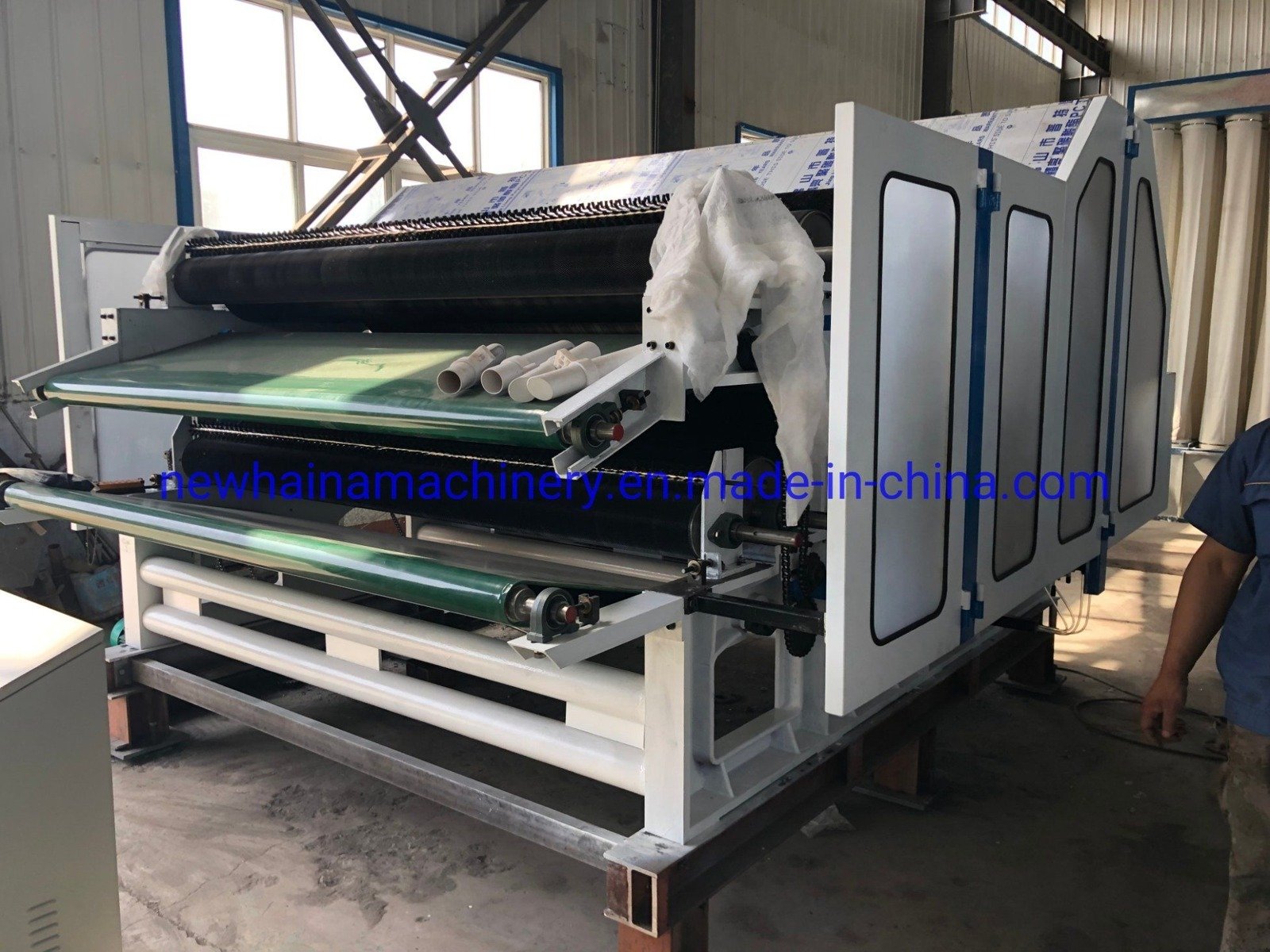
Production line and factory setup overview
This proposal presents a practical low-entry fiberglass carding machine for Afghanistan. Wide working-width carder with adjustable speed and density for uniform fibre webs. The starting configuration prioritizes economical Chinese machinery, local fabrication of noncritical items, affordable local labor, simple buildings and phased automation.
Recommended lowest-entry line configuration Start with one semi-automatic shift and the minimum core equipment needed for fiberglass carding machine; add automatic handling and higher-speed packing after demand is proven.
Production process and implementation sequence
- Material feeding
- Primary treatment
- Web preparation
- Machine processing
- Inspection
- Winding or stacking
- Packing
Products, capacity and market fit
- Local production can replace selected imported finished goods.
- Affordable land, labor and local fabrication reduce the entry threshold.
- A one-shift starting model limits working-capital pressure.
- Modular equipment allows capacity to grow with confirmed sales.
- Standard industrial grade - Confirm with buyer and local market - Afghanistan and nearby regional buyers
- Lightweight grade - Confirm with buyer and local market - Afghanistan and nearby regional buyers
- Heavy-duty grade - Confirm with buyer and local market - Afghanistan and nearby regional buyers
- Customer-specified roll or bale - Confirm with buyer and local market - Afghanistan and nearby regional buyers
Core production machinery and line specifications
| Machine / stage | Function / value | Production note |
|---|---|---|
| Material feeder | Supports the fiberglass carding machine workflow | Sized to selected entry capacity |
| Opening or preparation unit | Supports the fiberglass carding machine workflow | Sized to selected entry capacity |
| Main processing machine | Supports the fiberglass carding machine workflow | Sized to selected entry capacity |
| Dust and fiber extraction | Supports the fiberglass carding machine workflow | Sized to selected entry capacity |
| Drive and control cabinet | Supports the fiberglass carding machine workflow | Sized to selected entry capacity |
| Inspection table | Supports the fiberglass carding machine workflow | Sized to selected entry capacity |
| Winder or stacker | Supports the fiberglass carding machine workflow | Sized to selected entry capacity |
| Packing press | Supports the fiberglass carding machine workflow | Sized to selected entry capacity |
| Air compressor | Supports the fiberglass carding machine workflow | Sized to selected entry capacity |
| Maintenance tooling | Supports the fiberglass carding machine workflow | Sized to selected entry capacity |
Raw materials, utilities and factory requirements
- Selected fiber feedstock
- Binders or treatment chemicals where required
- Packaging film and straps
- Lubricants and wear parts
- Labels and pallet materials
- Three-phase power
- Compressed air
- Dust and fiber extraction
- Dry production hall
- Fire detection and suppression
Indicative low-entry investment and implementation plan
These planning ranges prioritize economical machinery, local labor and local civil works. Final pricing follows confirmed capacity, product specification, delivery terms and site conditions.
| Scope | Indicative range | Entry-plan note |
|---|---|---|
| Entry machine package | US$18k-85k | Economy configuration using local labor where practical |
| Local utilities and workshop | US$8k-30k | Economy configuration using local labor where practical |
| Dust control and tooling | US$6k-25k | Economy configuration using local labor where practical |
| Freight and installation | US$8k-28k | Economy configuration using local labor where practical |
| Working capital | US$5k-20k | Economy configuration using local labor where practical |
| Low-entry project total | US$45k-188k | Economy configuration using local labor where practical |
Detailed proposal and next step
The proposal contains the complete line flow, machinery scope, raw-material and utility requirements, implementation stages and indicative entry planning. Final configuration follows confirmed products, capacity, site and budget.