
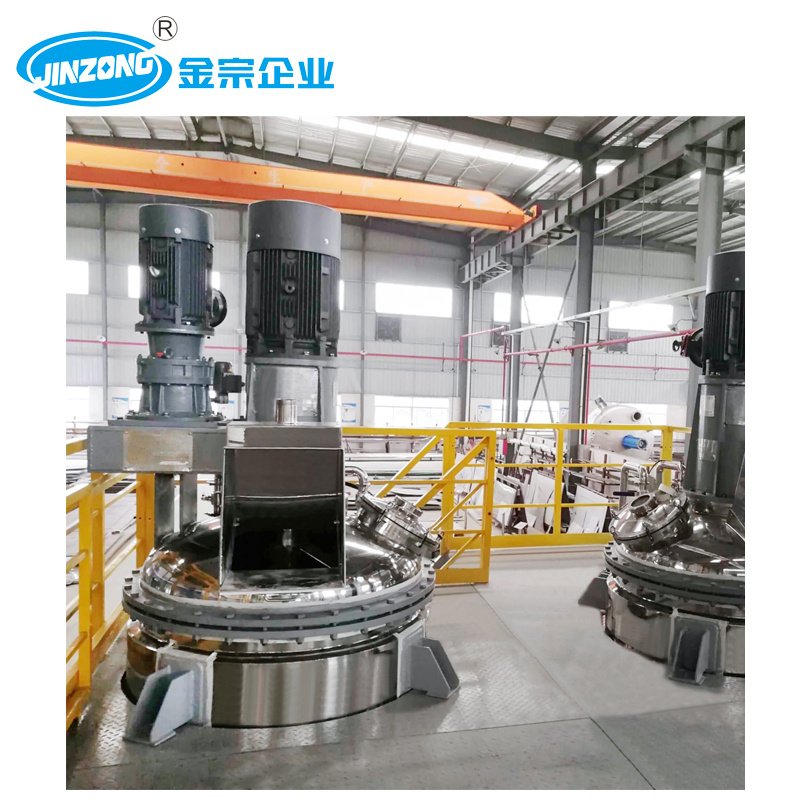
Production line and factory setup overview
A small line producing one interior water-based wall-paint family from approved mineral fillers and imported binder through water treatment, closed powder weighing, high-speed dispersion, controlled bead milling only where the formula requires it, let-down and tinting, viscosity and shade adjustment, filtration, batch laboratory release and 5-20 L pail filling. Solvent paint, resin synthesis and unknown formulas are excluded.
Recommended lowest-entry line configuration Launch one white interior emulsion paint and two package sizes at about 500-1,000 kg/batch. Use a dust-extracted powder station, high-speed disperser, jacketed let-down/tint tank, transfer pump, bag filter, semi-automatic net filler and a paint laboratory. Buy a validated binder/additive package and qualify Afghan calcium-carbonate filler before reducing imported content.
Production process and implementation sequence
- Raw-material certificate and filler release
- Treated-water and liquid dosing
- Closed powder charging and high-speed dispersion
- Optional milling and fineness check
- Let-down, tinting and viscosity adjustment
- Filtration and batch laboratory release
- Net filling, lidding and coding
- Retained sample and shelf-stability monitoring
Products, capacity and market fit
- Housing and renovation create recurring demand for affordable interior paint.
- Afghan mineral filler can add local value after whiteness and particle-size qualification.
- Water-based production avoids the fire load of solvent coatings but still needs chemical controls.
- Hiding power, adhesion, scrub resistance, shade and shelf stability determine product credibility.
- Interior water-based emulsion wall paint - Declared volume solids, density, viscosity, fineness, hiding, whiteness, adhesion, scrub resistance, drying time and VOC - Afghan housing, schools and commercial interiors
Core production machinery and line specifications
| Machine / stage | Function / value | Production note |
|---|---|---|
| Water-treatment and liquid dosing skid | Controls process water and additives | One formula |
| Enclosed powder station with extraction | Adds pigment/filler without dust release | Weighed batches |
| High-speed disperser | Wets and disperses solids | 500-1,000 kg/batch |
| Let-down/tint tank and transfer pump | Adjusts final paint consistently | Jacketed as required |
| Bag filter and semi-auto pail filler | Removes agglomerates and packs paint | 5-20 L |
| Paint laboratory | Releases performance and shade | Retained batch sample |
Raw materials, utilities and factory requirements
- Qualified calcium carbonate or other approved mineral filler
- Purchased water-based acrylic or vinyl-acrylic binder
- Titanium dioxide, dispersant, thickener, defoamer, preservative and approved pigments
- Treated water, pails, lids, labels and pallets
- Stable three-phase electricity with verified connected load
- Guarded machinery, lockout, ventilation and fire protection
- Covered segregated raw-material and finished-goods storage
- Maintenance tools, safe lifting and critical spare parts
- Local dust extraction and washable bunded chemical floor
- Temperature-controlled binder/additive storage
Indicative low-entry investment and implementation plan
These planning ranges prioritize economical machinery, local labor and local civil works. Final pricing follows confirmed capacity, product specification, delivery terms and site conditions.
| Scope | Indicative range | Entry-plan note |
|---|---|---|
| Powder handling and high-speed disperser | US$18k-45k | 500-1,000 kg/batch |
| Let-down, filtration and semi-auto filling | US$15k-38k | One white grade |
| Water treatment, dust control and laboratory | US$12k-32k | Interior paint tests |
| Freight, installation and formula trials | US$12k-30k | Two pail sizes |
| Indicative installed low-entry total | US$57k-145k | Building, formula license and stock excluded |
Detailed proposal and next step
The proposal contains the complete line flow, machinery scope, raw-material and utility requirements, implementation stages and indicative entry planning. Final configuration follows confirmed products, capacity, site and budget.