
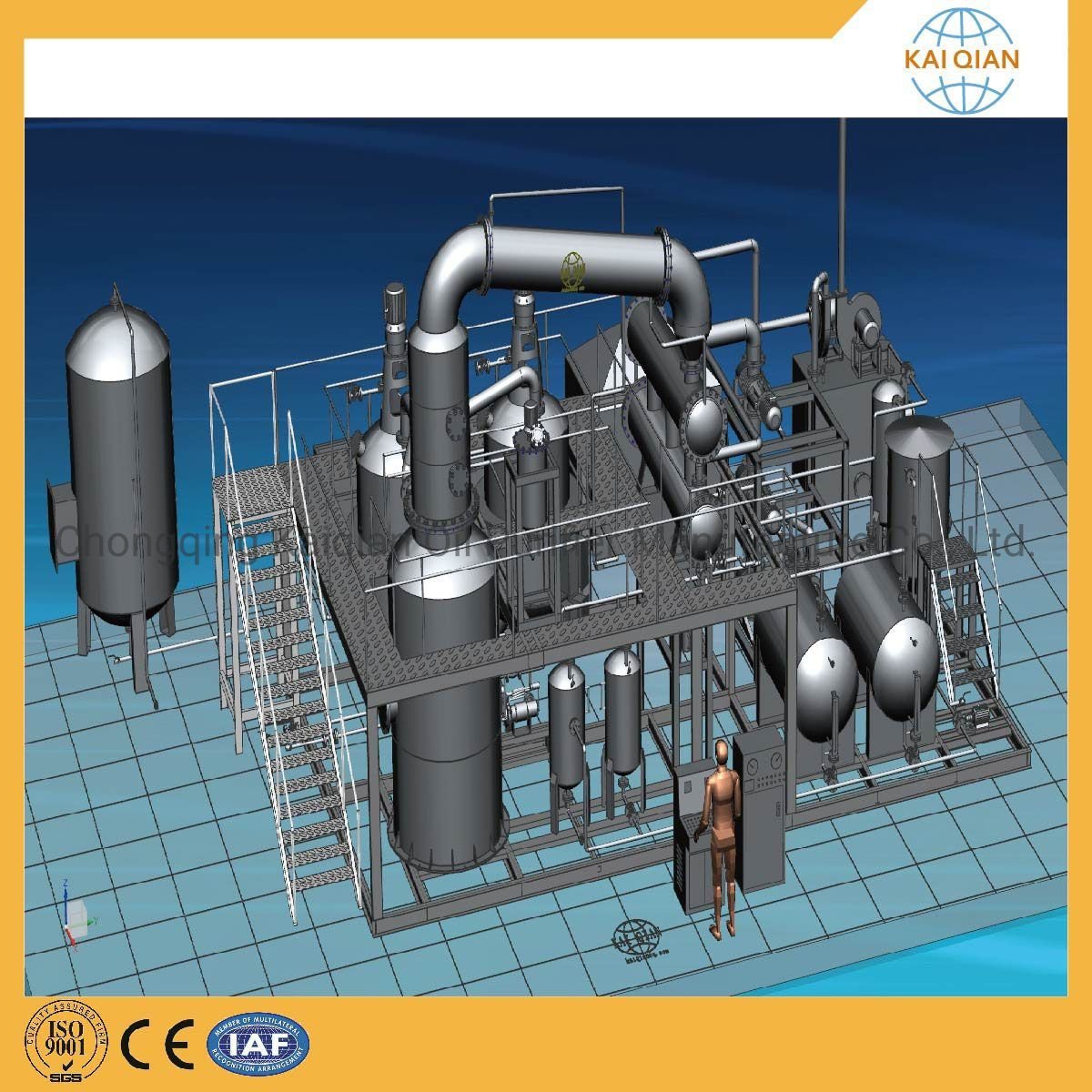
Production line and factory setup overview
A licensed small/medium hazardous-waste re-refining plant converting source-segregated used lubricating oil into tested base-oil fractions through manifest receipt, quarantine sampling, settling and coarse filtration, dehydration and light-end removal, high-vacuum thin-film or molecular distillation, fraction condensation, residue removal, optional polishing, base-oil laboratory release, closed storage and controlled loading. Simple filtration does not restore spent engine oil and is not presented as re-refining.
Recommended lowest-entry line configuration Proceed only after hazardous-waste and air-emission permits, feedstock collection contracts, residue disposal route and a bankable laboratory trial. The smallest responsible basis is roughly 5-10 t/day with closed pretreatment, high-vacuum distillation, condensers, non-condensable-gas treatment, residue handling, firefighting, wastewater control and a full lubricant/base-oil laboratory. Do not bottle the output as engine oil without separate blending and performance approval.
Production process and implementation sequence
- Manifest receipt, quarantine and feed analysis
- Settling, coarse filtration and dewatering
- Dehydration and light-end stripping
- High-vacuum thin-film/molecular distillation
- Fraction condensation and closed collection
- Residue and non-condensable-gas treatment
- Base-oil laboratory release
- Closed tank storage and controlled dispatch
Products, capacity and market fit
- Used lubricating oil is locally generated and often mishandled.
- Proper re-refining can recover base-oil fractions while controlling hazardous residues.
- A licensed collection system supports traceability and stable feed quality.
- Vacuum integrity, emissions, residue disposal and laboratory release make this an industrial—not workshop—project.
- Re-refined base-oil fraction - Boiling/viscosity cut, viscosity index, flash/pour point, water, sulfur, metals, acidity, colour and carbon residue - Licensed lubricant blenders after formula and performance qualification
Core production machinery and line specifications
| Machine / stage | Function / value | Production note |
|---|---|---|
| Manifest receiving and quarantine tanks | Segregates and samples hazardous feed | No mixed unknown waste |
| Settling, filters and dehydration skid | Removes solids, water and light ends | Closed system |
| High-vacuum distillation train | Separates recoverable base-oil cuts | 5-10 t/day |
| Condensers, vacuum and gas treatment | Recovers fractions and controls vapors | Emission guarantee |
| Residue, wastewater and fire systems | Manages hazardous outputs safely | Licensed disposal |
| Base-oil laboratory and storage | Releases and protects product cuts | Traceable tanks |
Raw materials, utilities and factory requirements
- Source-segregated used lubricating oil under manifest
- Filter media and approved polishing media if validated
- Sampling containers and hazardous-waste labels
- Closed product and residue tanks
- Stable three-phase electricity with verified connected load
- Guarded machinery, lockout, ventilation and fire protection
- Covered segregated raw-material and finished-goods storage
- Maintenance tools, safe lifting and critical spare parts
- Hazardous-waste, air and wastewater permits
- Explosion-rated electricals, nitrogen where required and foam firefighting
Indicative low-entry investment and implementation plan
These planning ranges prioritize economical machinery, local labor and local civil works. Final pricing follows confirmed capacity, product specification, delivery terms and site conditions.
| Scope | Indicative range | Entry-plan note |
|---|---|---|
| Receiving, pretreatment and dehydration | US$180k-420k | 5-10 t/day |
| Vacuum distillation, condensers and gas treatment | US$600k-1.5m | Core re-refining |
| Residue/water systems, laboratory and storage | US$280k-720k | Licensed controls |
| Freight, civil works, utilities and commissioning | US$320k-800k | Feed campaign required |
| Indicative project-screening total | US$1.38m-3.44m | Land, permits and working capital excluded |
Detailed proposal and next step
The proposal contains the complete line flow, machinery scope, raw-material and utility requirements, implementation stages and indicative entry planning. Final configuration follows confirmed products, capacity, site and budget.