Production line and factory setup overview
A micro/workshop moulding line producing one school-writing chalk or one construction-marking chalk recipe from qualified Afghan gypsum or calcium carbonate through fine screening, controlled dry dosing, low-shear mixing with water and approved binder, vacuum de-airing where needed, multi-cavity mould filling, setting, assisted demoulding, rack drying, trimming, breakage/dust/writing tests and box packing. The two uses require separate recipes and labels.
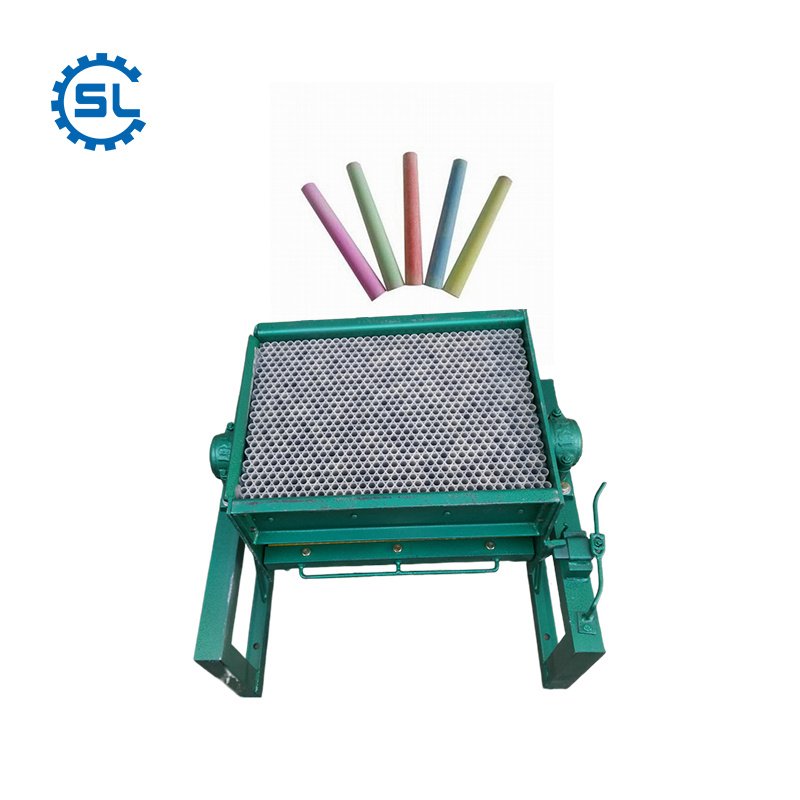
Recommended lowest-entry line configuration Launch one white school chalk recipe with a two- or four-mould rotary machine, small screened powder hopper, mixer, controlled water dosing, demould tray, covered drying racks, edge-finishing screen and simple packing. Validate low dust, smooth writing and safe ingredient limits; do not call ordinary gypsum sticks dustless without measured tests.
Production process and implementation sequence
- Mineral powder and additive release
- Fine screening and dry weighing
- Controlled slurry mixing and de-airing
- Multi-cavity mould filling
- Setting and assisted demoulding
- Covered rack drying
- Trimming, breakage and writing tests
- Counted box packing and lot coding
Products, capacity and market fit
- Afghan gypsum and calcium-carbonate resources can support local chalk conversion.
- A moulding workshop has low power and modest space needs.
- Schools and construction trades offer separate repeat markets.
- Breakage, writing feel, dust and ingredient safety matter more than headline piece count.
- White school-writing chalk - Dimensions, mass, whiteness, strength, writing smoothness, erasing, dust generation, moisture and ingredient limits - Afghan schools, training centres and stationery distributors
Core production machinery and line specifications
| Machine / stage | Function / value | Production note |
|---|---|---|
| Fine powder screen and weighing bench | Controls mineral feed and recipe | One white grade |
| Small slurry mixer and water doser | Creates repeatable mould feed | Batch controlled |
| Rotary two- or four-mould chalk machine | Fills, sets and demoulds sticks | 8,000-12,000 pcs/h |
| Demould trays and covered drying racks | Cures chalk without contamination | Weather-protected |
| Edge-finishing and counting tools | Removes flash and controls pack count | Guarded dust extraction |
| Chalk test and box-packing station | Releases writing performance | Retained lot sample |
Raw materials, utilities and factory requirements
- Qualified fine gypsum or calcium-carbonate powder
- Clean water and a validated low-dose binder system
- Approved pigment only for a separately tested coloured grade
- Printed small boxes, master cartons and labels
- Stable three-phase electricity with verified connected load
- Guarded machinery, lockout, ventilation and fire protection
- Covered segregated raw-material and finished-goods storage
- Maintenance tools, safe lifting and critical spare parts
- Dry covered curing room or low-temperature dryer
- Local extraction at powder screening and finishing
Indicative low-entry investment and implementation plan
These planning ranges prioritize economical machinery, local labor and local civil works. Final pricing follows confirmed capacity, product specification, delivery terms and site conditions.
| Scope | Indicative range | Entry-plan note |
|---|---|---|
| Screen, mixer and water dosing | US$2k-6k | One recipe |
| Two- or four-mould machine and racks | US$4k-12k | Covered drying |
| Finishing, test and packing tools | US$2k-6k | Manual entry |
| Freight, setup and spare moulds | US$2k-5k | Pilot batches |
| Indicative installed low-entry total | US$10k-29k | Building and raw stock excluded |
Detailed proposal and next step
The proposal contains the complete line flow, machinery scope, raw-material and utility requirements, implementation stages and indicative entry planning. Final configuration follows confirmed products, capacity, site and budget.