
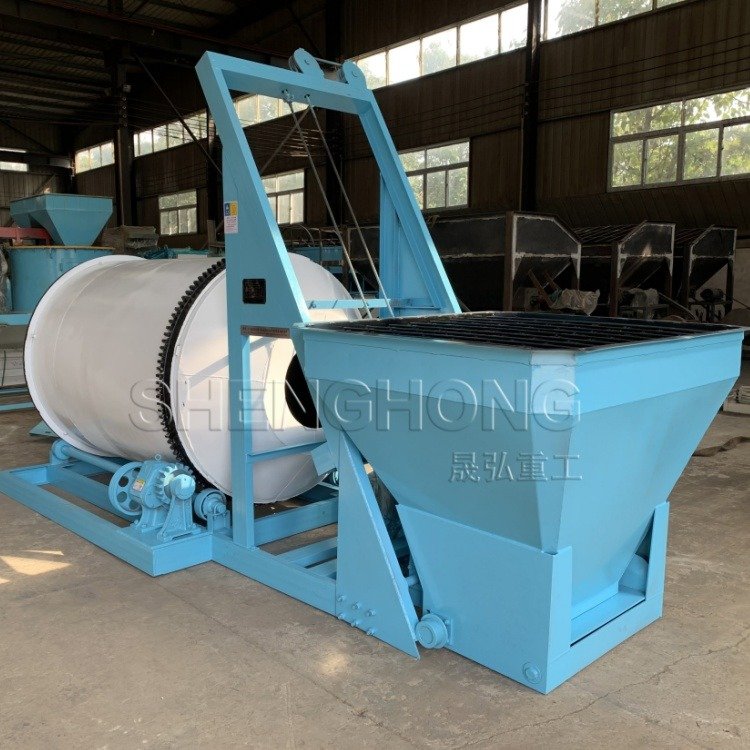
Production line and factory setup overview
A small/medium bulk-blending line producing declared NPK grades from purchased compatible dry granular fertilisers through supplier-certificate release, segregated humidity-controlled storage, screened feeding, gravimetric recipe batching, gentle low-segregation blending, surge transfer, automatic weighing into 25-50 kg bags, stitching, coding, check weighing, nutrient verification and retained-sample control. It performs physical blending only—not ammonia chemistry, acid processing or compound-fertiliser granulation.
Recommended lowest-entry line configuration Launch one agronomist-approved grade at 2-5 t/h using compatible, closely matched granule sizes of certified urea, DAP or MAP and potash. Include three to four covered bins, independent weigh hoppers, a gentle batch or rotary blender, short-drop conveyors, surge hopper, 25-50 kg net weigher, stitcher, coder, check scale and nutrient sampling. Keep incompatible or hygroscopic materials out until storage and caking trials are passed.
Production process and implementation sequence
- Ingredient certificate and compatibility release
- Dry segregated storage and screened feeding
- Independent gravimetric batching
- Gentle low-segregation blending
- Short-drop surge transfer
- Net weighing, stitching and coding
- Check weighing and nutrient sampling
- Retained sample and lot release
Products, capacity and market fit
- Afghan dealers can supply crop- and region-specific blends from standard imported nutrients.
- Physical blending needs far less capital than chemical fertiliser manufacture.
- One grade controls inventory, formulation and segregation risk.
- Certified inputs, accurate weighing and nutrient assays protect farmers and the brand.
- Bulk-blended granular NPK fertiliser - Declared N-P2O5-K2O grade, ingredient sources, granule range, moisture, segregation, net mass and legal label - Crop-specific Afghan farm supply under agronomic recommendation
Core production machinery and line specifications
| Machine / stage | Function / value | Production note |
|---|---|---|
| Three to four segregated feed bins | Keeps certified ingredients dry and separate | Matched granule sizes |
| Independent weigh hoppers | Meters each NPK recipe component | Calibrated gravimetric |
| Gentle batch or rotary blender | Mixes without crushing granules | 2-5 t/h |
| Low-drop conveyors and surge hopper | Limits post-blend segregation | Short transfer path |
| Net weigher, stitcher and coder | Packs declared grade | 25-50 kg |
| Sampling and nutrient-control station | Verifies formula and uniformity | Retained lot sample |
Raw materials, utilities and factory requirements
- Certified compatible granular urea or other nitrogen source
- Certified granular DAP/MAP or selected phosphate source
- Certified granular potash source
- Approved micronutrient granules only after compatibility validation
- Moisture-barrier sacks, thread, labels and pallets
- Stable three-phase electricity with verified connected load
- Guarded machinery, lockout, ventilation and fire protection
- Covered segregated raw-material and finished-goods storage
- Maintenance tools, safe lifting and critical spare parts
- Low-humidity segregated ingredient warehouse
Indicative low-entry investment and implementation plan
These planning ranges prioritize economical machinery, local labor and local civil works. Final pricing follows confirmed capacity, product specification, delivery terms and site conditions.
| Scope | Indicative range | Entry-plan note |
|---|---|---|
| Feed bins and gravimetric batching | US$22k-55k | Three to four ingredients |
| Blender, conveyors and surge hopper | US$18k-48k | 2-5 t/h |
| Bagging, dust control and quality station | US$15k-38k | 25-50 kg |
| Freight, installation and spares | US$14k-35k | Formula trials |
| Indicative installed low-entry total | US$69k-176k | Warehouse and fertiliser inventory excluded |
Detailed proposal and next step
The proposal contains the complete line flow, machinery scope, raw-material and utility requirements, implementation stages and indicative entry planning. Final configuration follows confirmed products, capacity, site and budget.