
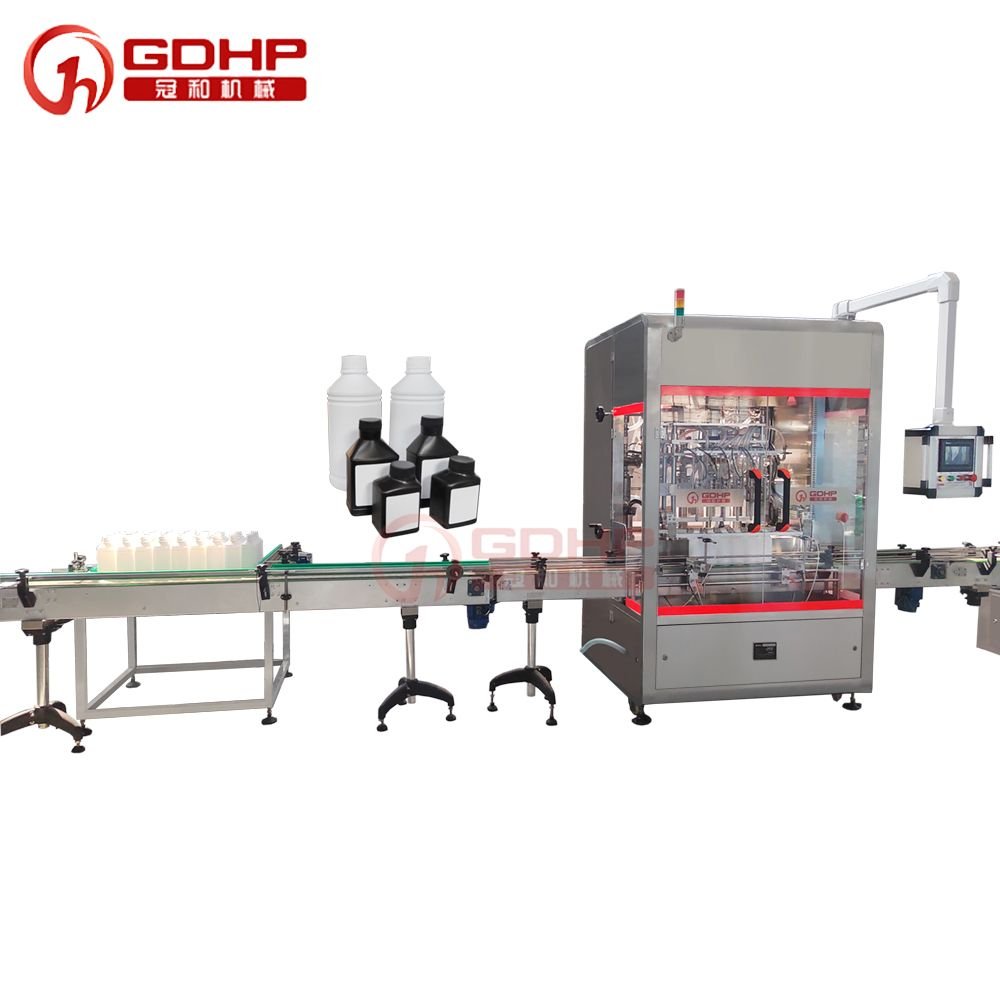
Production line and factory setup overview
A small/medium downstream line making one non-licensed industrial lubricant grade from purchased certified base oils and additive packages through segregated tank receipt, heated metered transfer, gravimetric or mass-flow dosing, closed agitated blending, temperature-controlled homogenization, recirculation and polish filtration, laboratory release, clean-product holding, 1-5 L or 20 L filling, capping, induction sealing, coding and retained samples. It does not refine crude or used oil.
Recommended lowest-entry line configuration Launch one simple hydraulic-oil or general industrial lubricant grade at 2-5 t/batch using supplier-approved base oil and additive package. Include bunded feed tanks, heated transfer, calibrated load cells, one closed blending kettle, recirculation/filter skid, clean hold tank, laboratory and one container family. Automotive engine-oil claims require licensed formulas and recognized performance approvals.
Production process and implementation sequence
- Base-oil and additive certificate release
- Bunded tank receipt and filtered transfer
- Calibrated formula dosing
- Closed heated blending and recirculation
- Polish filtration and laboratory release
- Clean-product holding
- Net filling, capping, sealing and coding
- Retained sample and batch traceability
Products, capacity and market fit
- Afghanistan imports base oils and finished lubricants but can add value through controlled local blending and packaging.
- One industrial grade avoids expensive engine-test claims at entry.
- Bulk purchasing and local packs can serve workshops, fleets and factories.
- Viscosity, cleanliness, additive dosing and counterfeit-resistant traceability are essential.
- One industrial hydraulic or circulating-oil grade - Declared viscosity grade, viscosity index, flash point, pour point, water, cleanliness, acid number, additive identity and pack mass - Afghan industrial plants, workshops and fleet maintenance
Core production machinery and line specifications
| Machine / stage | Function / value | Production note |
|---|---|---|
| Bunded base-oil and additive tanks | Stores certified inputs separately | One launch formula |
| Heated transfer and calibrated dosing | Meters formula accurately | Load-cell or mass-flow |
| Closed blending kettle | Homogenizes base oil and additives | 2-5 t/batch |
| Recirculation and polish-filter skid | Controls cleanliness and uniformity | Grade-specific filter |
| Clean hold tank and filling line | Protects and packs released oil | One container family |
| Lubricant laboratory | Releases viscosity and safety properties | Retained samples |
Raw materials, utilities and factory requirements
- Certified virgin base oils of the required viscosity range
- Supplier-approved additive package for one industrial grade
- Clean new bottles or pails, caps, induction seals and labels
- Filters, sampling bottles and cleaning oil
- Stable three-phase electricity with verified connected load
- Guarded machinery, lockout, ventilation and fire protection
- Covered segregated raw-material and finished-goods storage
- Maintenance tools, safe lifting and critical spare parts
- Bunded oil storage, spill recovery and oil-water separation
- Controlled heating without open flame
Indicative low-entry investment and implementation plan
These planning ranges prioritize economical machinery, local labor and local civil works. Final pricing follows confirmed capacity, product specification, delivery terms and site conditions.
| Scope | Indicative range | Entry-plan note |
|---|---|---|
| Bunded tanks, transfer and dosing | US$38k-95k | One formula |
| Blend kettle, recirculation and filtration | US$32k-82k | 2-5 t/batch |
| Laboratory and one filling family | US$28k-72k | Industrial grade |
| Freight, installation and spares | US$22k-55k | Calibration included |
| Indicative installed low-entry total | US$120k-304k | Building, approvals and oil stock excluded |
Detailed proposal and next step
The proposal contains the complete line flow, machinery scope, raw-material and utility requirements, implementation stages and indicative entry planning. Final configuration follows confirmed products, capacity, site and budget.