
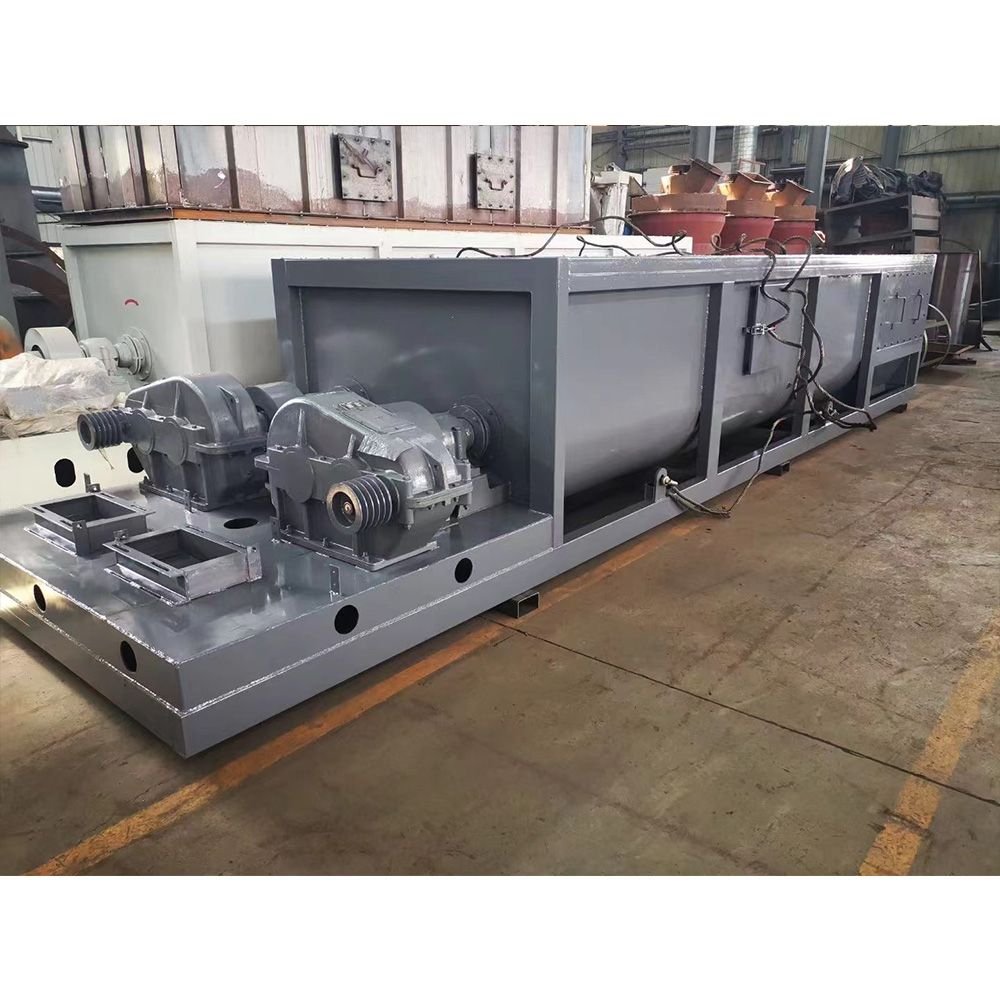
Production line and factory setup overview
A small controlled lime-hydration and finishing line receiving certified quicklime made from Afghan limestone and converting it into one declared hydrated-lime grade through enclosed quicklime crushing, silo storage and metering, staged water slaking, temperature and residence control, slag removal, cooling, air classification, dust-contained product storage, sampling and moisture/Ca(OH)2/fineness testing, and 20-25 kg valve-bag packing. It excludes limestone calcination and does not market caustic lime as a universal medical or food disinfectant.
Recommended lowest-entry line configuration For the smallest responsible entry, buy certified high-reactivity quicklime from a compliant local kiln and install a 3 t/h enclosed two-stage slaker, bag filter, separator/classifier, cooler, product silo and valve-bag packer. Launch one agricultural soil-liming grade only after neutralizing-value, fineness and contaminant testing. Any sanitation-grade product requires a separate specification, label, exposure assessment and regulatory approval.
Production process and implementation sequence
- Quicklime certificate, reactivity and size release
- Enclosed crushing and silo metering
- Controlled first- and second-stage slaking
- Slag removal, cooling and classification
- Dust-contained product silo
- Chemical, moisture and fineness release
- Valve-bag filling and coding
- Safe palletizing, storage and dispatch
Products, capacity and market fit
- Afghan limestone can support a local lime value chain.
- Buying certified quicklime avoids the cost and emissions of a kiln at entry.
- Hydration and fine bagging create a controlled agricultural soil input.
- Caustic exposure, dust, exothermic slaking and truthful application labels require strict control.
- Hydrated agricultural lime - Declared Ca(OH)2 or available-lime content, neutralizing value, fineness, moisture, insolubles, contaminants and application label - Soil pH correction only under soil-test and agronomic recommendation
Core production machinery and line specifications
| Machine / stage | Function / value | Production note |
|---|---|---|
| Enclosed quicklime crusher and feed silo | Controls reactive CaO feed size | Below supplier limit |
| Metered two-stage lime slaker | Hydrates CaO under controlled water and residence | 3 t/h entry |
| Bag filter and vapor-control system | Contains caustic dust and steam | Negative-pressure points |
| Grit separator and air classifier | Removes unreacted material and controls fineness | One grade |
| Cooler and sealed product silo | Protects stable dry hydrate | Safe pack temperature |
| Valve-bag filler and lime laboratory | Releases traceable 20-25 kg packs | Ca(OH)2/fineness/moisture |
Raw materials, utilities and factory requirements
- Certified high-reactivity quicklime made from qualified Afghan limestone
- Controlled clean slaking water
- Moisture-resistant valve sacks and caustic-hazard labels
- Laboratory reagents, filters and critical wear parts
- Stable three-phase electricity with verified connected load
- Guarded machinery, lockout, ventilation and fire protection
- Covered segregated raw-material and finished-goods storage
- Maintenance tools, safe lifting and critical spare parts
- Caustic-resistant floors, emergency shower and eyewash
- Enclosed dust extraction and filtered exhaust
Indicative low-entry investment and implementation plan
These planning ranges prioritize economical machinery, local labor and local civil works. Final pricing follows confirmed capacity, product specification, delivery terms and site conditions.
| Scope | Indicative range | Entry-plan note |
|---|---|---|
| Quicklime crushing, silo and metering | US$24k-58k | Purchased quicklime |
| Two-stage slaker, dust filter and separator | US$65k-150k | 3 t/h basis |
| Cooler, product silo, laboratory and bagging | US$32k-78k | One grade |
| Freight, civil interfaces and commissioning | US$28k-65k | Caustic-safe installation |
| Indicative installed low-entry total | US$149k-351k | Limestone kiln, building and stock excluded |
Detailed proposal and next step
The proposal contains the complete line flow, machinery scope, raw-material and utility requirements, implementation stages and indicative entry planning. Final configuration follows confirmed products, capacity, site and budget.