
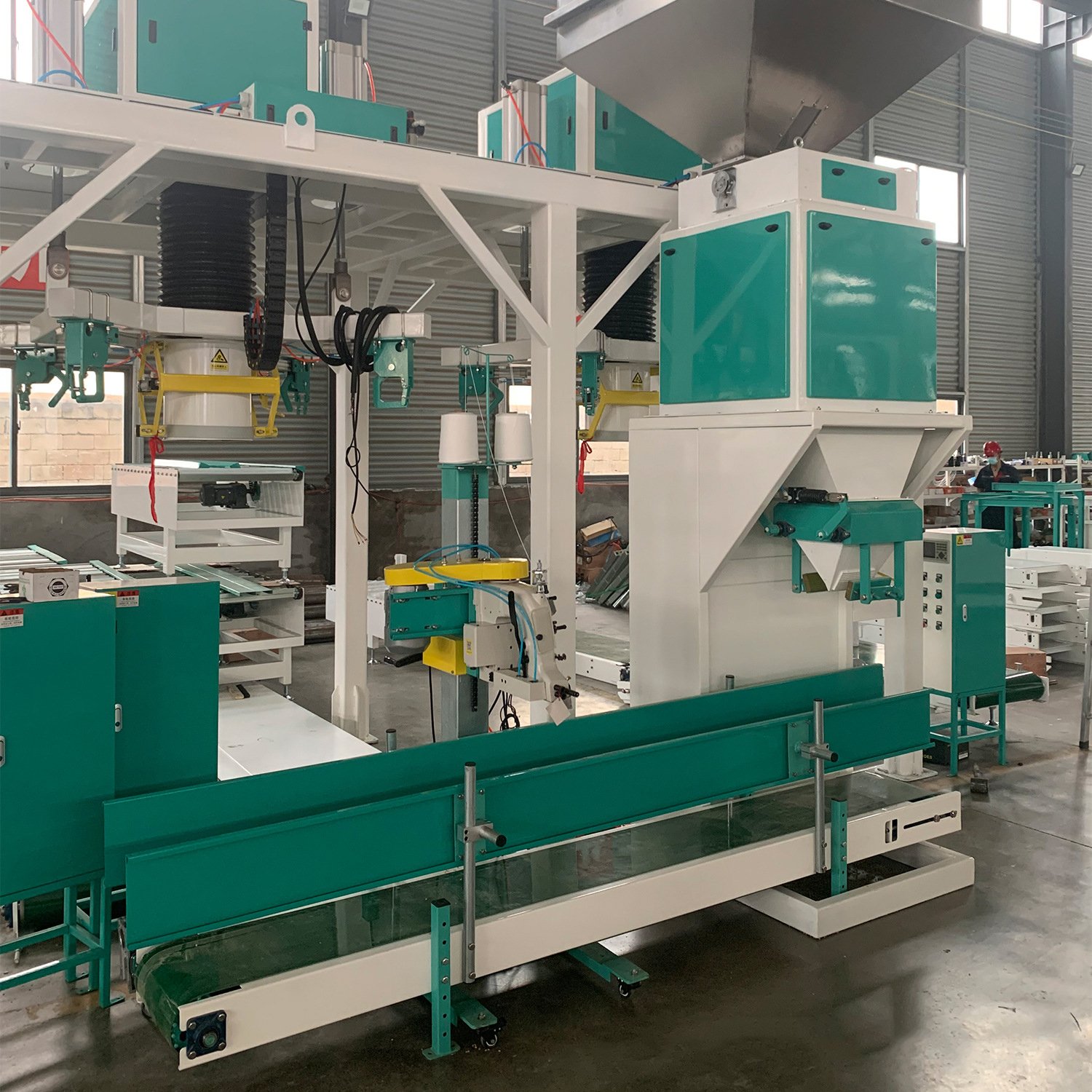
Production line and factory setup overview
A micro/workshop finishing line receiving fully matured compost and converting it into a consistent bagged soil amendment through quarantine inspection, removal of plastics and metal, controlled feeding, enclosed trommel screening, oversize and contaminant separation, optional recipe blending only after agronomic approval, surge storage, gross weighing into open-mouth 10-25 kg bags, stitching or heat sealing, coding, check weighing and retained-sample release. Active composting and waste sanitation are outside this line.
Recommended lowest-entry line configuration Accept only fully stabilized compost with a documented source. Start with one screened unblended soil-amendment grade, a small covered feed hopper, magnet/manual picking, enclosed 1-2 t/h trommel with dust control, oversize return bin, surge hopper, semi-automatic gross weigher for 10-25 kg open-mouth bags, stitcher, coder and check scale. Do not bag hot, odorous or pathogen-unsafe material.
Production process and implementation sequence
- Mature-compost quarantine and sampling
- Plastic/metal removal
- Controlled trommel screening
- Oversize separation and return
- Optional approved blending
- Surge storage and gross weighing
- Bag stitching/sealing and coding
- Check weight, retained sample and release
Products, capacity and market fit
- Screened bagged compost can serve nurseries, farms and urban gardening.
- A finishing line is much cheaper than a complete municipal composting plant.
- One unblended grade reduces formulation and labeling risk.
- Maturity, pathogens, weed seeds, salts, plastics and bag weight determine buyer trust.
- Screened bagged compost soil amendment - Declared feed source, screen size, maturity, moisture, pH, EC, organic matter, contaminants, pathogens and net mass - Nurseries, farms, landscaping and household gardening
Core production machinery and line specifications
| Machine / stage | Function / value | Production note |
|---|---|---|
| Covered receiving hopper and picking belt | Quarantines and cleans mature compost | Documented source |
| Magnet and enclosed trommel screen | Removes metal and controls particle size | 1-2 t/h |
| Oversize/contaminant bins | Separates reject and reusable oversize | Clearly segregated |
| Optional small ribbon mixer | Blends only approved recipe | Excluded for unblended launch |
| Surge hopper and gross weigher | Fills open-mouth bags | 10-25 kg |
| Stitcher, coder and check scale | Closes and verifies every pack | Lot traceability |
Raw materials, utilities and factory requirements
- Fully matured source-documented compost
- Approved amendment only if an agronomic formula is declared
- Breathable or moisture-suitable open-mouth sacks
- Thread, labels, ink and retained-sample bags
- Stable three-phase electricity with verified connected load
- Guarded machinery, lockout, ventilation and fire protection
- Covered segregated raw-material and finished-goods storage
- Maintenance tools, safe lifting and critical spare parts
- Washable covered receiving and packing floor
- Local extraction at screen and bag filler
Indicative low-entry investment and implementation plan
These planning ranges prioritize economical machinery, local labor and local civil works. Final pricing follows confirmed capacity, product specification, delivery terms and site conditions.
| Scope | Indicative range | Entry-plan note |
|---|---|---|
| Receiving, picking and enclosed trommel | US$8k-22k | 1-2 t/h mature compost |
| Surge hopper, weigher, conveyor and stitcher | US$7k-18k | 10-25 kg bags |
| Dust control, test kit and floor interfaces | US$5k-13k | Safe finishing |
| Freight, setup and spares | US$4k-10k | Bag trials |
| Indicative installed low-entry total | US$24k-63k | Composting plant, building and stock excluded |
Detailed proposal and next step
The proposal contains the complete line flow, machinery scope, raw-material and utility requirements, implementation stages and indicative entry planning. Final configuration follows confirmed products, capacity, site and budget.