
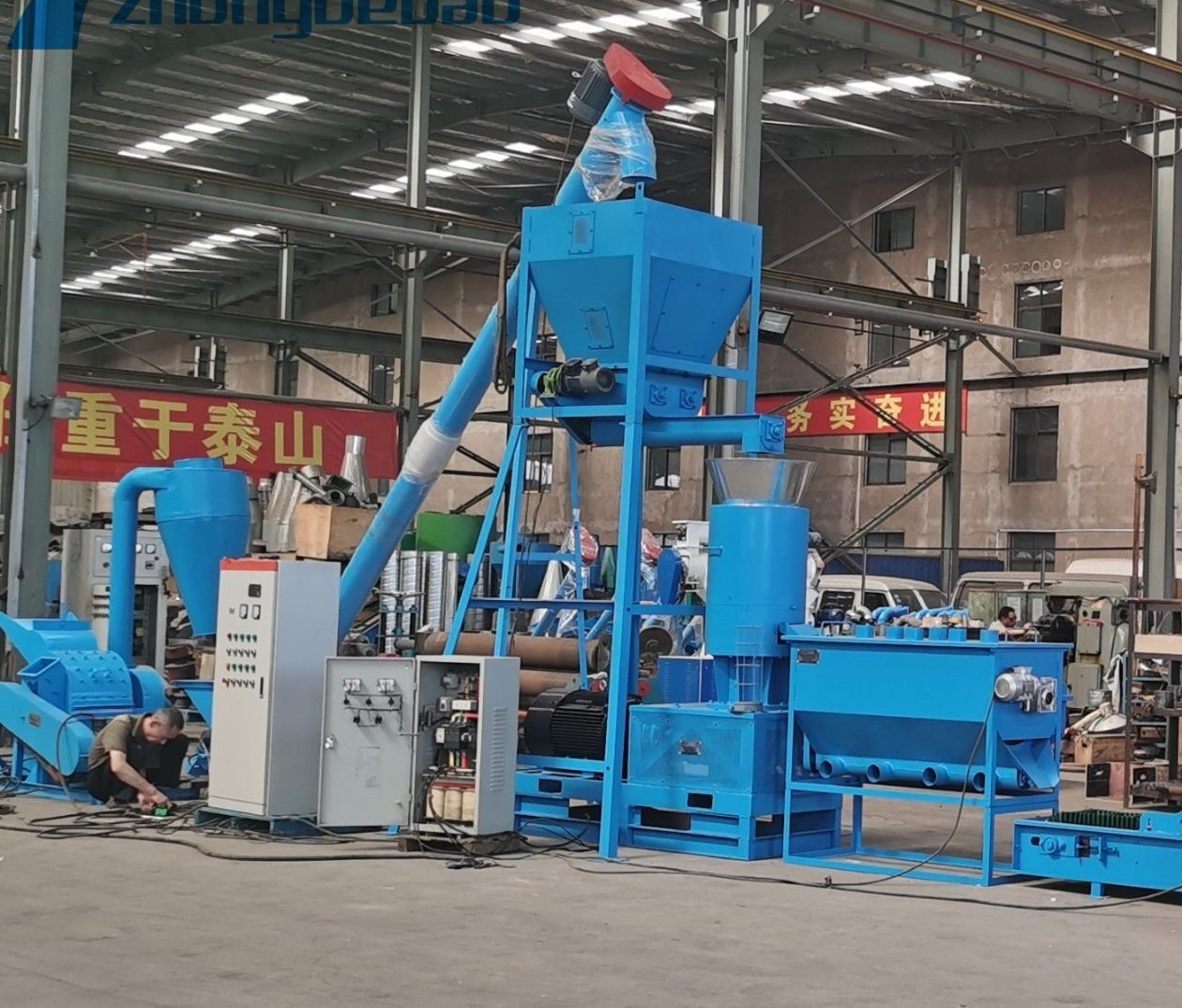
Production line and factory setup overview
A compact fuel-pellet line converting one qualified dry Afghan crop-residue or clean wood-residue blend through contaminant removal, controlled size reduction, moisture measurement and drying where required, buffer mixing, ring-die pelletizing, counterflow cooling, fines screening and recycle, batch release and moisture-protected bagging. Feedstock acceptance and ash, durability, bulk-density, fines, moisture and calorific-value testing are integral to the line.
Recommended lowest-entry line configuration Start with one documented feedstock recipe and a 300-500 kg/h ring-die line. Buy pre-dried residue when possible; add a guarded low-temperature dryer only after measuring seasonal moisture and fuel cost. Include metal removal, hammer mill, live-bottom buffer, conditioner, pellet mill, counterflow cooler, screen/fines return, dust collection, scales and 15-25 kg bagging. Do not promise premium domestic-heating pellets until ash and emissions are independently verified.
Production process and implementation sequence
- Feedstock lot identification
- Metal/stone removal and milling
- Moisture measurement and controlled drying
- Buffer blending and conditioning
- Ring-die pelletizing
- Counterflow cooling
- Screening and fines return
- Fuel testing and protected bagging
Products, capacity and market fit
- Afghan pruning, sawmill and selected crop residues can displace imported solid fuel.
- Pellets reduce storage volume and provide a metered boiler fuel.
- One controlled feedstock avoids unstable ash, slagging and pellet strength.
- Drying energy and dust/fire controls determine whether the business is economic and safe.
- Industrial biomass fuel pellet - One approved residue blend, diameter, moisture, ash, durability, fines, density and calorific value - Boilers, kilns and institutional heating after combustion trial
Core production machinery and line specifications
| Machine / stage | Function / value | Production note |
|---|---|---|
| Feed inspection, magnet and stone trap | Protects process and fuel quality | One residue blend |
| Hammer mill and aspiration | Controls particle size and dust | Screen selected by feed |
| Moisture meter and optional dryer | Stabilizes pelletizing moisture | Seasonal need verified |
| Buffer, conditioner and ring-die mill | Forms dense fuel pellets | 300-500 kg/h |
| Counterflow cooler and fines screen | Hardens pellets and recycles fines | Closed fines loop |
| Fuel laboratory and bagging station | Releases tested saleable batches | 15-25 kg bags |
Raw materials, utilities and factory requirements
- One qualified crop-residue or clean wood-residue blend
- Approved small binder only if validated and declared
- Moisture-resistant sacks, labels and pallets
- Lubricants, dies, rollers and wear parts
- Stable three-phase electricity with verified connected load
- Guarded machinery, lockout, ventilation and fire protection
- Covered segregated raw-material and finished-goods storage
- Maintenance tools, safe lifting and critical spare parts
- Explosion-relief, spark detection and dust extraction designed for biomass
- Dryer heat source and emissions controls only if wet feed is accepted
Indicative low-entry investment and implementation plan
These planning ranges prioritize economical machinery, local labor and local civil works. Final pricing follows confirmed capacity, product specification, delivery terms and site conditions.
| Scope | Indicative range | Entry-plan note |
|---|---|---|
| Cleaning, milling and feed buffer | US$18k-45k | One residue blend |
| Pellet mill, cooler, screen and dust control | US$38k-90k | 300-500 kg/h basis |
| Laboratory and bagging | US$10k-24k | Fuel release tests |
| Freight, installation and spares | US$14k-34k | Dies and commissioning |
| Indicative installed low-entry total | US$80k-193k | Dryer, building and feedstock stock excluded |
Detailed proposal and next step
The proposal contains the complete line flow, machinery scope, raw-material and utility requirements, implementation stages and indicative entry planning. Final configuration follows confirmed products, capacity, site and budget.