
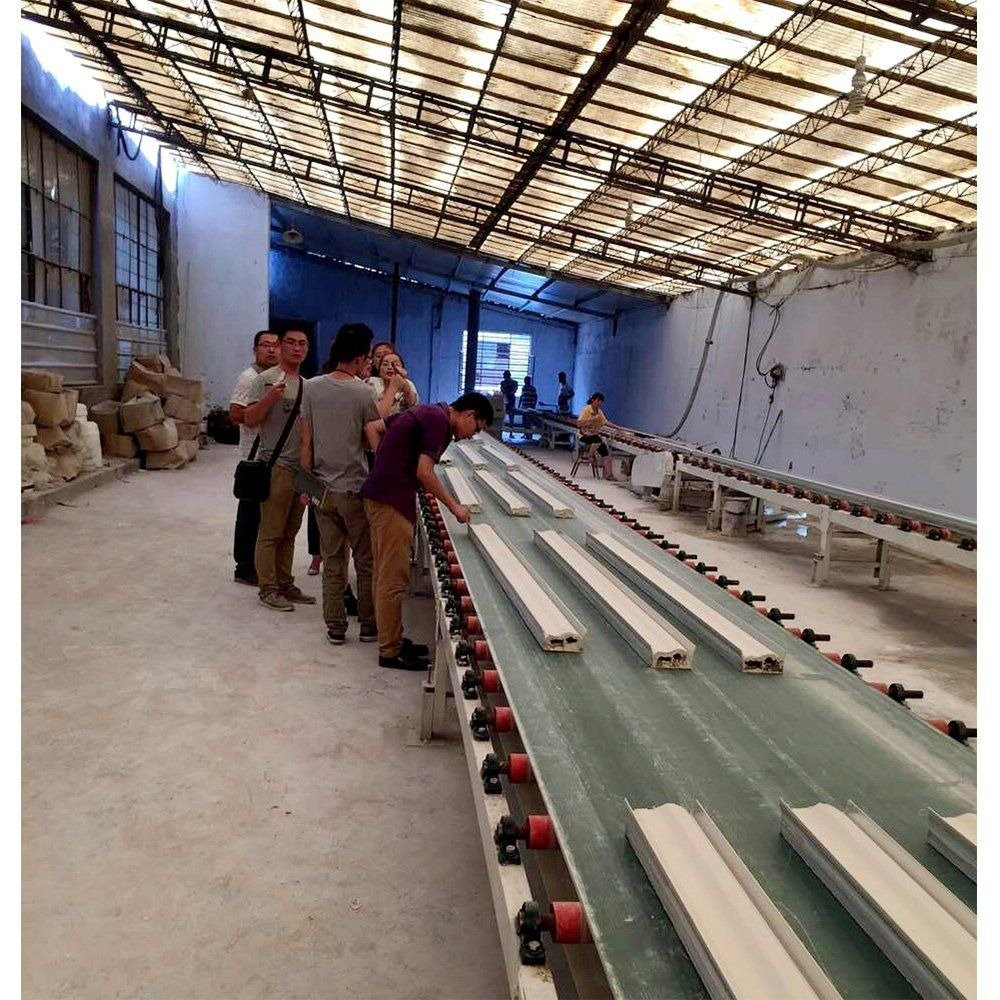
Production line and factory setup overview
Makes reusable silicone-rubber decorative moulds from master patterns through pattern finishing, mould-box preparation, accurate silicone/catalyst weighing, degassing, controlled curing, demoulding, trimming and repeat-cast inspection.
Recommended lowest-entry line configuration Launch with a small family of masters for gypsum, concrete or resin décor. Confirm silicone type, catalyst ratio, cure temperature, release agents, undercuts, wall thickness, tear strength and repeat-cast requirement before pricing moulds.
Production process and implementation sequence
- Master pattern preparation
- Mould-box/parting setup
- Silicone weighing/mixing
- Vacuum degassing
- Pouring/brush-up
- Controlled cure
- Demould/trimming
- Trial cast/repeat-use release
Products, capacity and market fit
- Approve a physical sample and applicable standard.
- Launch with a defined product range and documented tool settings.
- Keep material and quality records for each batch.
- Silicone decorative moulds - Silicone type/shore hardness, catalyst ratio, mould thickness, master pattern, undercut design, tear strength, cure time, release agent and expected casting cycles - Gypsum décor, artificial stone, concrete ornaments, resin craft, wall panels and restoration workshops
Core production machinery and line specifications
| Machine / stage | Function / value | Production note |
|---|---|---|
| Pattern/CNC finishing bench | Prepares masters | Surface/undercut detail |
| Precision scale/mixer | Controls silicone ratio | Catalyst accuracy |
| Vacuum chamber | Removes bubbles | Degassing time |
| Curing racks | Stabilises moulds | Temperature/cure record |
| Trial-cast bench | Checks repeat use | Tear/detail release |
Raw materials, utilities and factory requirements
- RTV silicone rubber, catalyst, pigments where needed, master patterns, release agents, mould boxes, backing materials, trimming blades and packing
- Stable electricity, covered raw-material storage and protected finished-goods handling
- Guarded equipment, documented maintenance, essential spares and product-specific safety controls
Indicative low-entry investment and implementation plan
These planning ranges prioritize economical machinery, local labor and local civil works. Final pricing follows confirmed capacity, product specification, delivery terms and site conditions.
| Scope | Indicative range | Entry-plan note |
|---|---|---|
| Pattern, weighing and mixing tools | US$2k-8k | Small master range |
| Vacuum, curing and trimming equipment | US$2k-10k | Bubble/cure control |
| Trial cast materials and setup | US$1k-5k | Sample-led release |
| Indicative entry total | US$5k-23k | Workshop and master-design cost excluded |
Detailed proposal and next step
The proposal contains the complete line flow, machinery scope, raw-material and utility requirements, implementation stages and indicative entry planning. Final configuration follows confirmed products, capacity, site and budget.