
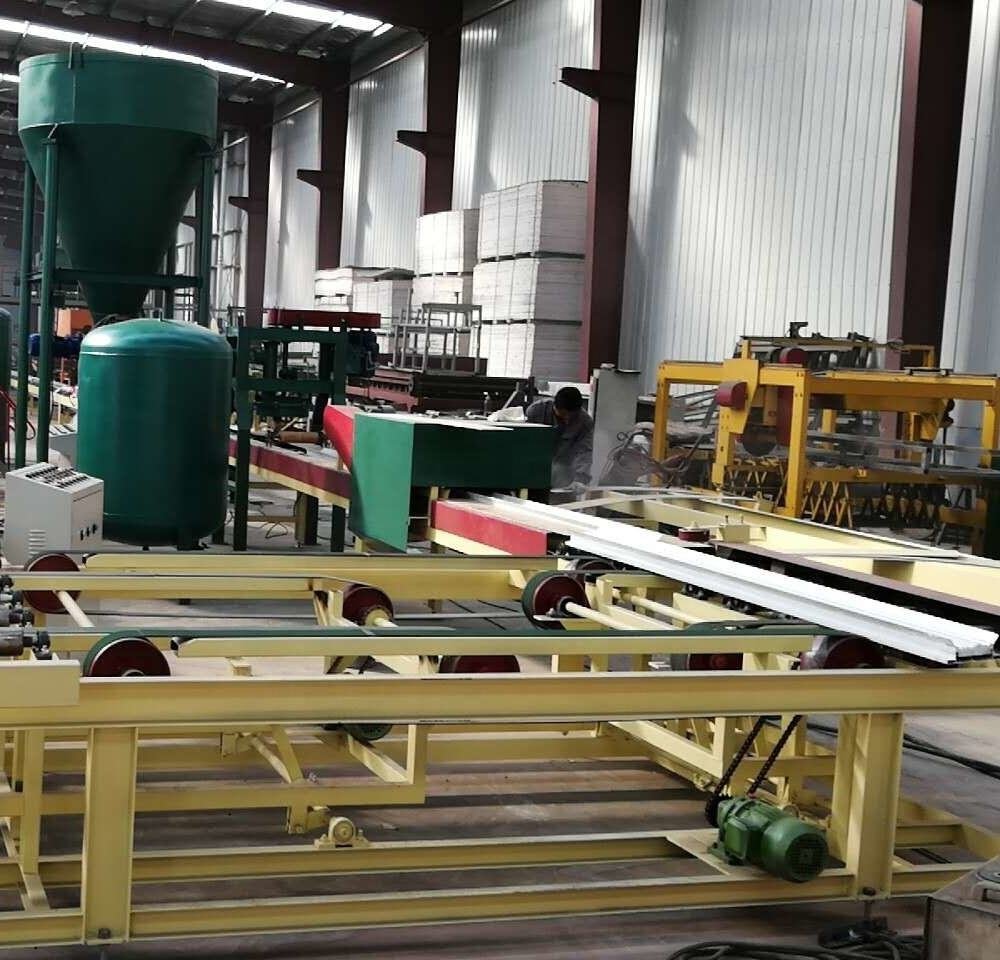
Production line and factory setup overview
Produces lightweight polyurethane cornices and trim profiles by accurately metering two-component PU into reusable moulds, controlled curing, trimming, priming and packing.
Recommended lowest-entry line configuration Start with 6–12 proven moulds and a low-output metering/mixing system. Isocyanate handling requires supplier SDS, trained staff, ventilation, PPE and a controlled cure area.
Production process and implementation sequence
- Mould preparation and release agent
- Polyol/isocyanate metering and mix
- Closed-mould casting
- Controlled cure and demoulding
- Trim, prime and inspect
- Pack matched profiles
Products, capacity and market fit
- Approve a physical sample and the intended installation system.
- Launch with a limited, saleable profile or finish range.
- Keep batch records for material, mould and quality checks.
- PU decorative cornices - Profile accuracy, density, cure, straightness, surface finish, primer adhesion and installation compatibility - Interior contractors, gypsum/ceiling shops, builders and retail finishing outlets
Core production machinery and line specifications
| Machine / stage | Function / value | Production note |
|---|---|---|
| PU metering/mixing unit | Dispenses two-component resin | Ratio and output verified |
| Reusable profile moulds | Forms cornice geometry | 6–12 starter profiles |
| Cure/trim station | Stabilises and finishes castings | Ventilated controlled area |
| Primer/packing bench | Prepares installer-ready pieces | Straightness and finish check |
Raw materials, utilities and factory requirements
- Specified polyol and isocyanate system, release agent, primer, pigments if approved, cartons and protective packing
- Stable power, extraction/ventilation and dry covered storage
- Guarded cutting equipment, documented maintenance and essential spares
Indicative low-entry investment and implementation plan
These planning ranges prioritize economical machinery, local labor and local civil works. Final pricing follows confirmed capacity, product specification, delivery terms and site conditions.
| Scope | Indicative range | Entry-plan note |
|---|---|---|
| Metering/mixing and safety extraction | US$12k–35k | Small controlled casting scope |
| Starter mould family and finishing tools | US$8k–30k | 6–12 selected profiles |
| Indicative entry total | US$25k–75k | Chemical inventory and building excluded |
Detailed proposal and next step
The proposal contains the complete line flow, machinery scope, raw-material and utility requirements, implementation stages and indicative entry planning. Final configuration follows confirmed products, capacity, site and budget.