
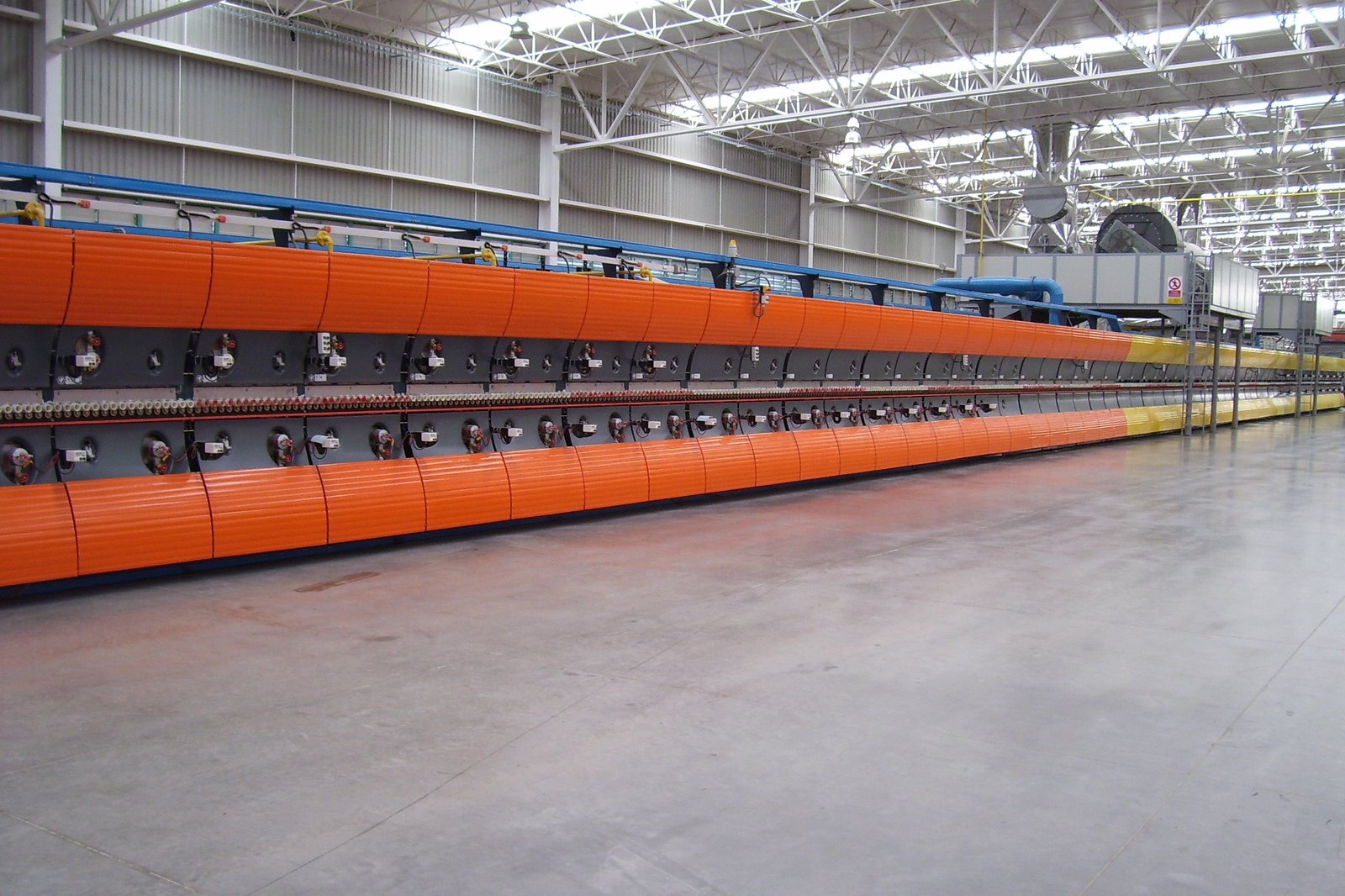
Production line and factory setup overview
Produces weather-resistant glazed clay roofing tiles from prepared Afghan clay through crushing, screening, controlled moisture mixing, vacuum extrusion or pressing, drying, glazing, kiln firing, cooling, sorting and packing.
Recommended lowest-entry line configuration Begin with one interlocking roof-tile profile and a clay-body trial. Select clay preparation, extrusion/pressing, controlled drying and a properly instrumented kiln together; roof-tile geometry, firing curve, water absorption and frost/weather performance must be proven on local clay.
Production process and implementation sequence
- Clay receiving, weathering and sampling
- Crushing, screening and moisture-controlled mixing
- Vacuum extrusion or profile pressing
- Green-tile cutting, trimming and profile inspection
- Controlled drying
- Glaze preparation and application
- Kiln firing and controlled cooling
- Sort, water-absorption test, pack and dispatch
Products, capacity and market fit
- Approve a physical product sample and its applicable performance standard.
- Launch with a limited, high-demand format and documented mould/tool setting.
- Keep batch, firing/cure and release records for every production lot.
- Glazed clay roofing tiles - Interlocking profile, dimensions, water absorption, fired strength, glaze adhesion, colour consistency, overlap and fixing detail - Housing, heritage projects, villas, roofing contractors and building-material dealers
Core production machinery and line specifications
| Machine / stage | Function / value | Production note |
|---|---|---|
| Clay crusher, screen and mixer | Prepares a consistent ceramic body | Local-clay moisture and particle control |
| Vacuum extruder or roof-tile press | Forms the approved interlocking profile | One launch mould/profile |
| Dryer racks or controlled dryer | Removes water without cracking or warping | Green-tile moisture schedule |
| Glaze booth and firing kiln | Applies finish and develops fired properties | Recorded firing curve |
| Roof-tile test and packing bench | Releases compatible roof units | Dimension/absorption/overlap check |
Raw materials, utilities and factory requirements
- Tested Afghan clay, grog or sand where required, water, approved stains/glazes, kiln fuel or electricity, setters, packaging and profile-tool spares
- Stable three-phase electricity, covered raw-material storage and protected finished-goods space
- Guarded machinery, documented maintenance, essential spares and defined dust/heat controls
Indicative low-entry investment and implementation plan
These planning ranges prioritize economical machinery, local labor and local civil works. Final pricing follows confirmed capacity, product specification, delivery terms and site conditions.
| Scope | Indicative range | Entry-plan note |
|---|---|---|
| Clay preparation and extrusion/pressing | US$45k–150k | One roof-tile profile basis |
| Drying, glazing and kiln system | US$120k–420k | Fuel and firing-control scope |
| Handling, test equipment, freight and setup | US$45k–140k | Local clay trials required |
| Indicative project total | US$210k–710k | Land, building and clay stock excluded |
Detailed proposal and next step
The proposal contains the complete line flow, machinery scope, raw-material and utility requirements, implementation stages and indicative entry planning. Final configuration follows confirmed products, capacity, site and budget.