
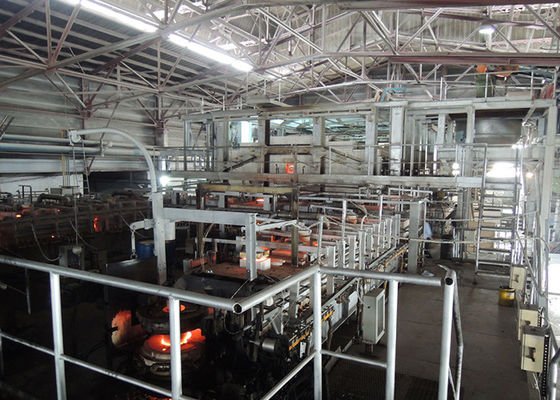
Production line and factory setup overview
Strategic float-glass manufacturing that melts qualified silica sand, soda ash, limestone and cullet in a continuous furnace, forms ribbon glass on molten tin, anneals, cuts, inspects and dispatches architectural flat glass.
Recommended lowest-entry line configuration Proceed only after an independent study proves suitable silica chemistry, long-term fuel/power, water, cullet, furnace rebuilding strategy, domestic and export off-take, emissions permits, logistics and experienced float-glass EPC/operating partner.
Production process and implementation sequence
- Resource, market and site feasibility
- Process design and EPC performance guarantees
- Civil works, utilities and long-lead equipment
- Installation, commissioning and interlock testing
- Representative production ramp-up
- Laboratory qualification and buyer acceptance
- Operator training, spares and controlled handover
Products, capacity and market fit
- This is a strategic plant, not a low-entry equipment package.
- Bankable feedstock, utility, permit, market, EPC and financing evidence is required before selection.
- Operate only with an independent laboratory, defined quality release and preventive-maintenance program.
- Architectural float glass - Confirmed thickness, width, optical quality, flatness, colour, defect limits, cut size, packing and standard - Architectural glazing, processors, fabricators, construction projects and regional flat-glass distributors
Core production machinery and line specifications
| Machine / stage | Function / value | Production note |
|---|---|---|
| Batch-house and raw-material system | Controls glass chemistry | Silica and recipe quality |
| Continuous melting furnace | Melts refined batch | Fuel, pull rate and emissions |
| Tin bath and annealing lehr | Forms and relieves glass ribbon | Flatness and stress |
| Cutting/inspection/packing | Releases saleable sheets | Optical and dimensional quality |
| Glass laboratory and emission systems | Controls process and compliance | Chemistry and defects |
Raw materials, utilities and factory requirements
- Qualified low-iron silica, soda ash, limestone/dolomite, refining agents, cullet, furnace refractories, fuel, packaging and laboratory consumables
- Bankable electricity/fuel/water plans, process cooling and treatment, plant fire safety, laboratory, covered stores and qualified operation team
- Environmental permits, emissions control, waste route, maintenance workshop, critical spares and site-specific safety systems
Indicative low-entry investment and implementation plan
These planning ranges prioritize economical machinery, local labor and local civil works. Final pricing follows confirmed capacity, product specification, delivery terms and site conditions.
| Scope | Indicative range | Entry-plan note |
|---|---|---|
| Batch house, furnace and tin-bath system | US$180m-550m | Capacity and fuel dependent |
| Lehr, cutting, inspection and packing | US$45m-160m | Width and automation scope |
| Utilities, emissions, laboratory and installation | US$70m-230m | Compliance-critical |
| Indicative strategic project total | US$295m-940m | Mine, land, finance and working capital excluded |
Detailed proposal and next step
The proposal contains the complete line flow, machinery scope, raw-material and utility requirements, implementation stages and indicative entry planning. Final configuration follows confirmed products, capacity, site and budget.