
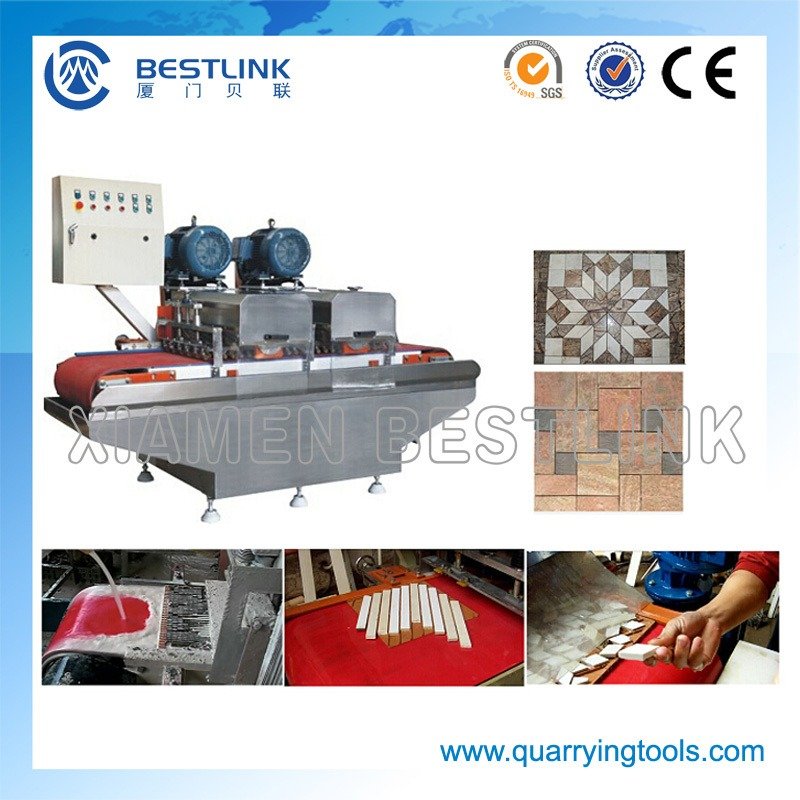
Production line and factory setup overview
Produces patterned encaustic cement tiles by dividing pigment face mixes in a metal pattern mould, applying a dry backing layer, hydraulic pressing, controlled wet cure, drying, dimensional inspection, optional protective treatment and packing.
Recommended lowest-entry line configuration Begin with four to eight saleable patterns, one standard size and proven pigment recipes. Use a small hydraulic press with accurate divider moulds and controlled cure; market the tiles only after testing colour stability, edge quality, absorption, wear and installation samples.
Production process and implementation sequence
- Pigment and fine-aggregate batching
- Pattern-divider mould preparation
- Face-colour placement
- Dry backing-layer addition
- Hydraulic pressing
- Wet cure and controlled drying
- Flatness, pattern and absorption inspection
- Protective treatment/packing where specified
Products, capacity and market fit
- Approve a physical product sample and its applicable performance standard.
- Launch with a limited, high-demand format and documented mould/tool setting.
- Keep batch, firing/cure and release records for every production lot.
- Encaustic patterned cement tiles - Pattern registration, size, thickness, pigment depth, cement strength, absorption, abrasion, flatness and sealing/installation requirements - Interior floors, cafés, hotels, heritage renovation, boutique retail and residential projects
Core production machinery and line specifications
| Machine / stage | Function / value | Production note |
|---|---|---|
| Fine mixer and pigment scales | Builds repeatable colour batches | Recipe and colour control |
| Encaustic divider moulds | Separates face colours precisely | 4–8 starter patterns |
| Hydraulic tile press | Densifies face and backing layers | Stable thickness/pressure |
| Curing racks and drying area | Develops strength without warp | Recorded cure cycle |
| QC/packing station | Protects matched tile lots | Pattern/flatness/absorption check |
Raw materials, utilities and factory requirements
- White/grey cement, marble powder or fine sand, mineral pigments, water, release agent, sealers where specified, divider-mould spares and protective packaging
- Stable three-phase electricity, covered raw-material storage and protected finished-goods space
- Guarded machinery, documented maintenance, essential spares and defined dust/heat controls
Indicative low-entry investment and implementation plan
These planning ranges prioritize economical machinery, local labor and local civil works. Final pricing follows confirmed capacity, product specification, delivery terms and site conditions.
| Scope | Indicative range | Entry-plan note |
|---|---|---|
| Mixing, colour dosing and divider moulds | US$3k–12k | Limited design family |
| Hydraulic press, cure and handling | US$7k–24k | One standard tile size |
| Testing, packing, freight and setup | US$4k–14k | Sample-led launch |
| Indicative entry total | US$14k–50k | Workshop and tile stock excluded |
Detailed proposal and next step
The proposal contains the complete line flow, machinery scope, raw-material and utility requirements, implementation stages and indicative entry planning. Final configuration follows confirmed products, capacity, site and budget.