
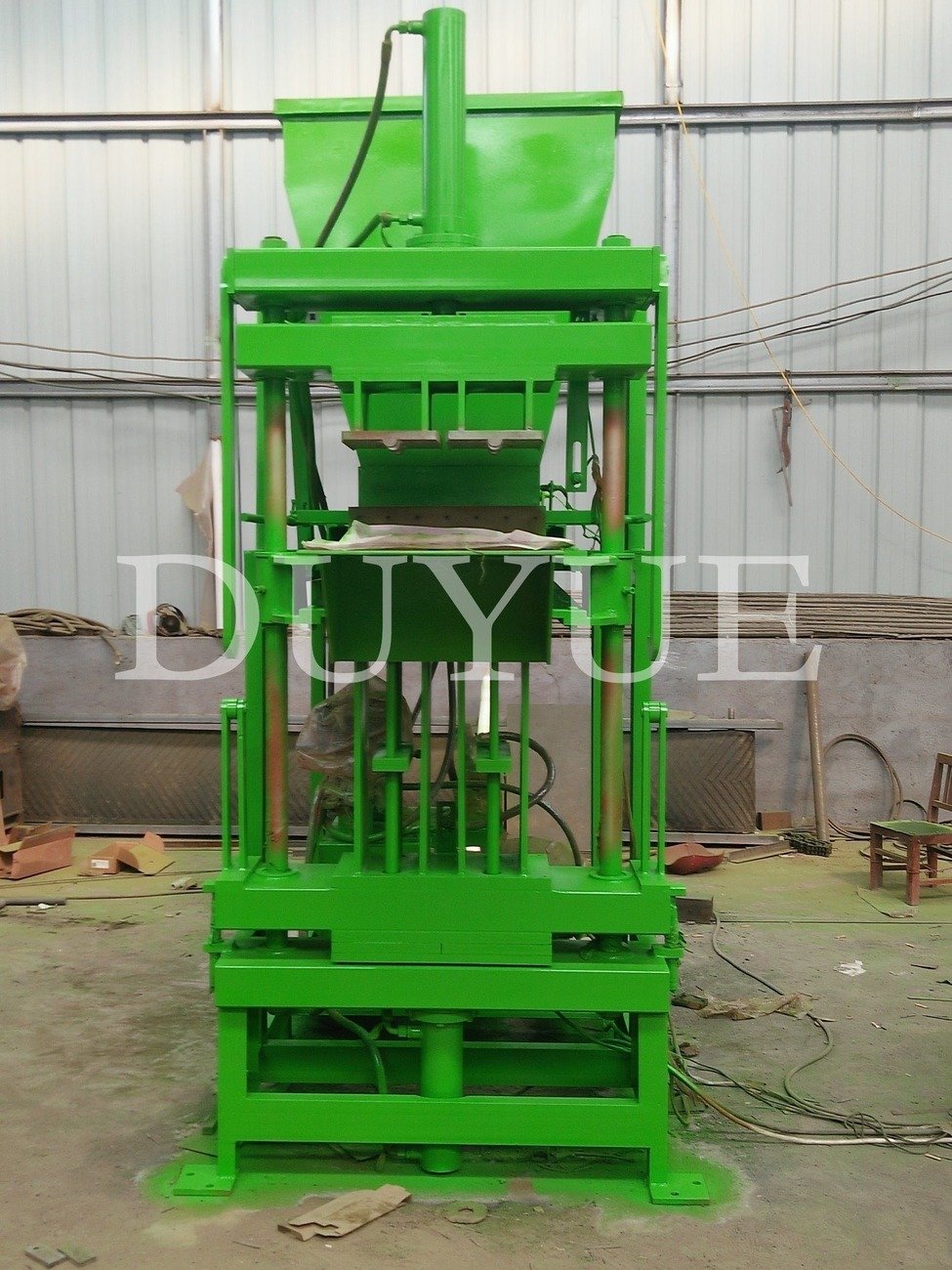
Production line and factory setup overview
A micro/small line producing stabilized compressed-earth blocks from a laboratory-approved local soil blend, controlled cement or lime stabilizer and water through soil excavation release, drying where necessary, crushing, screening, proportioning, dry mixing, moisture conditioning, hydraulic mould pressing, careful demoulding, protected moist curing, dimensional and strength testing and pallet storage. It is not conventional sun-dried adobe.
Recommended lowest-entry line configuration Do not buy a press before a geotechnical laboratory approves the soil. Start with one stabilized interlocking block for non-critical low-rise construction only after engineering and authority review. Screen a 3,000-4,000 block/day hydraulic press with soil crusher, 5 mm sieve, calibrated soil/stabilizer dosing, pan mixer, water meter, one mould, curing racks and compression/water-resistance testing.
Production process and implementation sequence
- Soil-source mapping and laboratory approval
- Drying, crushing and screening
- Soil and stabilizer proportioning
- Dry mixing and measured water addition
- Moisture equilibration and mould feeding
- Hydraulic compression and demoulding
- Protected moist curing and ageing
- Dimensions, strength and water-durability release
Products, capacity and market fit
- Suitable local soil can replace much fired-clay or transported masonry material.
- A compact hydraulic press supports rural and peri-urban construction businesses.
- Stabilization and controlled curing improve durability over informal adobe.
- Soil variability and building approval are decisive; machinery alone cannot make a safe block.
- Stabilized interlocking earth block - Approved soil blend, stabilizer content, dimensions, density, compressive strength, absorption and erosion resistance - Reviewed low-rise housing, compounds and non-critical partitions
- Alternative earth-block profile - Separate mould, structural review and site trial - Only after the launch block is proven
Core production machinery and line specifications
| Machine / stage | Function / value | Production note |
|---|---|---|
| Soil crusher and 5 mm screen | Creates consistent press feed | Dry friable soil |
| Soil and stabilizer scales | Controls the approved recipe | Batch traceability |
| Pan mixer and water meter | Conditions uniform moulding moisture | No visible balls or dry pockets |
| Hydraulic earth-block press | Compacts the prepared mix | 3,000-4,000 blocks/day screening |
| One interlocking mould | Forms launch geometry | Wear and dimension controlled |
| Curing racks and covers | Protects early hydration and drying | Full production inventory |
| Block laboratory | Tests soil and finished durability | Geotechnical plus masonry methods |
Raw materials, utilities and factory requirements
- Laboratory-approved local soil from a controlled borrow source
- Released cement or hydrated lime stabilizer
- Clean measured process and curing water
- Pallets, covers, straps, labels and hydraulic/mould spares
- Small three-phase supply or approved engine-driven hydraulic option
- Covered soil preparation and pressing area
- Protected moist-curing and dry-ageing space
- Drainage, dust control and safe material handling
- Access to geotechnical and compression-test laboratory
Indicative low-entry investment and implementation plan
These planning ranges prioritize economical machinery, local labor and local civil works. Final pricing follows confirmed capacity, product specification, delivery terms and site conditions.
| Scope | Indicative range | Entry-plan note |
|---|---|---|
| Soil crusher, screen and batching | US$3k-8k | One local soil blend |
| Mixer, water meter and hydraulic press | US$6k-16k | One mould included |
| Curing, laboratory and handling | US$3k-8k | Local racks and covers |
| Freight, setup, trials and spares | US$3k-9k | Compact plant |
| Indicative installed low-entry total | US$15k-41k | Land, building and soil excavation excluded |
Detailed proposal and next step
The proposal contains the complete line flow, machinery scope, raw-material and utility requirements, implementation stages and indicative entry planning. Final configuration follows confirmed products, capacity, site and budget.